
Rose Byrne stepped onto the Radio City Music Hall carpet in a shimmery white gown stitched with crystal beads and finished with sparkly black ribbons down the sides, diamond earrings catching the floodlights as she posed beside Bobby Cannavale, who wore a white tuxedo jacket with black trousers and a black bowtie. Byrne’s choice of dress read like a statement: understated glamour for an actor making her first trip onto the Tonys ballot.
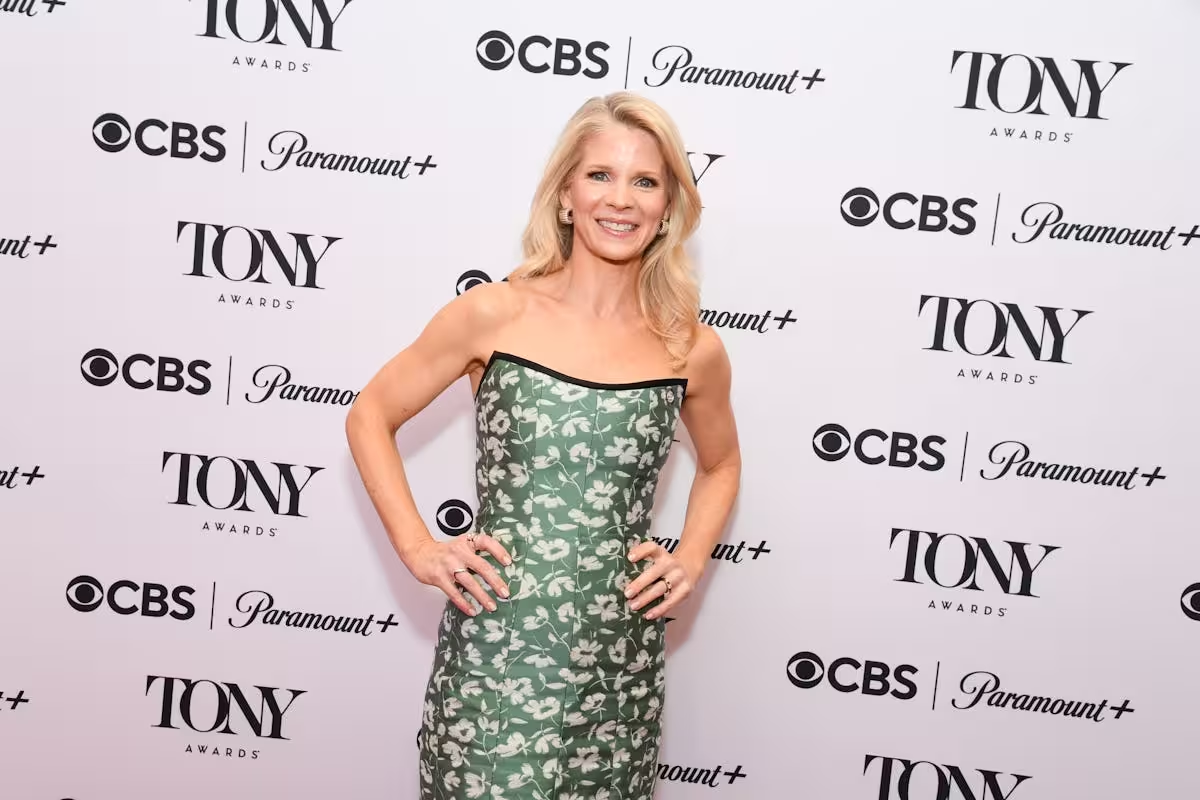
Her nomination — Best Performance by an Actress in a Leading Role in a Play for Fallen Angels — is the formal reason she was at the 79th Annual Tony Awards, and it carried weight beyond a single dress. Byrne is now a first-time Tony nominee and, in the same calendar year, she received her first Academy Award nomination and won a Golden Globe for If I Had Legs I’d Kick You, a combination that places her among just 34 performers in history to earn Oscar and Tony nominations in the same year. Competing with her in the leading-actress category were Kelli O’Hara, Carrie Coon, Susannah Flood and Lesley Manville.

Byrne’s Tony nod recognizes her turn as the unhinged Jane in the 2026 revival of Fallen Angels, a production that opened in March at the Todd Haimes Theatre. The role trades on brittle comedy and slow-burn menace; the limited-run staging was streamed live for BroadwayHD subscribers on June 5, and the recorded production remains available to stream on demand through June 19.
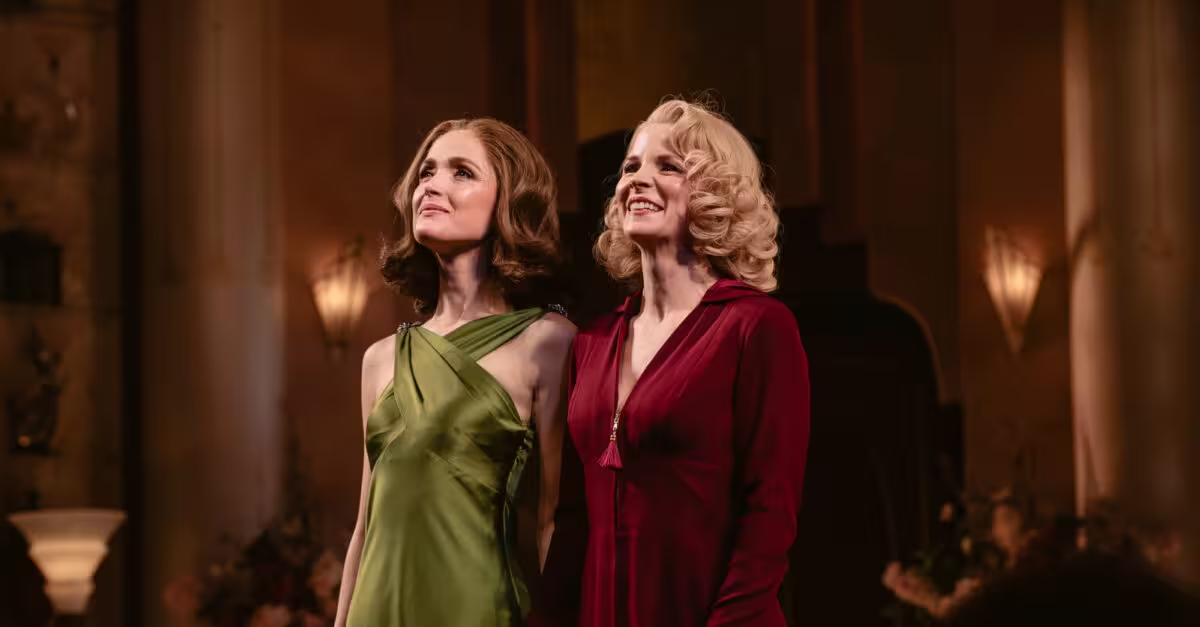

The evening carried an immediate contradiction. Byrne’s awards-night glamour arrived on the same day her show closed — Fallen Angels ended its run the day the Tonys were held — turning what might have been a singular, private celebration into a public career moment framed by both applause and final bows. The production’s live stream earlier that week broadened the audience, but the company’s curtain call and the industry’s vote landed on the same date, compressing a theatre life cycle into a single, high-profile day.
That compression is the tension: the industry’s appraisal arrived while the work it honored was already off stage. For viewers who missed the limited live transmission, Byrne’s performance remains accessible through the BroadwayHD on-demand window; for awards voters and the theatre community the moment was both culmination and coda. Whether the night ends with a Tony in Byrne’s hands or simply another notch on an already remarkable year, audiences can judge the performance themselves before the streaming window closes on June 19.
Byrne’s simultaneous recognition across film and theatre marks a rare, cross-medium peak rather than a single milestone. Her red-carpet look at Radio City was the visible flourish; the deeper consequence is a career moment that now exists in awards roll calls, critics’ pages and, crucially, in a streamed performance anyone can watch. If the Tony remains unresolved here, the record of the work that earned the nomination is clear — and viewable — for the next eleven days.