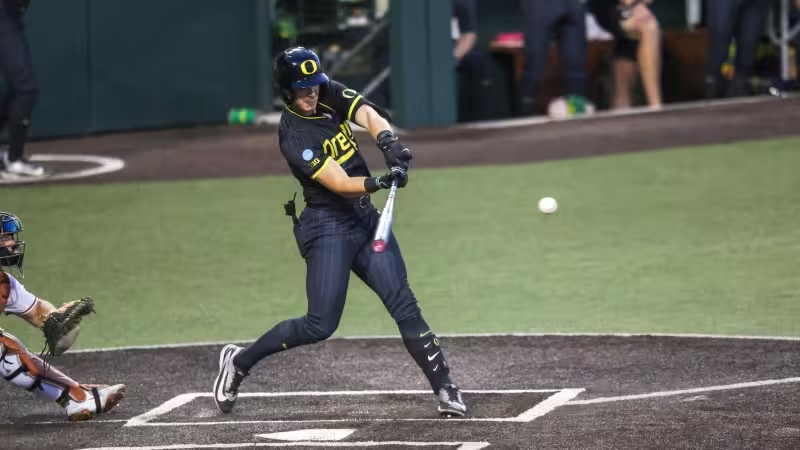
Oregon Baseball dropped Game 1 of the Austin Super Regional, leaving the Ducks on the wrong side of the opener after an opponent’s concentrated offensive outburst. The stat sheet from the University of Oregon Athletics listing shows Adrian Rodriguez drove in five runs and supplied two sacrifice flies that accounted for the game’s most decisive run production.
Rodriguez’s five RBIs were the clearest single-game difference: two sac flies produced multiple runs in key moments, and Ethan Mendoza added two RBIs to complement the opponent’s scoring engine. Those clustered contributions contrasted with a broader set of smaller plays across Oregon’s lineup that failed to add up to a winning total.

Oregon did generate offense. Aiden Robbins drove in one run, hit a sacrifice fly and scored once. Maddox Molony and Naulivou Lauaki Jr. each recorded doubles, and Molony crossed the plate. Anthony Pack Jr. scored three times, Temo Becerra scored twice and Casey Borba scored twice while also driving in one run. Drew Smith and Jack Brooks each scored once. Dariyan Pendergrass drove in one run, scored once and, along with Mendoza and Becerra, was hit by a pitch during the game.
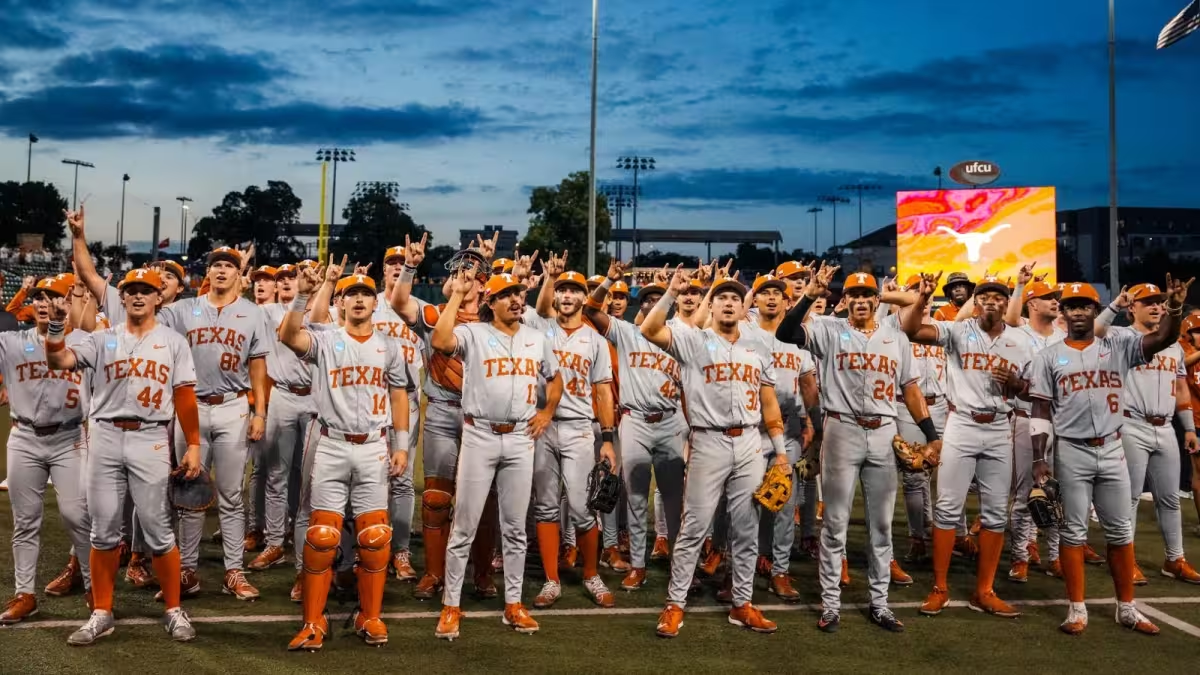
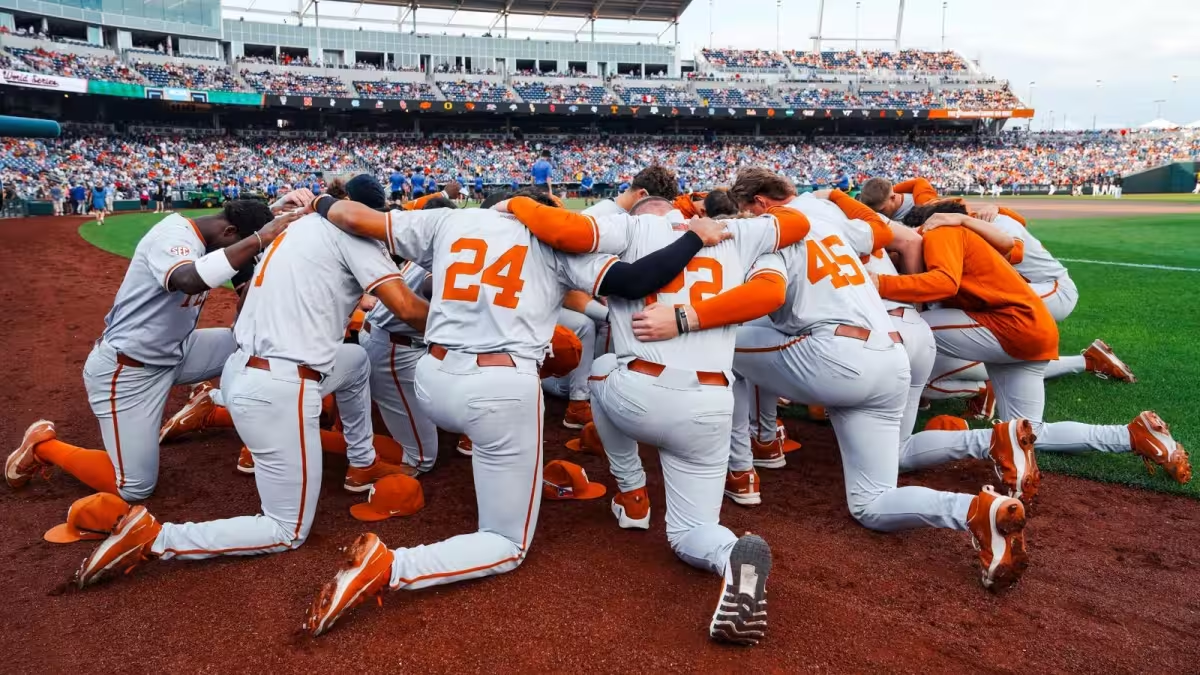

Context matters: this account is drawn from the University of Oregon Athletics stat listing tied to the Austin Super Regional, and it captures individual output on both sides. The distribution shows Oregon manufactured baserunners and pushed runs across multiple hitters but lacked the single concentrated set of swings the opponent supplied through Rodriguez and Mendoza.
The friction is straightforward and unforgiving—Oregon’s offensive breadth didn’t convert into a winning sequence. Robbins’s sacrifice fly, Molony’s double and Pack’s three runs are the kinds of contributions a lineup needs to win, yet they were offset by the opponent’s handful of decisive plays that produced multiple runs in short order.
The immediate consequence is practical: Oregon has ceded the opening game in Austin and now carries the pressure of the remaining super regional contests. The stat sheet does not list a final score here, nor does it confirm the date or result of the next game, so the central unresolved question is whether the Ducks can transform the same offensive pieces—Robbins’s situational hitting, Molony’s extra-base power and the baserunning that produced multiple runs—into a single, decisive win in the next outing.
Oregon’s path forward will hinge less on individual flashes than on timing: converting those scattered contributions into a rally that produces multiple, timely runs. The numbers delivered in Game 1 show the Ducks have the parts; whether they can assemble them into a victory in Austin is the immediate story left unanswered by the available stat listing.