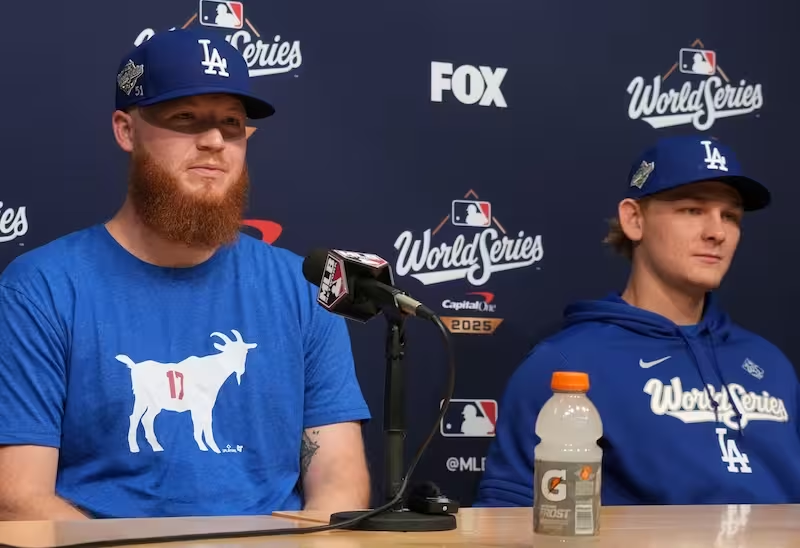
“Our development system is what gets overlooked,” Emmet Sheehan said this week, cutting through the usual headlines about payroll as he prepares for a favorable home start against the Angels noted by BaseballHQ. He followed that thought with a practical outline of how the club builds depth: “how much time and money they put into finding the right people in the minor leagues to make people better.”
Sheehan did not frame his point as denial of Los Angeles’s spending power. “When I got drafted, I didn’t realize how lucky I was coming to an organization like this,” he said, and later acknowledged plainly, “Obviously, they put a lot of money into the team here, which is awesome, but there are a lot of guys that contribute way more than people realize, guys stepping up when we’ve had injuries.”

The second voice in the room was Jack Dreyer, whose own path is a compact example of the Dodgers’ pitch. Dreyer joined the Dodgers as an undrafted free agent in 2021 and made his MLB debut in 2025. “One of the things that the Dodgers do better than anybody else,” he said, “is that as soon as you get into that organization, they’re doing everything they can to develop you to maximize your potential.”
Dreyer described a patient, iterative process. “When I first got to the Dodgers organization, I had a long way to go before I had a chance at anything,” he said. “I think they saw something that even I didn’t see in myself, but they kept fine-tuning, and tweaking, and revamping different things until I got to this point.” He closed on resources and gratitude: “Every single guy who’s in the Dodger organization is very lucky with all of the resources the Dodgers provide, so I’m very thankful I signed here.”
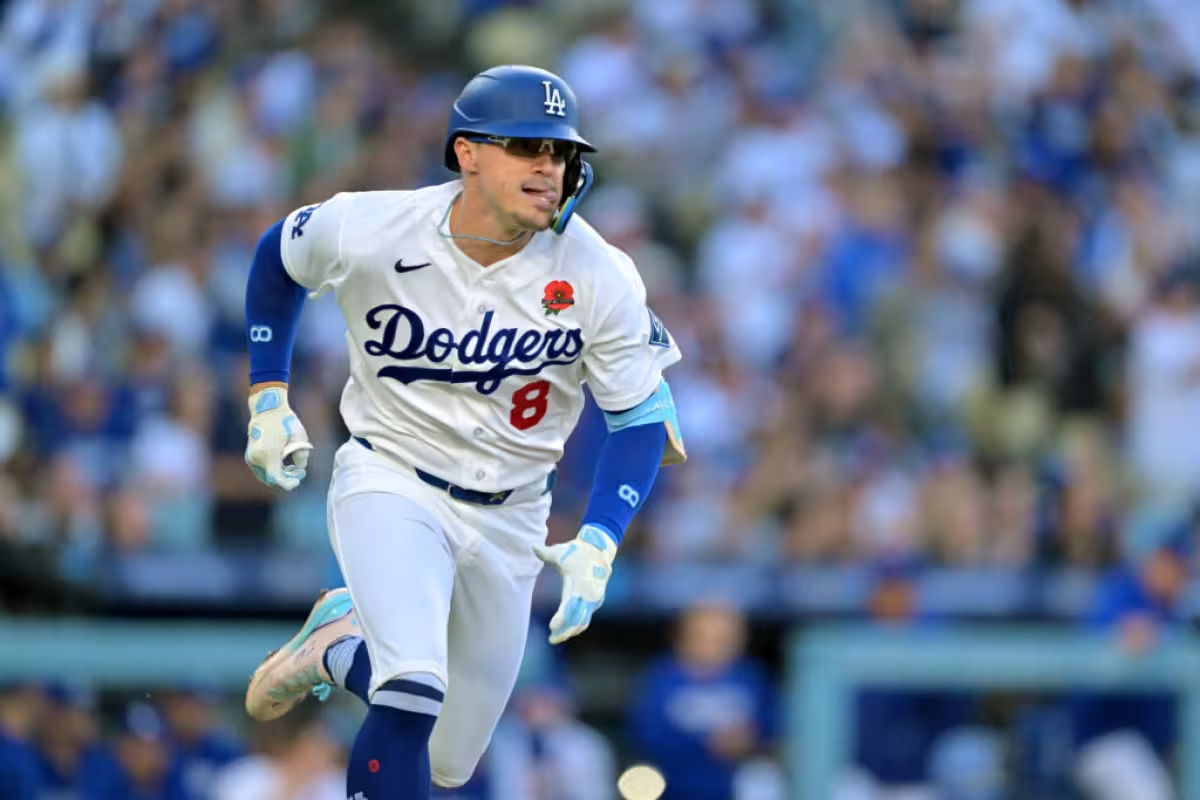
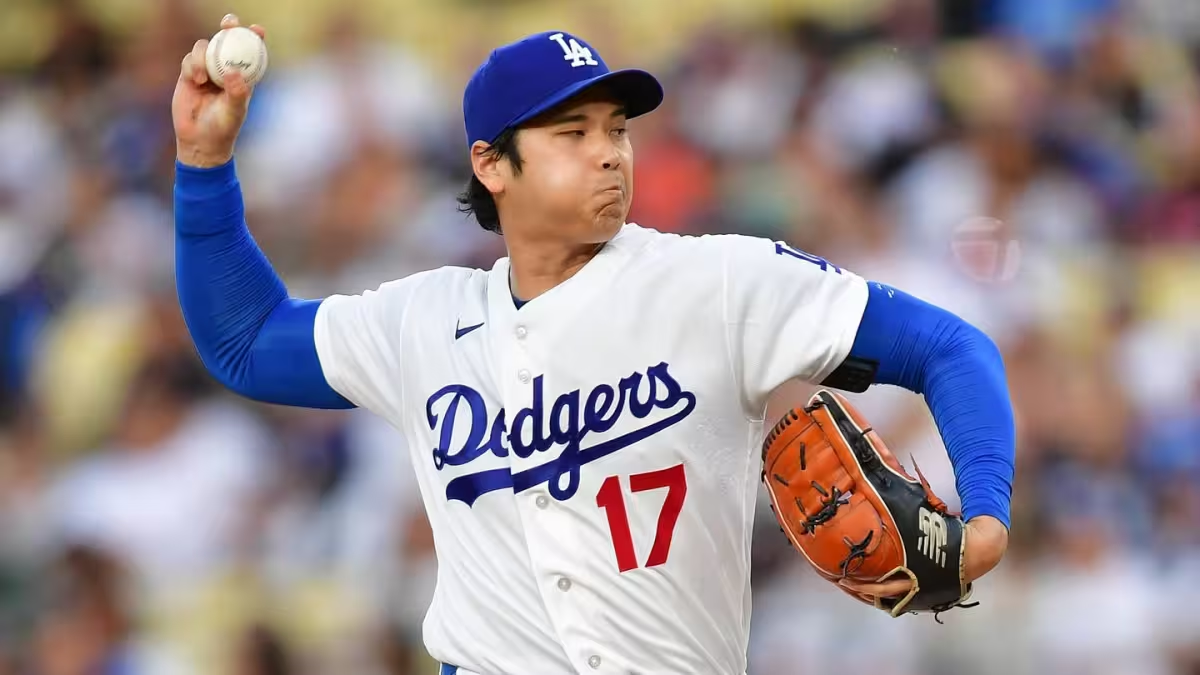
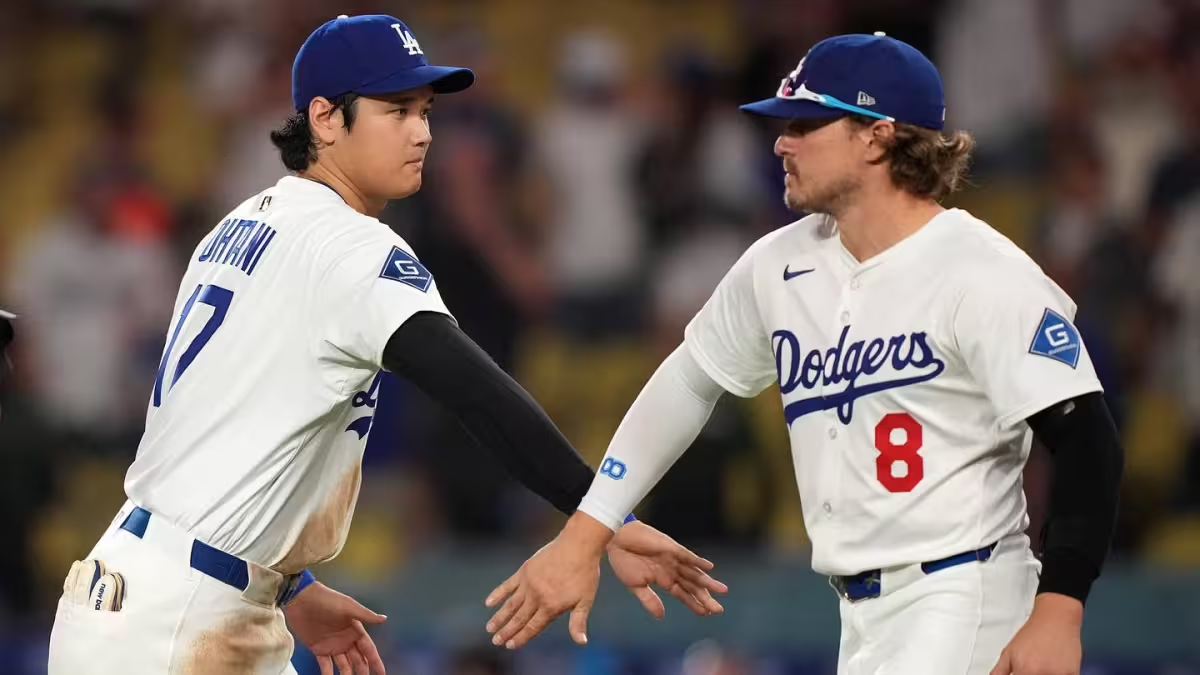
Those testimonials point at concrete outcomes the organization can claim. Sheehan and Dreyer cited examples of players the Dodgers helped turn into contributors — names like Max Muncy, Chris Taylor and Will Klein — as evidence that scouting, coaching and development routinely turn under-the-radar acquisitions into major-league pieces.
The timing of the remarks matters. Major League Baseball and the MLBPA have exchanged opening proposals for a new collective bargaining agreement and remain far apart in negotiations. League officials and labor leaders are debating how to preserve competitive balance; many critics single out the Dodgers’ payroll gap as proof that spending, not systems, drives advantage. Sheehan and Dreyer’s accounts press a different point: organizational investment is not just salary dollars but the staff, scouting and time spent in the minors to find and improve players.
That contrast creates a practical policy question that the players’ quotes do not resolve. Critics point to the Dodgers’ ability to outspend rivals; the players emphasize the work done before salaries hit the ledger. Neither side — and neither testimonial — quantifies how much of Los Angeles’s sustained success is attributable to development versus sheer payroll. The Dodgers’ pipeline clearly produces contributors, but the relative share of wins carved out by coaching and scouting remains unmeasured.
For the players involved, the system is real and immediate: it turned an undrafted free agent into a major-leaguer and gave a recent draftee a platform to start at home. For negotiators and policymakers, the testimony complicates a narrow solution that targets salaries alone. The next act will be in the CBA talks — and in the games that follow as MLB and the MLBPA decide whether reforms will aim at payroll, at organizational resources, or at both.