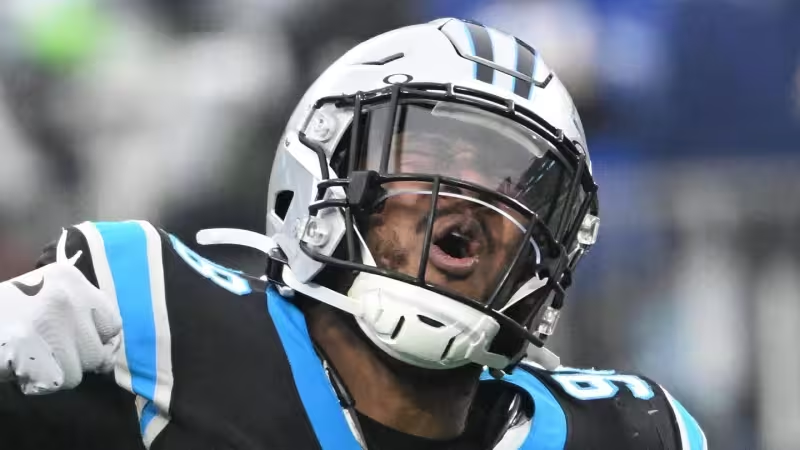
D.J. Wonnum’s next season starts in Detroit. The Lions signed Wonnum to a one-year deal that immediately positions him as the team’s every-down edge opposite Aidan Hutchinson — a role the franchise has chased for years and one Wonnum has already shown he can handle in volume.
Last season with Carolina, Wonnum missed one game but still logged 68 percent of the team’s defensive snaps, a workload that underlines why Detroit gave him a short-term chance to stabilize an unsettled edge spot. Wonnum arrives with 30 career sacks across six NFL seasons and a single-season high of eight, numbers that pair with a 61.8 run-defense grade from Pro Football Focus and suggest a reliable presence against the run.

The Lions lost Al-Quadin Muhammad in free agency and did not retain Marcus Davenport, leaving a hole opposite Hutchinson that Detroit explicitly wants Wonnum to fill. Muhammad finished last season with 11 sacks while playing 41 percent of Detroit’s defensive snaps across all 17 games and posted a 59.3 run-defense grade; the contrast with Wonnum’s snap share and PFF mark helps explain why the Lions felt an upgrade in availability and base-down ability was necessary.
Detroit’s internal calculus is plain: they wanted a player who can stay on the field against the run and take meaningful pass-rush snaps so Hutchinson isn’t the sole edge who must do both. The team ranks Wonnum No. 20 on its list of most important players for the 2026 season, a placement that reflects modest expectations — useful, potentially stabilizing, not franchise-altering.
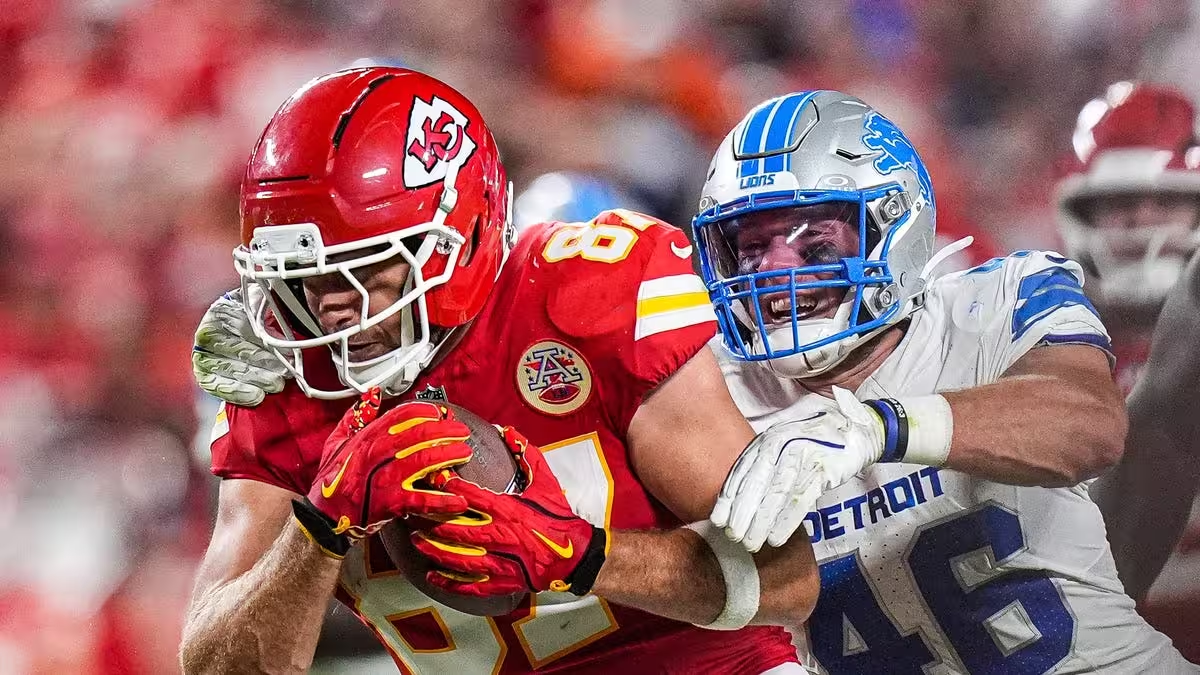
Still, the move contains an obvious wrinkle. Wonnum is described as having run-defense chops and pass-rush upside, but his pass-rush ability "won't pop off the page" at first glance. That friction sits at the center of Detroit’s bet: he should be able to handle every-down work and set a steadier baseline, but whether he supplies the splash plays and consistent sack production that Muhammad delivered remains an open question.
The comparison with last year’s options sharpens the issue. Muhammad’s 11 sacks came on far fewer snaps than Wonnum logged in Carolina; Detroit is effectively trading snap consumption and steadiness for the hope that Wonnum’s pressures and technique will translate into similar, if not identical, production. The team’s decision to let Davenport walk as well compounds the urgency — Detroit is asking Wonnum not just to rotate, but to be a dependable foil to Hutchinson.
How this plays out will matter beyond the depth chart. The broader pass-rush market is in motion — teams are reshaping edges and weighing steep trades — and Detroit went the conservative route with a one-year commitment. For context on how these edge moves can ripple across rosters, see reporting on Josh Sweat’s situation and how it could reshape pass rush (
The clearest next step is simple and decisive: performance in team drills and game action. Wonnum’s snap rates show he can handle heavy work, and his PFF run-defense grade suggests he will satisfy Detroit’s base-down needs. What will determine whether this signing is a fix or a stopgap is how much tangible pass-rush production he delivers for the Lions in 2026 — pressures, quarterback hits and sacks that ease Hutchinson’s load rather than merely match it in steadiness.
If Wonnum can marry the reliability his snap counts imply with a modest jump in game-day pass-rush impact, Detroit will have answered a persistent roster question without a long-term commitment. If he cannot, the Lions will face the same decision in 2027: chase a high-upside splash or keep paying for steadiness opposite Hutchinson.