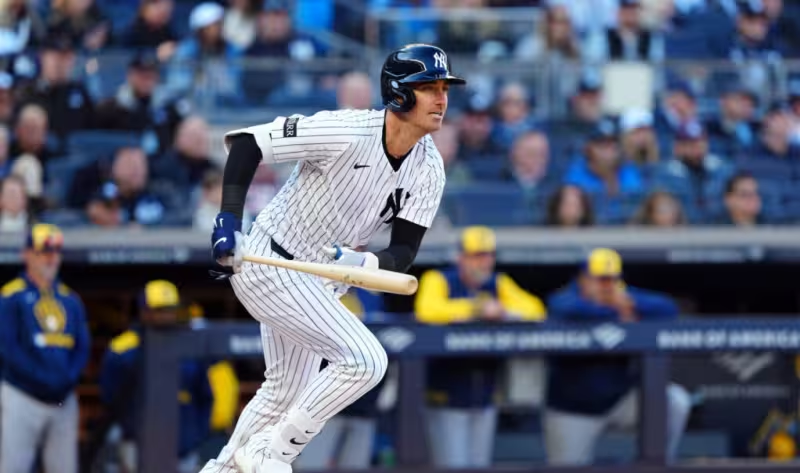
Cody Bellinger returned to the Yankees on a five-year, $162.5 million pact 11 days after Kyle Tucker signed with the Dodgers, and through play on June 5 he has done the one thing that makes big free-agent bets look smart: produce immediately. Bellinger entered play on June 5 with a.273/.373/.468 slash line, eight home runs and a 136 wRC+, and he leads all MLB left fielders with 2.3 fWAR.
Those numbers matter because they are tied directly to a roster choice that many thought favored Tucker. Bellinger’s 136 wRC+ is 26 points higher than Tucker’s 110, and the defensive ledger is stark: Bellinger has plus-15 Defensive Runs Saved and plus-3 Outs Above Average in left field, while Tucker has 0 DRS and minus-3 OAA in right for the Dodgers.

“Belli has turned himself back into one of the best all-around players in the game 🗽,” wrote Just Baseball, capturing the sense that Bellinger’s revival is both offensive and defensive. The Yankees committed roughly $31.5 million per season to that revival — a contract without deferrals — when they signed Bellinger for $162.5 million.
That commitment did not come out of nowhere. New York targeted Bellinger when the Chicago Cubs made him available after the 2024 season, and the team’s offseason spending choices — including not signing Juan Soto in 2024 and instead adding Paul Goldschmidt and Bellinger among others — set the stage for this lineup construction. Bellinger’s 23.2 percent career air-pull rate and the short right-field porch at Yankee Stadium were part of the calculus.
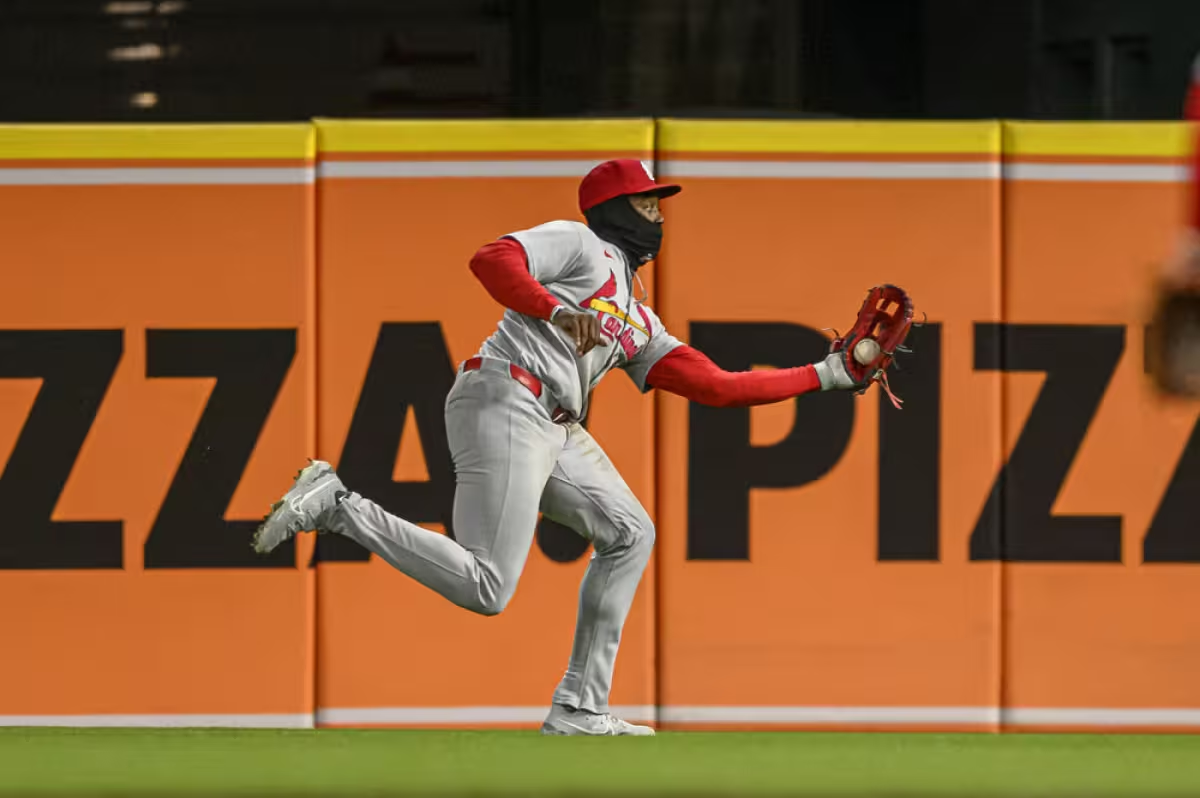
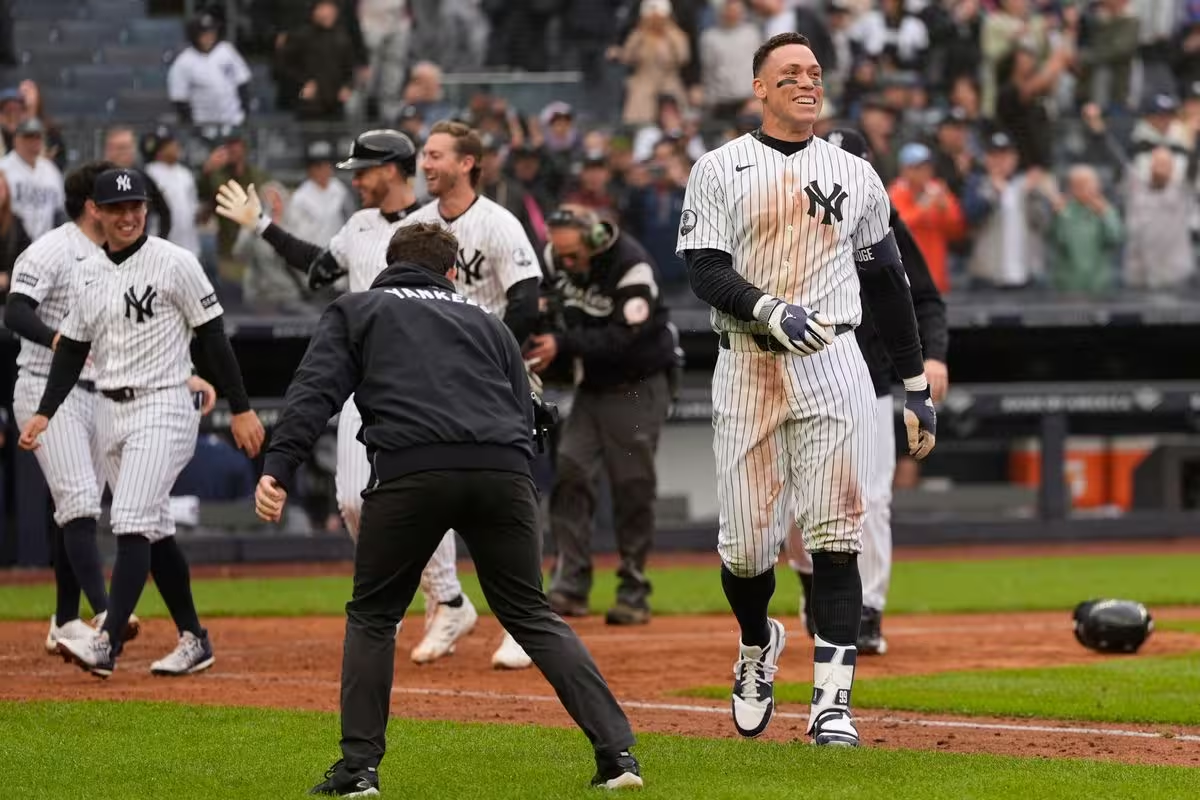

The numbers through early June are the clearest rebuttal to the pre-free-agent narrative that Tucker was the superior prize. Where Tucker started 2026 with a 110 wRC+ and middling defensive marks, Bellinger combined a top-line offensive run creation figure with eye-popping defensive value that has tilted several games in New York’s favor. Leading all left fielders in fWAR at 2.3 gives those raw slash numbers context: this is production that moves standings and payroll narratives.
Bellinger’s arc makes the early-season outperformance feel like a comeback with history, not a fluke. He burst onto the scene as the 2017 National League Rookie of the Year, hit 39 homers and drove in 97 that season, and reached a peak in 2019 when he won the NL MVP after a 47-homer, 115-RBI year and an 8.7 bWAR. He fell hard from 2020 through 2022 — batting.203 and combining for 41 homers over that stretch — and was non-tendered by the Dodgers before reviving his career with the Cubs, earning NL Comeback Player of the Year in 2023.
Last season’s splits also explain why teams circled him: he hit.353 with a.415 on-base percentage and a.601 slugging percentage against left-handed pitching, producing a 1.016 OPS in those matchups. That kind of left-on-right dominance, paired with his ability to pull the ball into Yankee Stadium’s favorable geography, was a selling point for New York’s front office.
Still, the early-season comparison to Tucker highlights the central tension of the move. Tucker entered free agency as the more highly regarded arm of the market, and his signing with the Dodgers set off a chain that left the Yankees choosing Bellinger. For now, Bellinger’s bat and glove are vindicating that choice; whether the Yankees’ five-year commitment ends up looking shrewd or reckless depends on durability and whether this level of production holds over a full season and beyond.
The clearest question left standing is simple: can Bellinger sustain what he has done in the opening months across the 2026 season and, by extension, across the five-year, $162.5 million deal New York gave him? The answer will determine whether the Yankees’ decision to bet on a reinstated All-Star returns value or becomes another expensive experiment in payroll construction.