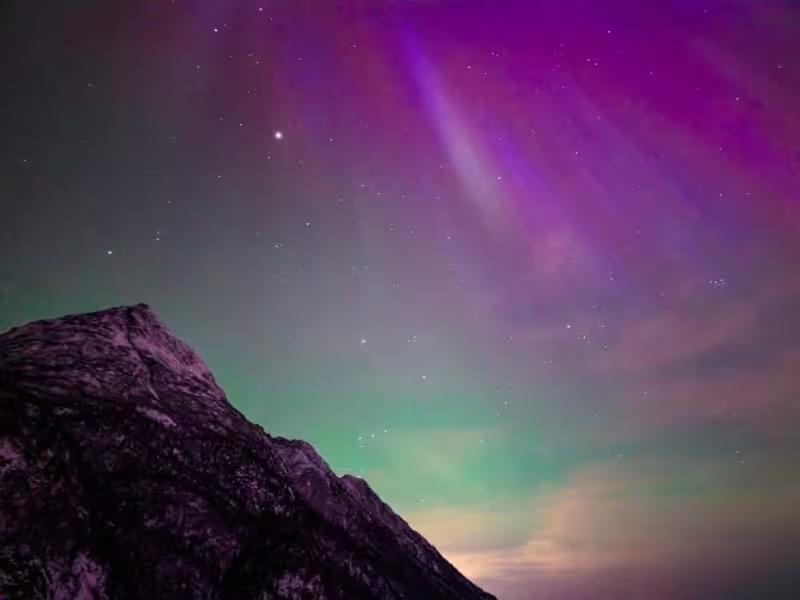
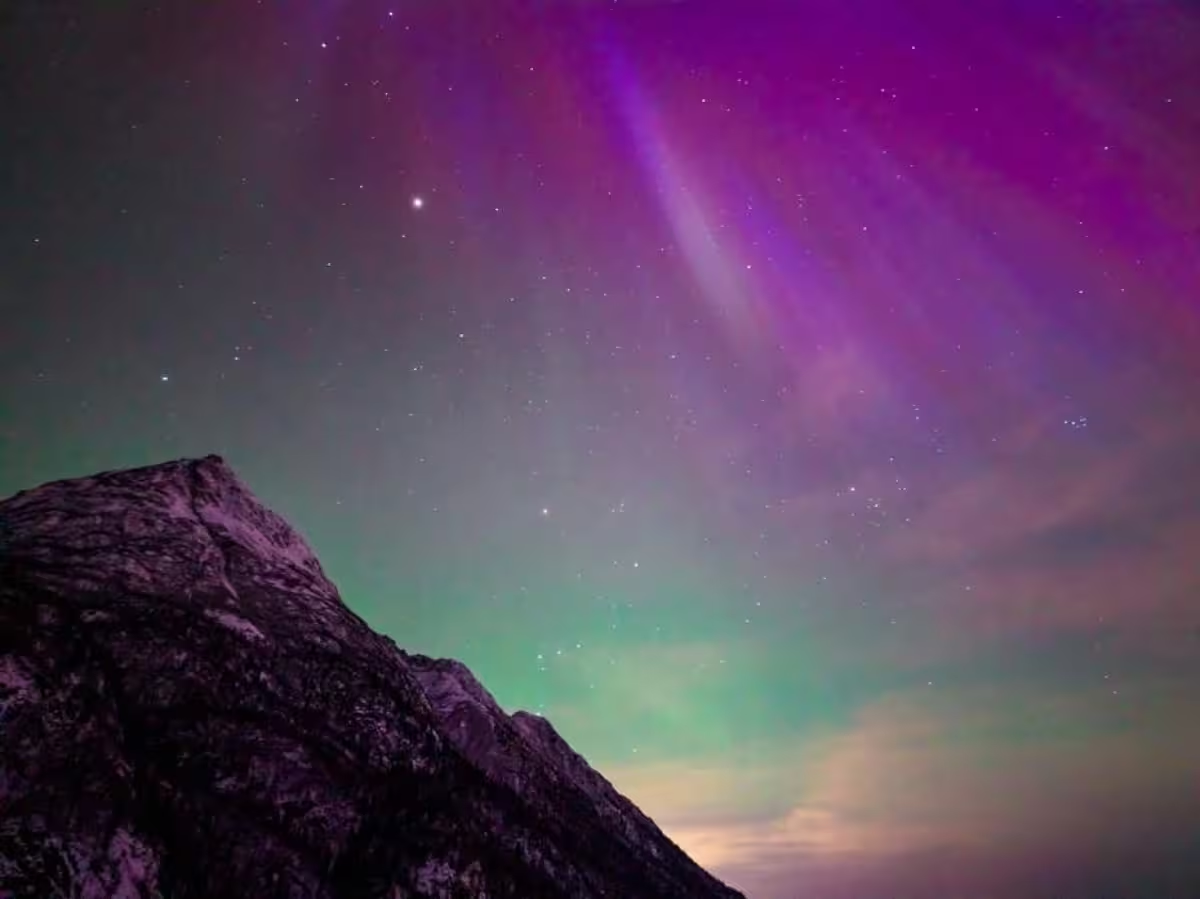
NOAA says the northern lights could be visible Sunday night across several states along the U.S.-Canadian border before a coronal mass ejection arriving Monday drives geomagnetic storms. The forecast gives skywatchers a chance at coronal mass ejection aurora visibility in parts of the Lower 48, though Alaska is still the best bet.
The agency is predicting a Kp index of five out of nine for Sunday night, with aurora chances in North Dakota, much of the Michigan Upper Peninsula, northern Minnesota, northern Montana and the northernmost stretches of Washington, Idaho, Wisconsin and South Dakota. NOAA also forecasts a high chance of the aurora borealis appearing in Alaska.

By Monday, forecasters expect the coronal mass ejection that escaped from the sun on Saturday to arrive, raising conditions to minor through strong geomagnetic storms on NOAA’s G1 to G3 scale. Those storm conditions could continue through Tuesday.
In practical terms, the forecast means the lights may be visible farther south than usual if the storm strengthens, with NOAA saying strong geomagnetic storms can push the aurora as far south as Illinois. But the agency is also clear that the odds of catching the display in the Lower 48 remain relatively low compared with Alaska, where the northern lights are more likely to show.
Coronal mass ejections are expulsions of solar material from the sun’s corona. When one reaches Earth, it can interact with the planet’s magnetosphere and trigger geomagnetic storms, which are what make auroras possible at lower latitudes. Stronger storms can also affect satellites and radio communications, even when the sky show itself is faint or short-lived.
NOAA advises people who want to try to see the lights to head north toward Earth’s magnetic north pole, look from a hill with a clear view of the northern sky, and stay far from city lights. The aurora is typically most active around midnight, especially between 10 p.m. and 2 a.m., and smartphone cameras can capture it well if flash is off, night mode is on and RAW format is used. A tripod and timed release can help keep the camera steady for longer exposures.
The open question is not whether a storm is coming, but how vivid it will be once the coronal mass ejection arrives Monday. If NOAA’s forecast holds, the best viewing window starts Sunday night, and the stronger activity could carry the chance of a visible aurora into Tuesday.