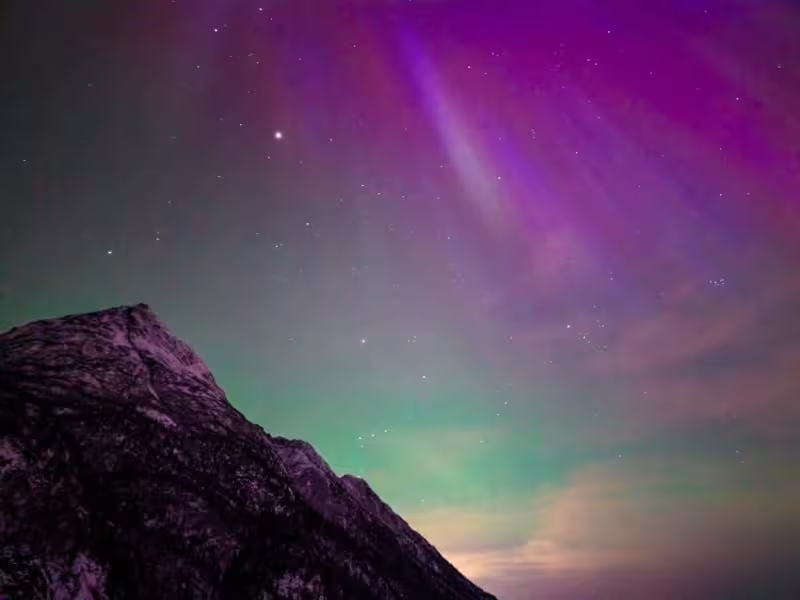
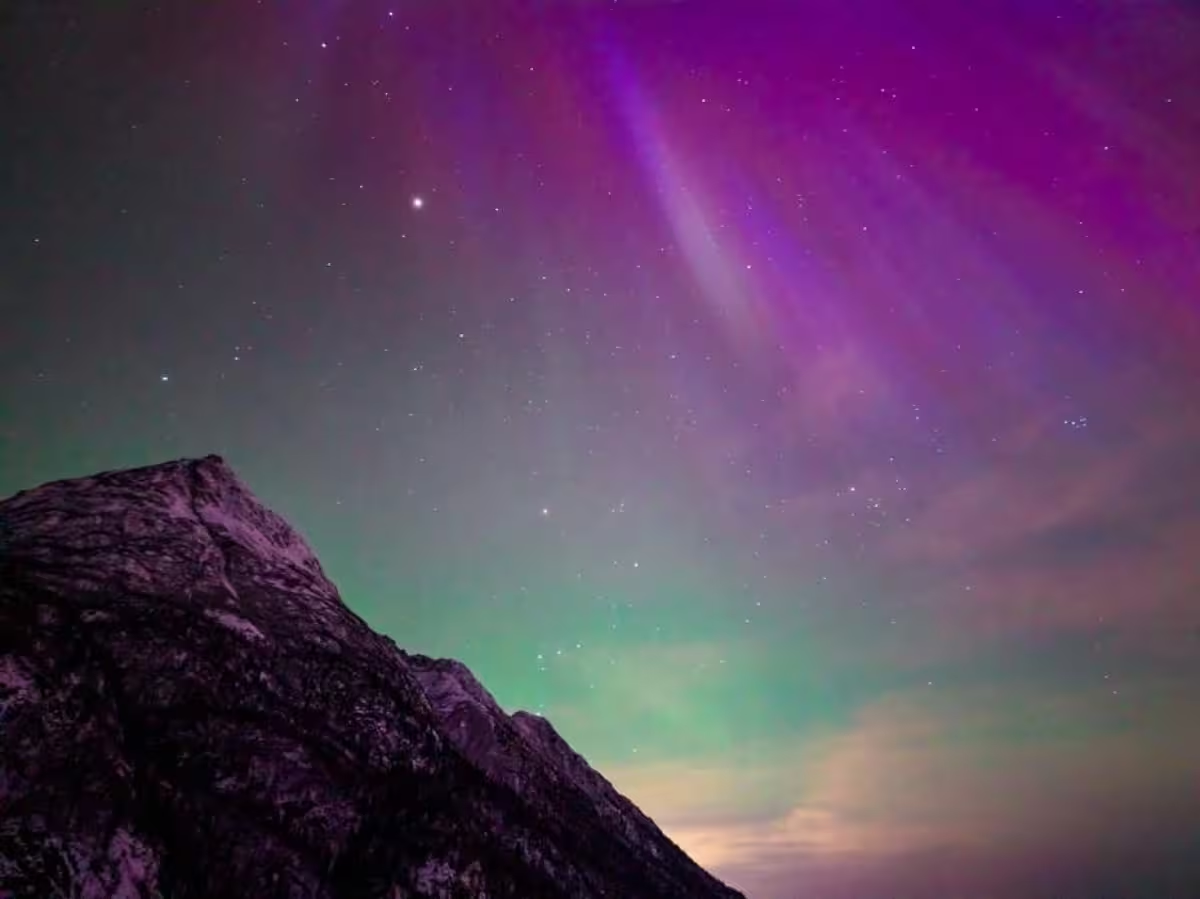
The northern lights could be visible Sunday night across several states along the U.S.-Canadian border, with NOAA forecasting a Kp index of five out of nine and a higher chance of activity in Alaska.
The agency said people in North Dakota, much of the Michigan Upper Peninsula, northern Minnesota, northern Montana and the northernmost stretches of Washington, Idaho, Wisconsin and South Dakota could have a shot at seeing the aurora. NOAA also said the lights could be visible as far south as Illinois if geomagnetic storms strengthen later in the week.

The forecast comes after a coronal mass ejection escaped from the sun on Saturday and is expected to reach Earth by Monday. NOAA predicted minor to strong geomagnetic storms beginning Monday and lasting through Tuesday, a window that could push the aurora farther south than usual if conditions intensify.
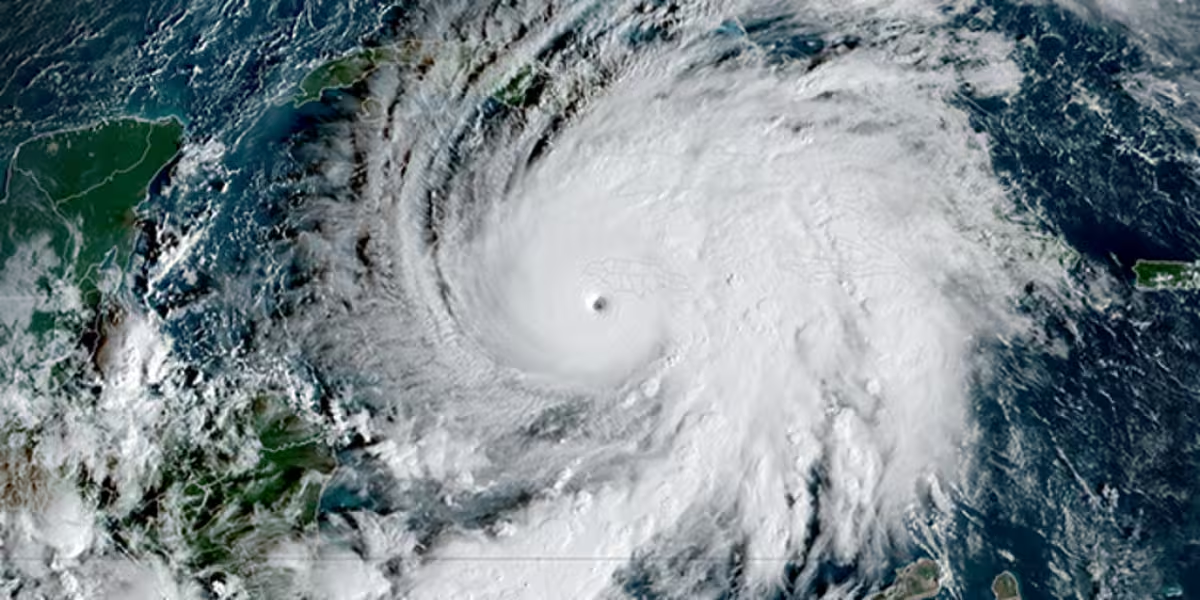
Coronal mass ejections are bursts of solar material from the sun’s corona, its outermost atmospheric layer. When one reaches Earth, it can disturb the planet’s magnetosphere and set off geomagnetic storms that sometimes interfere with satellites and radio communications.
There is a clear split in the forecast. NOAA’s strongest aurora outlook is for Alaska, where it sees a high chance of visibility Sunday night, while the Lower 48 has only modest odds even with several border states in play. The difference reflects how closely the storms line up with each region’s latitude and magnetic position, and it means some places will see a bright display while others just outside the best zone may miss it entirely.
For anyone hoping to catch the lights, NOAA recommends heading north toward Earth’s magnetic north pole and finding a spot with an open view of the northern sky, far from city lights. Experts said the best viewing hours are usually around midnight, roughly from 10 p.m. to 2 a.m., and smartphone cameras can often capture the aurora more clearly than the eye can. Turning off flash, using night mode, shooting in RAW and keeping the camera steady on a tripod with a timed release can improve the odds of getting a usable photo.
The main question now is not whether the aurora will appear somewhere, but where the clearest view will fall once the solar blast arrives. NOAA expects the coronal mass ejection to reach Earth by Monday, with geomagnetic storms continuing into Tuesday, and that should determine whether the Sunday-night forecast turns into a brief border-state show or a stronger southern push.