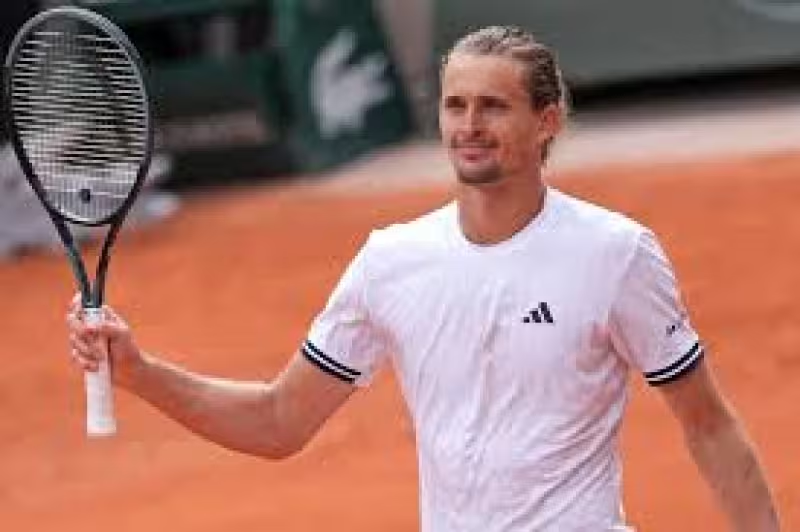
Alexander Zverev has been dating German actress and model Sophia Thomalla since 2020, a relationship he and Thomalla have kept visible through frequent posts on each other’s social media as he prepares for the 2026 French Open.
It matters because Zverev is not a casual name on the tour: he is ranked No. 3 in the ATP rankings and arrives at Roland Garros under real pressure to add a Grand Slam to a résumé that already includes finals at the 2020 U.S. Open and the 2025 Australian Open. The combination of elite expectations on court and a public personal life off it makes his partnership with Thomalla a notable part of the athlete’s current story.

Thomalla is known professionally as an actress and model; the pair have been a visible couple since 2020, sharing photographs and support on social platforms that track many of tennis’s modern relationships. That public thread has become a shorthand for the stability people around a player often cite: training, travel and recovery all happen against the same backdrop that the public can now watch.

There is, however, a complication in Zverev’s personal picture. He is also a father to Mayla, the daughter he had with ex-girlfriend Brenda Patea. Zverev has addressed that relationship directly, saying, "Even though Brenda and I are no longer together, we have a good relationship and I will live up to my responsibility as a father. Together we will take care of the little person that is about to grow. "I am very much looking forward to the child." The comment underscores a friction: Zverev frames his current romantic life with Thomalla as ongoing while describing a separate parental arrangement with Patea that he insists is cooperative.
That split — a visible partnership with Thomalla and an ongoing co-parenting relationship with Patea — is the personal complexity behind the headlines. It is part of why fans and commentators watch not just match results but the rhythms of his life off court. Zverev’s public statements emphasize responsibility and a desire for stability; his social-media presence with Thomalla projects continuity. But the existence of a shared child with Patea means the relationships intersect in ways a simple status line does not capture.
One open question remains: the pair’s origin story. Despite the frequent social snapshots, the specifics of how Zverev and Thomalla met are not part of the public record presented alongside their posts. That gap is notable because couples of this profile rarely carry only one narrative thread; the meeting, the early months and how they negotiated Zverev’s tour schedule would illuminate whether the relationship is a longstanding support system or a more present-tense arrangement that has adapted to the demands of top-level tennis.
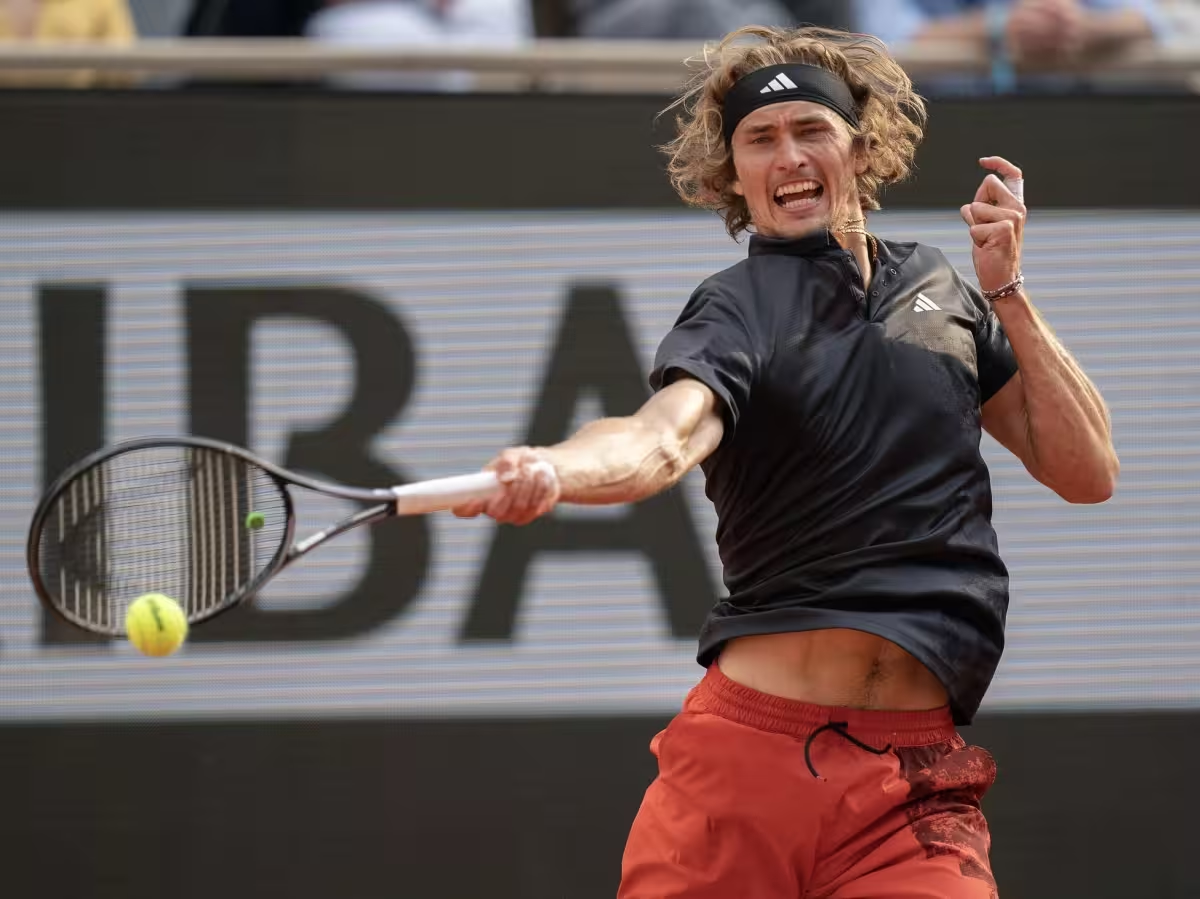
What matters next is straightforward. Zverev is chasing a first French Open title in 2026, and his personal life will be part of the backdrop as he tries to convert past finals into a major championship. The visible partnership with Thomalla — in place since 2020 and frequently displayed online — appears to be the stable element he brings to the clay-court season. If on-court results are the truest indicator, Zverev’s focus has held: he comes into the tournament as a top contender. How the balance between family, co-parenting and a high-profile romantic relationship plays out over the fortnight at the French Open will be the clearest measure of whether that balance gives him the edge he needs to win.