



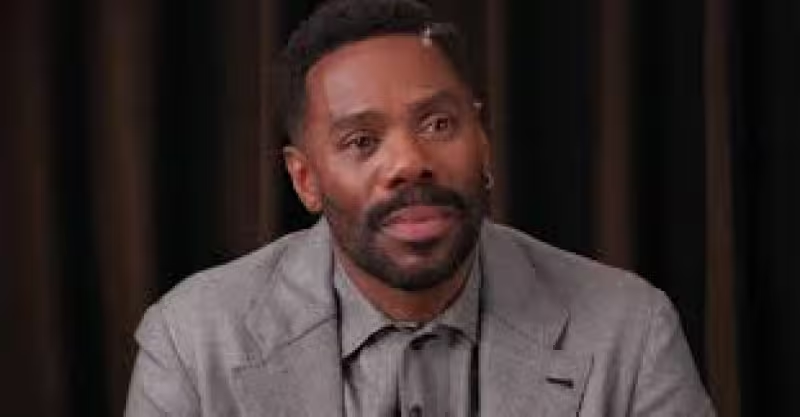
"My view has become more realistic," Steven Spielberg told the Leicester Square crowd at the UK premiere of Disclosure Day, and then widened the claim: "There's a lot of mystery and things that are undisclosed but I've become more optimistic that people are going to be able to discover things that we have not been allowed to discover."
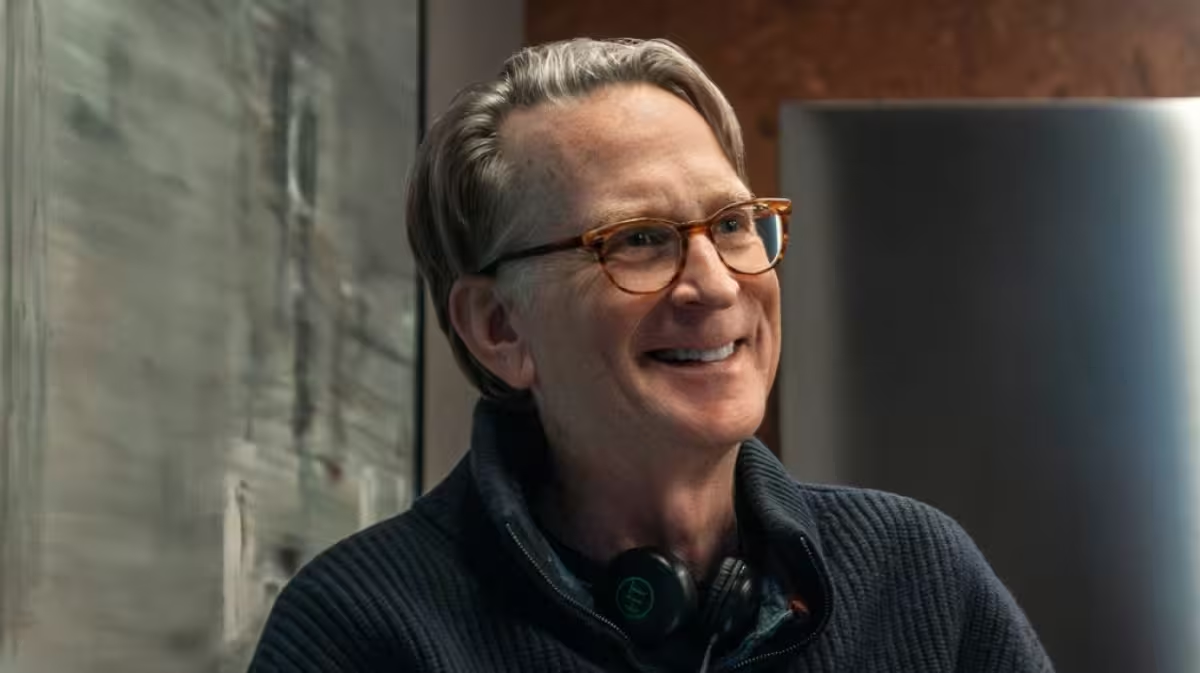
The remark landed amid a packed promotional turn for the sci‑fi thriller, which imagines a world on the brink of proof that non‑human intelligence exists and has been hidden in plain sight. Spielberg appeared with a cast that includes Emily Blunt, Josh O'Connor, Colman Domingo, Colin Firth and Eve Hewson as the film heads to theaters everywhere on June 12.

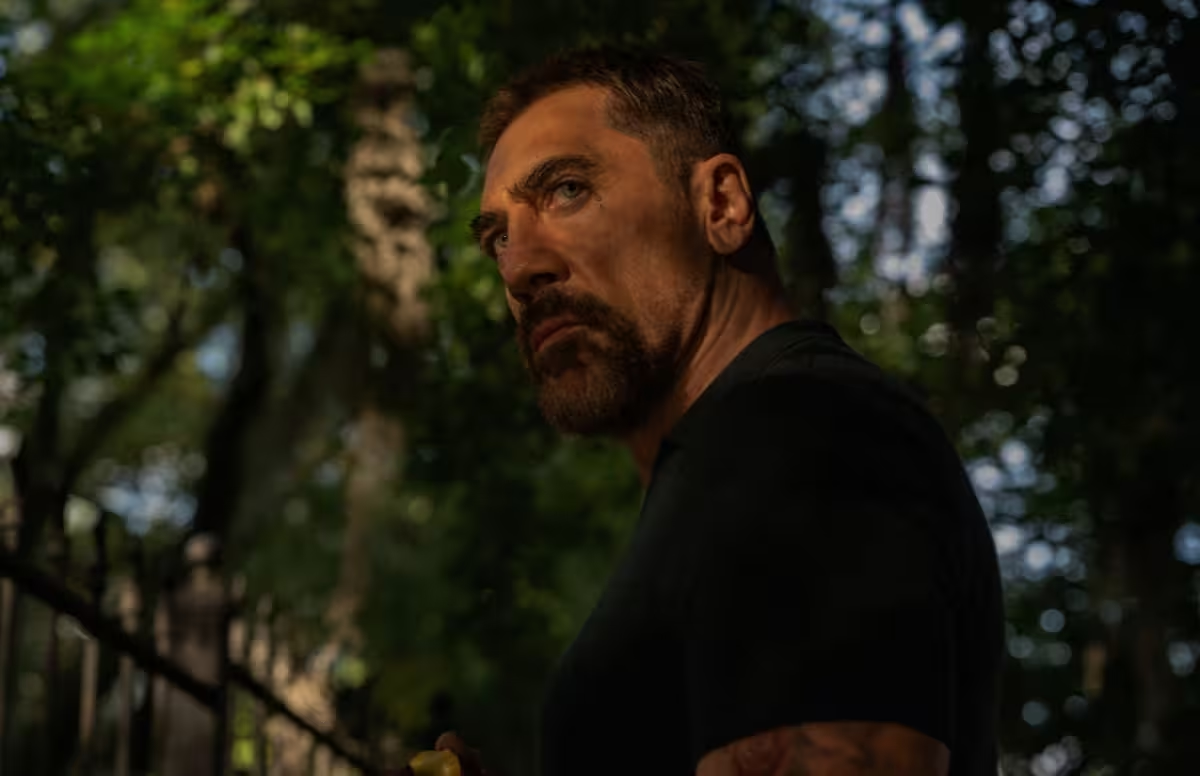
Disclosure Day centers on Daniel Kellner, a cybersecurity expert played by Josh O'Connor, who uncovers evidence of a long‑running cover‑up, and Margaret Fairchild, a meteorologist played by Emily Blunt. Governments and powerful corporations race to contain the truth; the film stages institutional resistance as its central drama even as its makers press a counterargument about empathy and unity.
Onstage, the actors made that counterargument plain. O'Connor said, "When the script came through, I read it in one go in a rush and it was thrilling, it felt so needed as it's a film about hope and humanity and understanding." He added, "When there's a lack of understanding of each other, maybe something from outside might unite us," and asked, "I wonder whether the idea of hate is a human invention because none of the documented close encounters are nasty or violent."
Colman Domingo framed the picture as an appeal from Spielberg's own convictions. "I can tell you with my entire heart that it is one of the most hopeful films that anyone can see right now," he said, later calling the movie "essentially it’s about Steven’s heart and his belief of what we could be if we invite the unknown in," and describing UFOs or UAPs as "a stand‑in for the other."
The premiere put Spielberg's remarks in a specific place: the director has been exploring extraterrestrial life on film for more than 40 years, from Close Encounters to E.T., and Disclosure Day places that longstanding fascination into a contemporary story about secrecy, trust and social reaction to unsettling evidence.

Spielberg tied his new realism to an ethical argument: discovery, he said, "would bring people together" and the film is "about empathy and bringing people together." That line of thinking is part of the film's public pitch — a hopeful vision of communal response to the unknown — even as the plot dramatizes how institutions might suppress or control that discovery.
That contradiction is the film's kinetic force. The story offers a director's belief in openness and a cast that speaks of hope, while the narrative hinges on governments and powerful corporations working to contain the truth. It is both an invitation and a warning: the possibility of revelation raises the question of who controls knowledge and why.
One important gap remains unfilled at the premiere: neither Spielberg nor the film supplies a specific, verifiable mechanism or piece of evidence that would prove non‑human intelligence exists. The movie stages proof as a dramatic fulcrum and then watches institutions respond; it does not serve as an evidentiary dossier for disclosure.
That omission is deliberate and central to what the film asks its audience. Disclosure Day, as promoted in Leicester Square, is less a claim about facts than a moral experiment — can a modern society choose curiosity and welcome over fear and containment? The cast and director are offering an answer framed around hope; they are not offering the evidence itself.
Audiences will take the final vote when Disclosure Day opens on June 12. The film’s persuasive power will rest on whether viewers accept Spielberg's renewed realism and optimistic wager — that the revelation of something unknown could unite people despite the institutions that seek to hide it — or whether the portrait of cover‑up will leave them skeptical that discovery will lead to anything but more secrecy.
For a closer look at how the film is landing with early viewers and critics, see the Filmogaz piece "Emily Blunt Commands Steven Spielberg’s Disclosure Day in Early Press Raves."



