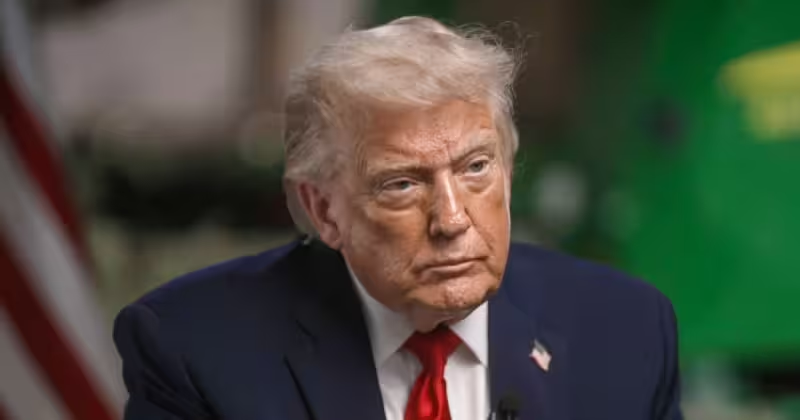
Donald Trump used a Sunday interview on Meet The Press to cast his strikes on Iran as decisive, telling Kristen Welker that the B-2 bombers “totally obliterated” a site and left Tehran unable to move toward a nuclear weapon. He also said Iran’s navy, air force and anti-aircraft systems were “gone,” framing the mission as one that had erased the country’s military reach.
The interview aired after Trump sat down with Welker on Friday and quickly became a fresh test of how far his claims lined up with the record. He said, “We had a choice. We could let them have a nuclear weapon, or we could go along and have some beautiful days,” and added, “If I didn’t go in there with the B-2 bombers, they would right now have a nuclear weapon, and it could be that half of the world would be eradicated already.”

That account collides with U.S. and international assessments that have not moved as dramatically as Trump suggested. Tulsi Gabbard testified in March 2025 that U.S. spy agencies had assessed Iran had not decided whether to build nuclear weapons, and NBC News reported in June 2025 that that judgment had not changed. In July 2025, NBC News reported that one nuclear enrichment site was mostly destroyed, but two others were not as badly damaged.
The remaining picture is more complicated than Trump’s language suggested. The International Atomic Energy Agency said Iran likely still retains nearly 1,000 pounds of uranium enriched to 60%, and experts and former officials said it could take months or possibly more than a year for Iran to build a warhead that could fit on the tip of a missile even if it had enough uranium enriched to weapons grade.
Trump’s own description of the attack went further than the available damage assessments. He said, “Their navy is gone. Their air force is gone. Their anti-aircraft is gone,” and then added, “In three months, I’ve demolished the navy, the air force, anti-aircraft. They have no radar. They have nothing.” NBC News reported that half of the country’s unconventional navy remains intact after weeks of bombing.
The dispute matters because Trump has spent years arguing that the 2015 nuclear deal, negotiated under Barack Obama, left Iran too close to a bomb while the United States held back. Before Trump withdrew from the agreement in his first term, Iran had no stockpiles of uranium enriched beyond a low level and was subject to regular United Nations inspections.
Welker’s interview gave Trump a live platform to defend that record, but it also exposed the gap between his version of events and the public assessments available so far. The unanswered issue now is not whether the strikes were damaging — they were — but how much they actually delayed Iran’s nuclear program and military capacity beyond the damage Trump described.