



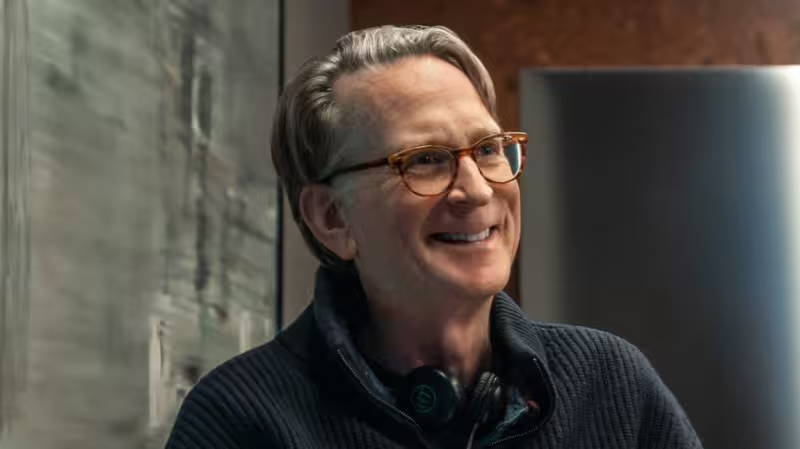
David Koepp wrote Disclosure Day as his seventh script with Steven Spielberg after Spielberg emailed him a 38-page attachment and then asked, "Do you want to do it?" Koepp went on to produce 42 drafts before the project reached publication.
Those numbers matter because they are the visible evidence of an uncommon collaboration: a long-standing writer and one of the most exacting filmmakers in modern cinema shaping a single idea until it will not be improved by more work. Koepp called Disclosure Day a '70s-style paranoid thriller and said, "It’s a further exploration" of themes Spielberg first turned to three decades ago. Spielberg has described Koepp this way: "He’s a good collaborator because he listens as much to me as I do to him."

When Spielberg first put the package on Koepp's desk—an email with a 38-page attachment—the director followed the message with a direct question: "Do you want to do it?" Koepp accepted and then rewrote. Forty-two drafts is not a boast; it is a process. Koepp said of Spielberg, "He wants this one to be the best one." Spielberg himself praised Koepp's willingness to refine: he said Koepp is willing to rework a script "including and often through principal photography."

Context matters here. Disclosure Day sits inside a long relationship between the two men. Koepp and Spielberg first collaborated on The Lost World: Jurassic Park in 1997 and have since worked together on several major projects, including two Indiana Jones films and War of the Worlds. Koepp's career outside that partnership has ranged from Panic Room to Cold Storage and the project Black Bag, the latter of which drew on a conversation Koepp had with a CIA adviser 30 years earlier.
The script itself ties into recurring Spielberg interests. Koepp calls Disclosure Day a further exploration of the themes of Close Encounters of the Third Kind and frames it as paranoid in tone. He brings both the pop and the odd to the desk: in his Manhattan office rest titles like The Flying Saucers Are Real and The Hero With a Thousand Faces alongside books on interrogation techniques. He has said plainly, "I think they’re out there," and added, "I think maybe we’re looking for the wrong things." He also referenced a scientific detail in passing—humans can see between 4,000 angstroms and 8,000 angstroms—which signals the kind of small, specific elements that have driven many of his drafts.
There is friction beneath the routine of revision. Koepp has said Spielberg was more exacting on Disclosure Day than he had ever seen him because Spielberg knew Koepp had worked in this area before. That combination—heightened expectation from a director and a writer who will not let a draft rest—creates a production dynamic that promises intensity but also the risk of diminishing returns: more hands, more cuts, more debate over tone and emphasis. Spielberg framed the pattern as part of their working method and its consequences when he noted Koepp's readiness to keep reworking material "including and often through principal photography."
The effect, by the facts themselves, is concrete. This is not a quick pitch turned into a shooting script; it is a text that has been dismantled and rebuilt dozens of times under a director determined to make it his best. If Spielberg asked, "Do you want to do it?" and Koepp answered by filing 42 drafts and filling his office with the odd and the canonical, the answer to the headline question is plain: Disclosure Day will be the product of relentless revision aimed at a specific tonal target—a 1970s paranoid thriller that doubles as another probe into Spielberg's long-running fascination with the unknown.



