



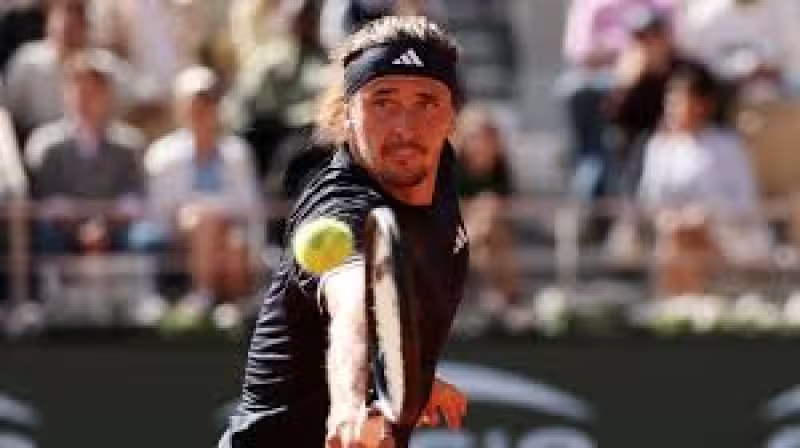
Jim Courier still hears the pulse of Paris. Standing near the courts at Roland Garros, he told listeners that facing Andre Agassi in the 1991 French Open final was unlike anything he had felt: “It was like an out-of-body experience, where I know how to play tennis, but I’ve never played tennis when it’s a life-changing moment.”
That moment landed when Courier was 20 — it was his first Grand Slam final while Agassi was playing his third — and it left a career-shaped groove. Courier roomed with Agassi at the Nick Bollettieri Tennis Academy in Florida in the 1980s, went on to win four Grand Slam titles and reach world No. 1, and later carried his on-court authority into the booth.

Those credentials are the weight behind his voice. He has a television career more than a quarter-century old and says his route to becoming a broadcaster began in earnest 35 years ago in Paris. At 55, Courier still watches the way players handle first finals the way a coach might: “That’s what I love about seeing these players, when they have their first experience in a final. How they react to that energy, that moment,” he said, and described the question every young player faces: “Can you grab it? Can you take it? Can you fight off that external force? And not just your opponent, but that other force that’s arguably as big, if not bigger, and you don’t know until you know, right? There’s no way to know how you’re going to feel until you get out there.”
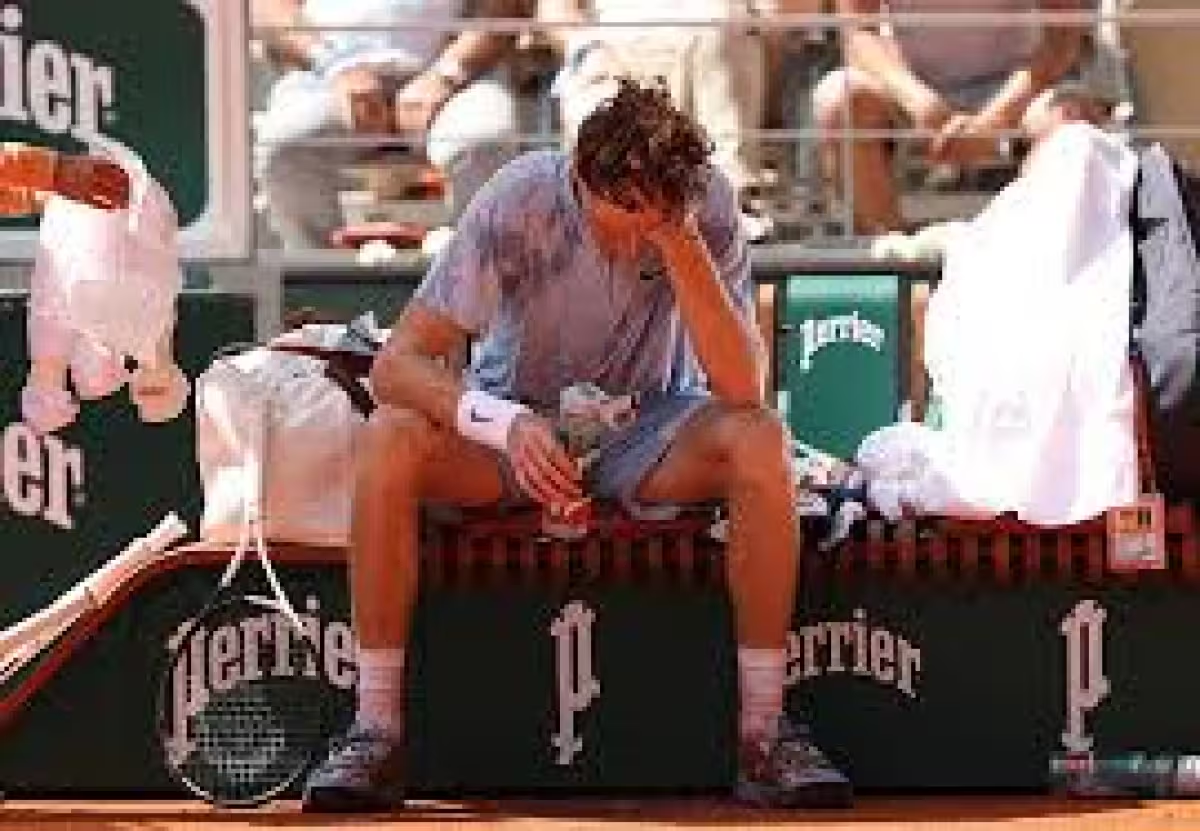
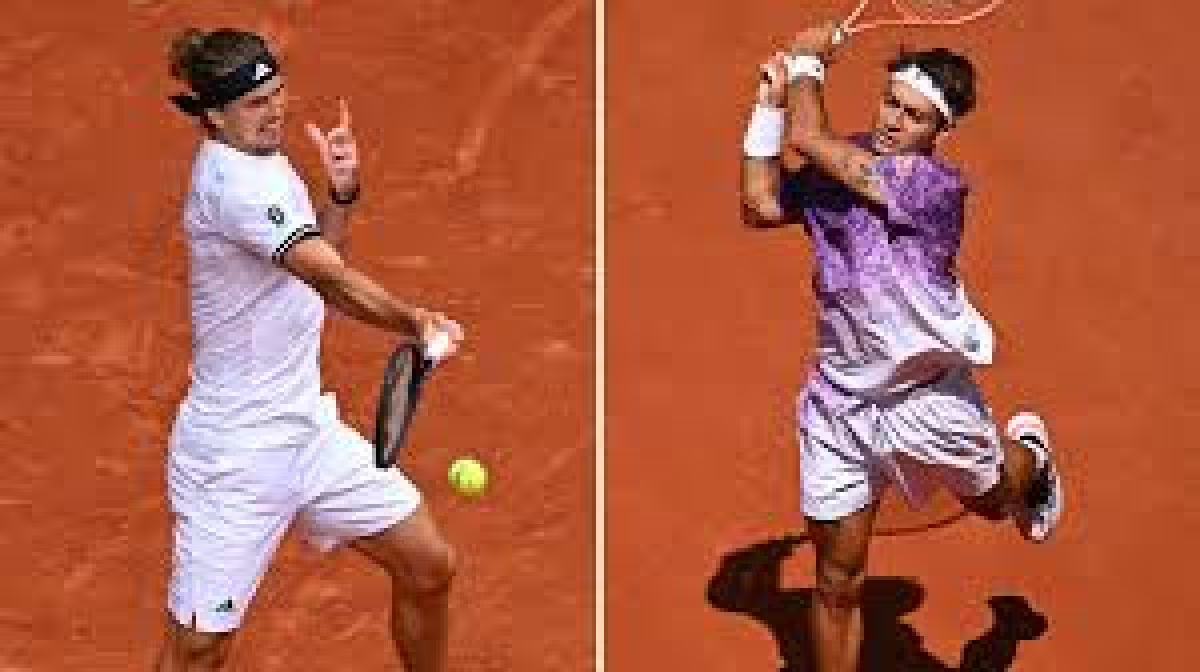
Courier pointed to the small, immediate proofs that make the sport brutally honest: “None of this matters, any of it, if you pull far enough back from frame, but we don’t live up here,” he said. “We live down here feeling everything every day, feeling the adrenaline rush when you win. You win or you lose, and it’s every day you get a report card. You know if it’s working or not very quickly.” Hours before the interview he had been commentating on two players “going through their own mental wringer,” he added — a reminder that his broadcast role keeps him close to the live drama he once felt as a competitor.
That proximity helps explain the applause. Last week, Chris Eubanks posted on social media calling Courier “Best analyst in sports.” Yet there is a friction in how that praise reads: long before broadcasters became personalities, figures such as John McEnroe established themselves as the marquee American voices, and it remains possible for a top analyst not to be assigned the very biggest matches. Courier’s authority is clear; his assignments are not always the story’s center court.
The consequence is practical as well as philosophical. Fans who rely on lived experience to interpret big moments hear Courier’s perspective whether or not he’s attached to the most-watched broadcast. He pointed to the same mixture of adrenaline and daily verdicts that made him a champion; those lines of experience are what he now turns into explanation for viewers.
The immediate question left by his latest remarks is concrete: which matches is he calling this fortnight, and which finals will carry his voice? He declined to announce any new career move, and beyond his ongoing commentary work there is no confirmation of a change in role. For now, Courier remains both a witness to and an interpreter of the moment — a player who once felt petrified in a Parisian final, and a broadcaster who watches players learn what he already knows.



