
Andre Agassi told viewers Thursday that "there’s no excuse for [Sinner] to run into a wall" after Jannik Sinner’s dramatic second-round collapse at Roland Garros, putting the former champion squarely at odds with the tidy narrative of routine fitness at the sport’s top level.
Agassi spoke on U.S. coverage of Roland Garros on June 4, 2026, as Juan Manuel Cerundolo recovered from a 6-3, 6-2, 5-1 deficit to win 18 of the final 20 games and knock out the world No. 1 in under two hours. Sinner, who later admitted, "I hit the wall," had been one game from a rout that would have opened the draw.

The numbers are blunt: Sinner surrendered 18 of the last 20 games after building that commanding lead, and the match finished in less than two hours. The panel, Agassi said, had expected an easier passage — "We all thought we’d see him not even lose a set." That split between expectation and reality is the weight of the moment.
Agassi did not cast doubt on Sinner's effort. "It’s not that that dude doesn’t work hard. It’s not that he’s not fit," he said. He located the problem precisely enough to be provocative: "there’s a difference between being fit and being prepared," and, "I have to point at a flaw in that kind of preparation because there’s something you can do about that."
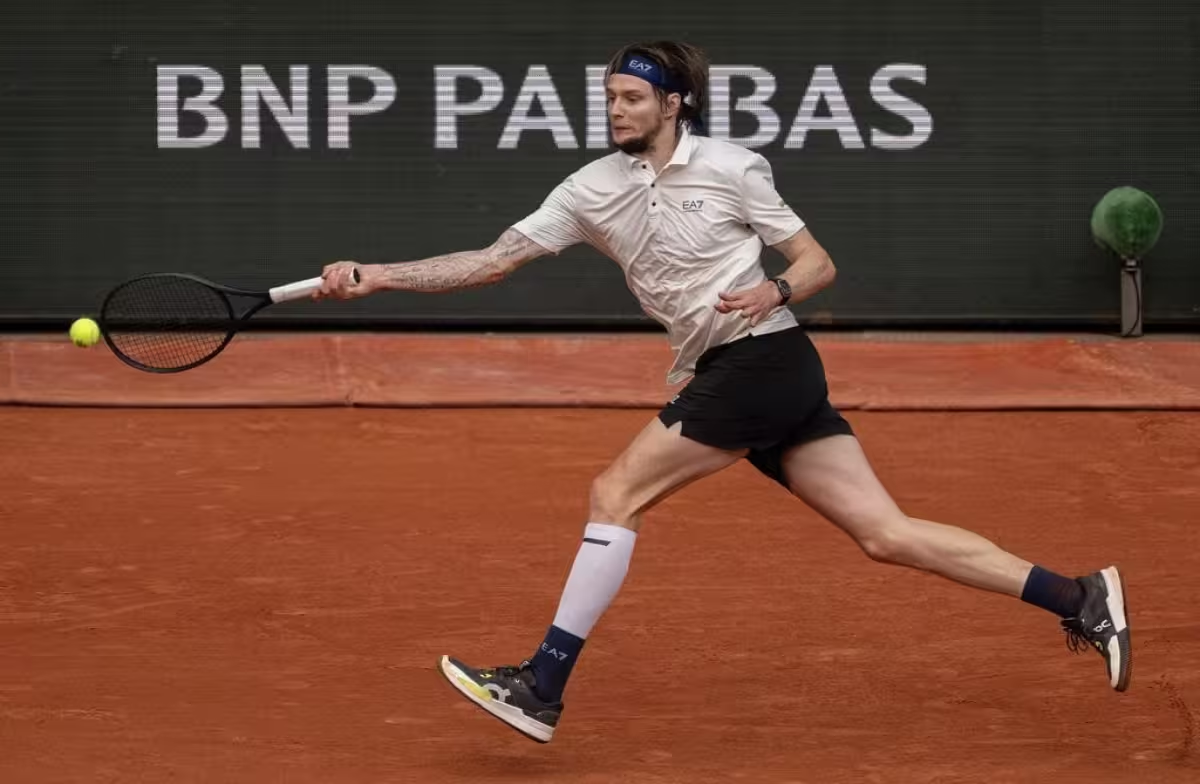
That friction — praising Sinner's fitness while insisting preparation failed — is the story’s seam. Agassi, who won Roland Garros in 1999 and is on the tournament’s U.S. coverage as a TNT analyst, used his own career as a measuring stick. "I mean, I don’t know about your guys when you played or Caroline [Wozniacki] you, but I had a body clock of about four hours when I played," he said. "And if you gave me hot conditions, it dropped to about 3:45 or 3:50. But to go from him playing five-and-a-half hours last year in the finals and then having the heat tap him out in an hour and 45, there’s a difference between being fit and being prepared." He even sketched the margins he believed mattered under ideal conditions — perhaps stretching a body clock to "4:10 to 4:15."
The comment landed for two reasons. First, Sinner is the sitting world No. 1 and had been expected to accelerate deep into the tournament. Second, his coach is Darren Cahill, the veteran who previously coached Agassi, Lleyton Hewitt and Simona Halep to No. 1, a connection Agassi referenced implicitly by noting coaching histories and the standards that attend them.
Agassi’s critique is not a blanket indictment of Sinner’s team or work ethic; it is a targeted charge that something in the way Sinner prepared for the combination of heat, intensity and the specific pacing of Grand Slam matches was off. He framed it as fixable: there is "something you can do about that." But Agassi stopped short of prescribing what Sinner should change in training, recovery or match strategy.
That omission matters. The immediate drama of Cerundolo’s run and Sinner’s collapse is resolved on the scoreboard, but the live question is technical and tactical: if Sinner is fit yet still vulnerable to a sudden physical breakdown at a major, what concrete adjustments follow? No specific follow-up action by Sinner or Agassi has been confirmed. The criticism from a former champion and current analyst now forces the choice onto Sinner and his camp — name the change, or accept that short-term lapses can unspool even the game’s top player.