The Better 82-0 game is a five-round roster challenge that asks players to build a starting five — one pick per round — from team-and-decade pairings and see whether that lineup can register a simulated perfect 82-0 season.
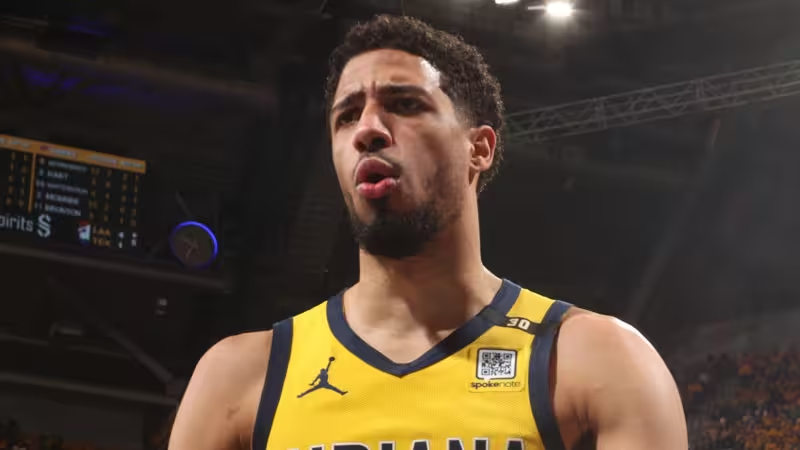
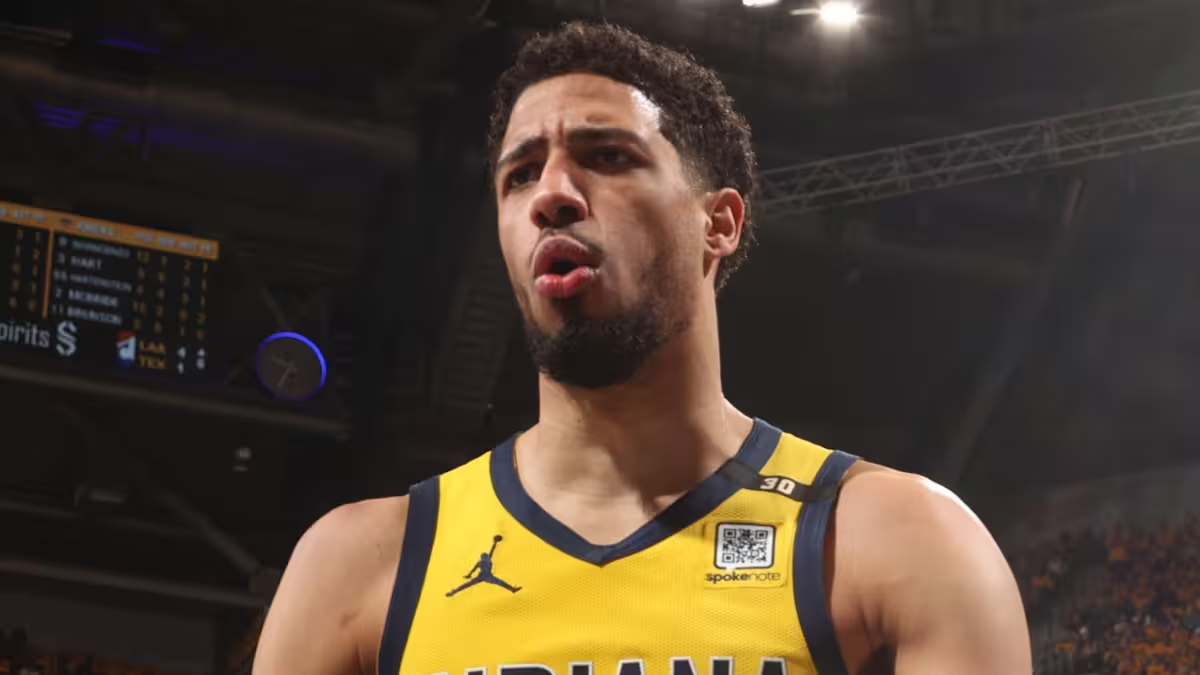
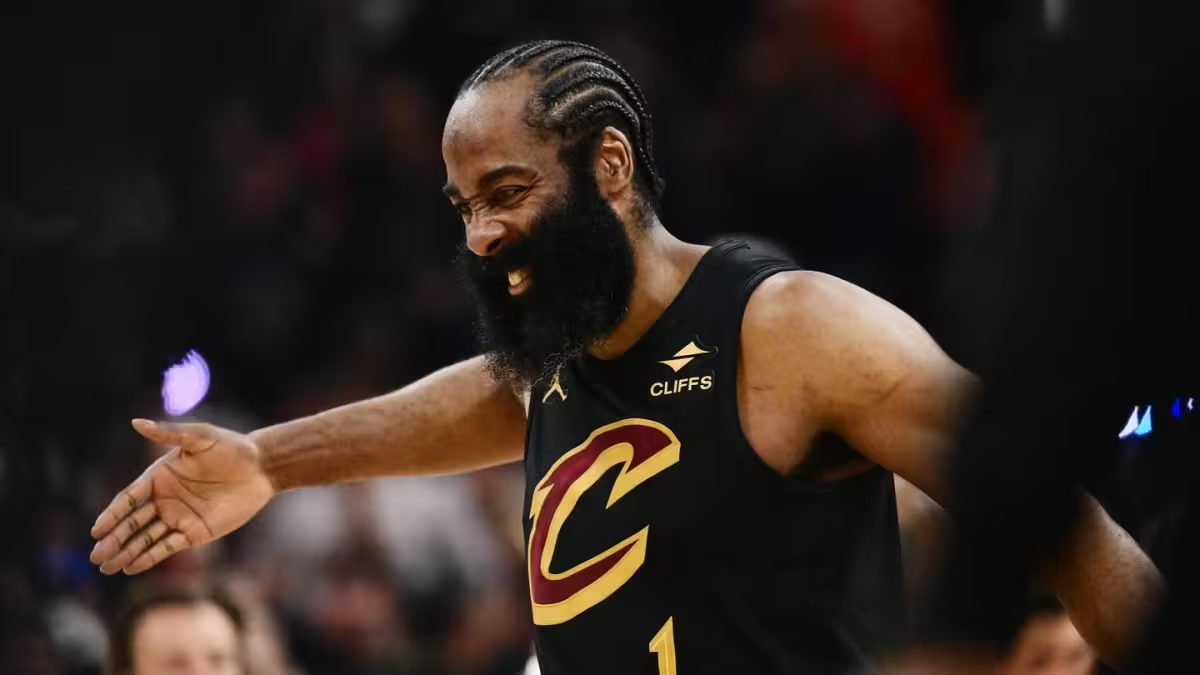
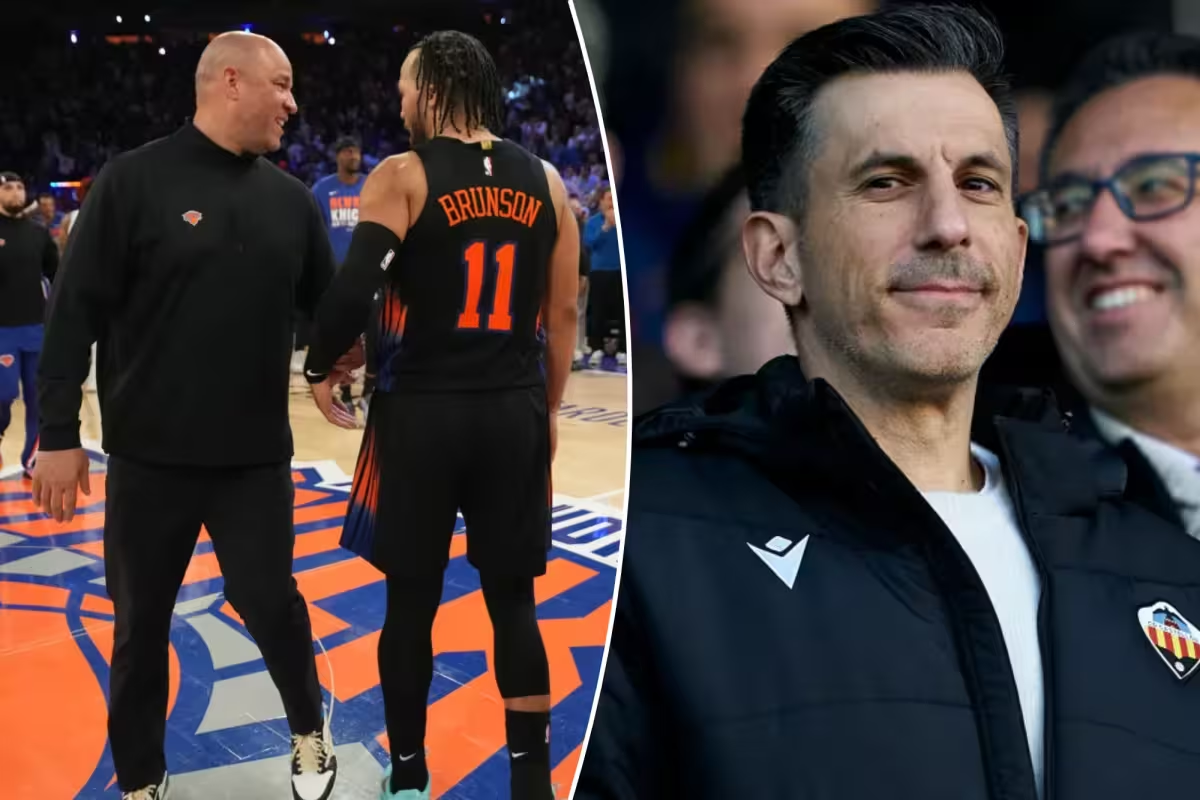
The simplicity of the format is the reason it has spread this week: fans, former players and broadcasters are sharing lineups and reactions as the experiment circulates. Tyrese Haliburton, Brandon Jennings, Dan Le Batard and Nick Wright have all publicly reacted to versions of the challenge, boosting visibility and prompting more people to post their best combinations online.

How it works in plain terms: each of the five rounds shows an NBA team paired with a decade, and the chooser must select one player from that specific pairing. The constraint forces tradeoffs — a round might hand you a contemporary shooting guard or a legend from an older era — and those forced choices are the point of the exercise. The game is designed as a strategy test, not a fantasy draft: you are judged by whether the five names the format yields can, in the simulation, go 82-0.
That era constraint matters for reasons beyond aesthetics. Official record-keeping in the league changed over time; blocks, for example, were not a recognized NBA statistic until the 1973-74 season, and Bill Russell retired five years before blocks became official. The game's designers have nonetheless included pre-stat-era stars — the format explicitly recognizes Russell as a historic player who can be an impactful addition — which forces the system to account for players whose box-score contributions were not always recorded the same way as modern players.
The result is a mix of social play and technical curiosity. Fans post standout combinations; others nitpick positional fit and era adjustments. The format’s constraints have produced an obvious friction: some lineups that read like all-time dream teams do not automatically produce flawless seasons in the simulation. Several people were surprised when a roster of LeBron James, Michael Jordan, Kobe Bryant, Larry Bird and Moses Malone failed to produce an 82-0 result — a clear reminder that the game applies its own, partially opaque logic to combinations.
That opacity has encouraged systematic attempts to reverse engineer the rules. An X account named anirudh used AI to work backward from outcomes and propose what the game values, and those experiments have become part of the conversation. The community now treats the challenge like a distributed research project: players test hypotheses about era adjustments, positional balance and hidden weightings, then post results for scrutiny.
For most participants the practical consequence is straightforward: the game keeps producing new conversations and new lineups. High-profile reactions broaden the audience, and public attempts at reverse engineering give the challenge an analytical edge beyond simple bragging rights. Fans are not just sharing favorite lineups; they are trying to identify the invisible rules that make certain five-man stacks succeed while others fail.
The unresolved question — what precise selection criteria cause some seemingly unbeatable rosters to miss 82-0 — is also the clearest next beat. Community analysis and AI probes are narrowing possibilities, but the only way to settle the matter is a transparent rule set from the game's creator. Until that happens, a truly guaranteed perfect five does not exist; the competition will continue to run on experimentation, social proof and the occasional viral upset.