Kurt Russell says he and Goldie Hawn left California in 1986 so their blended family could live on a ranch in Colorado — a choice he describes as practical, not theatrical. "I wanted to eventually get into the ranching life," he said, and he adds plainly that moving was about a better day-to-day life for the children.
Russell and Hawn built a ranch in Old Snowmass a couple of years after they got together in 1983, and the family raised its children there. Their household included Wyatt Russell, Oliver Hudson and Kate Hudson, who Russell says "grew up with a good dose of what nature can offer." He summed his interest in the place with, "What I want to look at, what I want to be a part of [are] all the things that Colorado has to offer."

The detail landed again this spring when Russell explained the decision in a recent interview. The couple have been together for 42 years and the ranch has been part of their life for more than four decades. Russell noted that he "doesn't dislike L.A.," but that Los Angeles "simply was not the way he wanted to live every day," and that he "wasn't escaping. I was just living where I live."

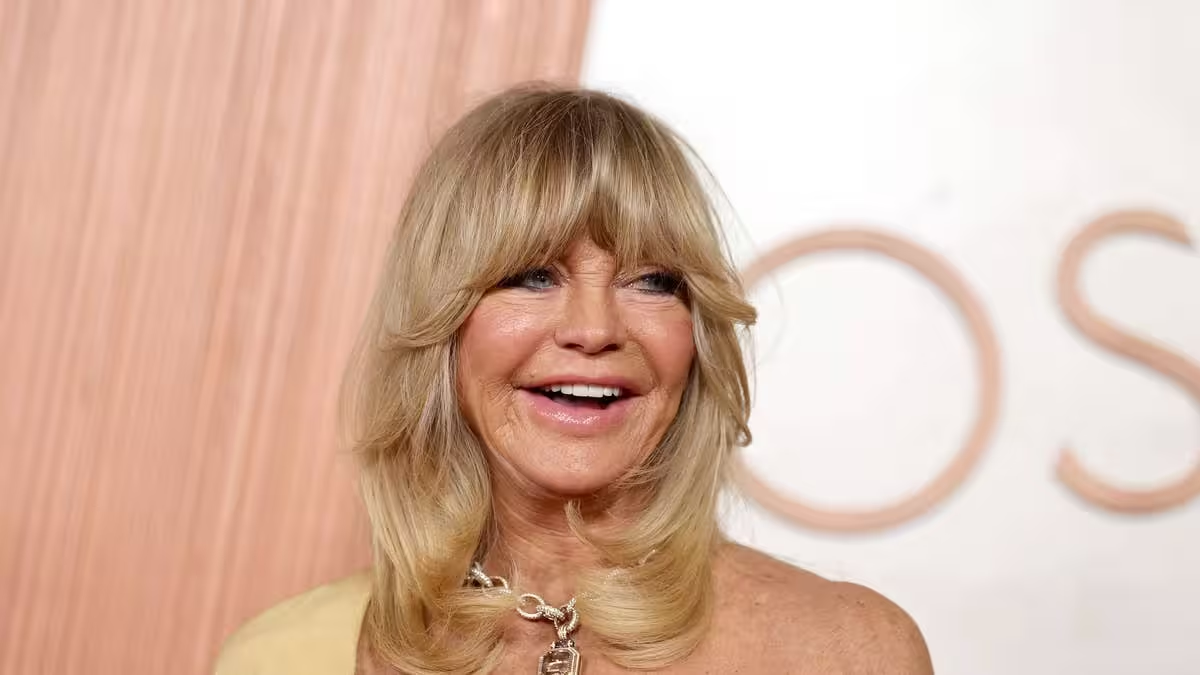
That last line addresses the fear that greeted the move in the 1980s. "When I did it, nobody else was doing that. I had many people tell me, 'Well, that's goodbye. That's it.' I said, 'Well, we'll see,'" Russell recalled. He said he was fortunate the relocation "really didn't make any difference to my career," a point underscored by decades of work afterward and a 2017 star on the Walk of Fame. He and Hawn continued to appear together on screen in projects including Overboard and The Christmas Chronicles.
The stronger, immediate consequence of the decision was domestic. Russell framed the choice around ordinary routines rather than celebrity theater: the children could run outside, learn from the land and live with seasons rather than streetlights. He put it plainly: "I wasn't escaping." That insistence reframes the move as a settled life choice rather than a publicity stunt or an exile from show business.
Still, some questions remain about the ordinary mechanics of that life. Russell’s account explains the why — family and ranching — and the what — a long-term home in Old Snowmass — but not the how: the daily rhythms, the school runs, the neighbors, the chores and compromises that turned an upscale celebrity acreage into a working family ranch. Those specifics matter because they show how two public people managed privacy while keeping active careers.
For now, the sharper answer is simple: leaving Los Angeles did not end Russell’s career. He continued working for decades after the move, and his explanation is consistent — a deliberate relocation for family life and ranching rather than an escape. The unresolved question worth watching is how that everyday Colorado life shaped the children's paths in ways Russell’s summary only begins to describe.