



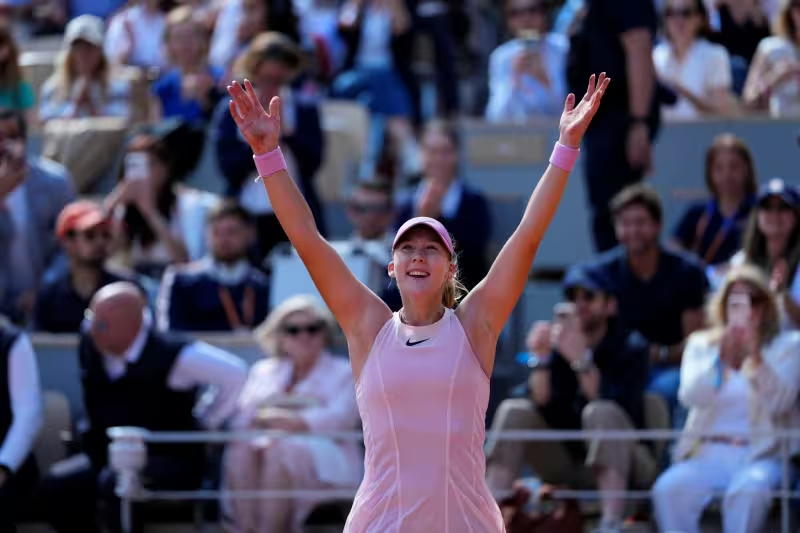
Mirra Andreeva beat Maja Chwalinska 6-3, 6-2 on Saturday to win the Roland‑Garros women’s singles title, lifting the Coupe Suzanne‑Lenglen on Court Philippe‑Chatrier and securing her first Grand Slam championship.
The victory came in straight sets and arrived with clear markers: Andreeva entered the final as world No. 8, was nineteen years old, and this was her fourth appearance at Roland‑Garros. The scoreline—6-3, 6-2—left no room for doubt about the outcome on the day, and the trophy on the central court underlined that this was a completed, dateable achievement.

Those numbers matter because they frame Andreeva’s place in the tournament’s recent history: she is the youngest women’s singles champion in Paris since Monica Seles, who was 18 when she won a third consecutive Roland‑Garros title in 1992. The comparison is simple and precise—Seles remains the benchmark for youth at Roland‑Garros, and Andreeva’s win is the closest anyone has come to that mark in more than three decades.
Andreeva’s path to the title has a compact, public timeline. She first qualified for a major main draw at Roland‑Garros in 2023, burst into the semifinals two years ago, and now converts that early promise into a full Grand Slam crown. Her progress has been accompanied off court by Conchita Martinez, the former world No. 2 who was the Roland‑Garros 2000 runner‑up; Martinez is identified as Andreeva’s coach and figures in the coaching narrative that now surrounds the new champion.
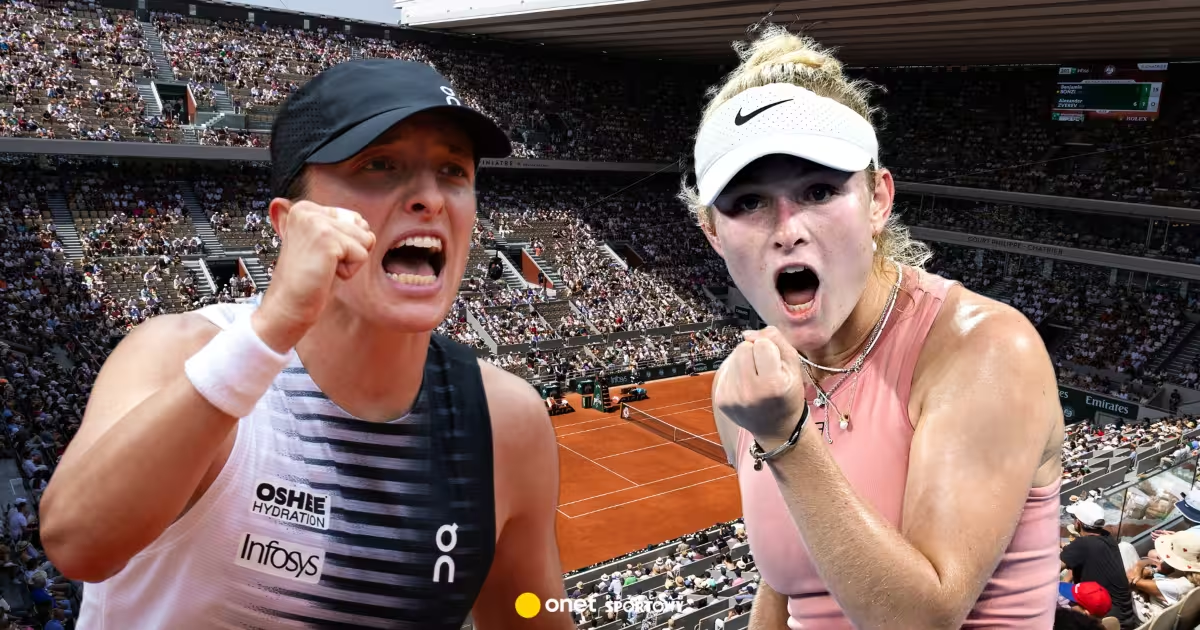
The friction in the result is straightforward: Andreeva is a teenager and a Grand Slam champion, yet she does not supplant the all‑time youngest winner in Paris. That tension—between being the youngest in a generation and still trailing Monica Seles’s 1992 age milestone—changes how the achievement is read. It is both a breakthrough and a reminder that historic benchmarks remain intact.
Maja Chwalinska, the beaten finalist, was the direct opponent affected by the outcome; she fell in straight sets on Court Philippe‑Chatrier and finishes the tournament as runner‑up. The final’s brevity and the score underline the degree to which Andreeva dominated on the day, but they do not erase the larger narrative threads: the career arc that began with a 2023 main‑draw debut and a semifinal run two years ago, and the presence of an experienced Grand Slam finalist and coach at her side.
The immediate questions the win leaves open are concrete and consequential. The source material does not confirm how the title will affect Andreeva’s ranking or schedule, nor does it map her next tournament commitments or the strategic choices her team will make for the rest of the season. Those are the next chapters—how a nineteen‑year‑old world No. 8 and newly minted Grand Slam champion navigates ranking points, expectations, and the calendar.
In plain terms: Andreeva has closed one chapter and opened another. She arrived at Roland‑Garros with a record that included a 2023 main‑draw debut and a breakout semifinal run two years ago, and she leaves as the youngest Paris champion since Monica Seles in 1992—while still two years older than Seles was when she set that standard. The question now is not whether Andreeva can win a major; she has done that. It is which targets she and her team pursue next, and how quickly the tour adjusts to a new Grand Slam winner who is already a top‑10 player.



