



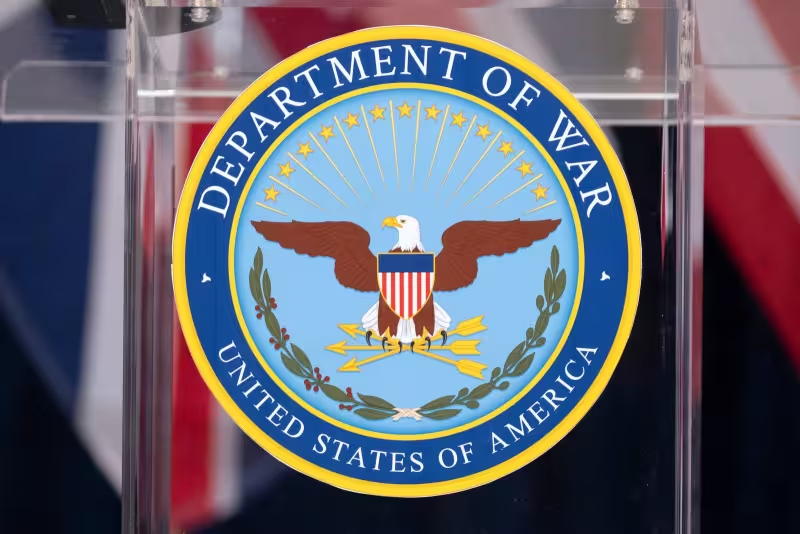
The Defense Department has cut its recognized religious faith and belief codes from 211 to 31 in a May 20, 2026 memorandum issued at Defense Secretary Pete Hegseth’s direction. The change removes about 180 listed faiths and worldview categories and gives the services 60 days to revise the codes they use to record service members’ religious preferences.
The memorandum, signed by Anthony Tata, the under secretary of defense for personnel and readiness, says the revision is meant to streamline the department’s collection of religious preferences for service members and improve targeted support from the Chaplaincy. The revised list keeps Agnostics, Buddhists, Hindus, Islam, Judaism, Sikh and several Christian-based groups, but drops minority faith and worldview categories including Atheists, Asatru, Deists, Druids, Eckankar, Heathens, Humanists, Magick, New Age churches, Pagan, Rosicrucianism, Shaman, Spiritualists, Troth, Unitarian Universalists and various Wiccans.

The list had not been officially revised since a March 27, 2017 memo issued during President Donald Trump’s first term. That earlier action expanded the codes after the Armed Forces Chaplains Board endorsed a broader list to standardize and better identify religious preferences across the military services. The new revision narrows that framework sharply, and it does so just as the Pentagon is once again asking chaplains to work from a much smaller set of officially recognized categories.


Military.com reported that it obtained the revised list and that service members will not be limited to the religious affiliation codes when selecting information for their dog tags. That leaves a gap between the records the military will use for chaplain planning and the wider range of beliefs troops may want reflected in other parts of their service file. Hegseth has also described some of the broader administrative changes around the department as “impractical,” underscoring how much the new policy is part of a wider internal reset.
For service members whose beliefs were covered by the removed codes, the immediate effect is straightforward: the Pentagon’s official system now recognizes far fewer faith and worldview groups than it did a day earlier. What remains unclear is why those excluded traditions were left out of the final list, even as the memo says the goal is better religious support. The next step is the 60-day revision period, which will determine how the services translate the new list into day-to-day records, chaplaincy planning and any future guidance on religious identification.
Related reading: Pete Hegseth West Point Speech touts Army recruiting milestone at academy



