




Katie Holmes called Joshua Jackson before she ever sent him the script for Happy Hours — not out of marketing calculus, she said, but to ask whether the part would be right for him. The phone-call choice set the tone for a reunion that began nearly three decades after they first met on Dawson’s Creek and carries into the film’s premiere at the Tribeca Festival on Saturday, June 6.
Happy Hours, a romantic dramedy Holmes both wrote and directed, opens at Tribeca as the fourth film she has shepherded behind the camera. She plays Liz, a freshly divorced photographer; Jackson plays Andrew, a travel writer who broke her heart as a teen. The pairing brought a wave of attention while the production shot in New York City last year: TikTok flooded with videos of fans following the shoot, and crew had to lock down especially populated locations such as Washington Square Park to manage crowds.

Holmes said the public attention caught the team off guard. "To be honest, it was unexpected," she said, adding that the production tried to keep filming private. "We didn’t want anyone to record us. Sometimes it worked; obviously sometimes it didn’t," she said. Those precautions underline how strongly viewers still connect Holmes and Jackson with the characters they once played together.
The emotional weight of the reunion is obvious: Holmes and Jackson had not worked together in 25 years, and both have moved on professionally and personally. "We hadn’t worked together in 25 years, and we’ve changed a lot," Holmes said. Still, she also described an ease on set: "It’s like a shorthand that we quickly realize still exists," she said, and later added, "We’ve always done well working off one another. He directs me and I direct him without us even mentioning it." The shorthand shows in scenes that ask two midlife actors to navigate love, regret and the possibility of starting again.
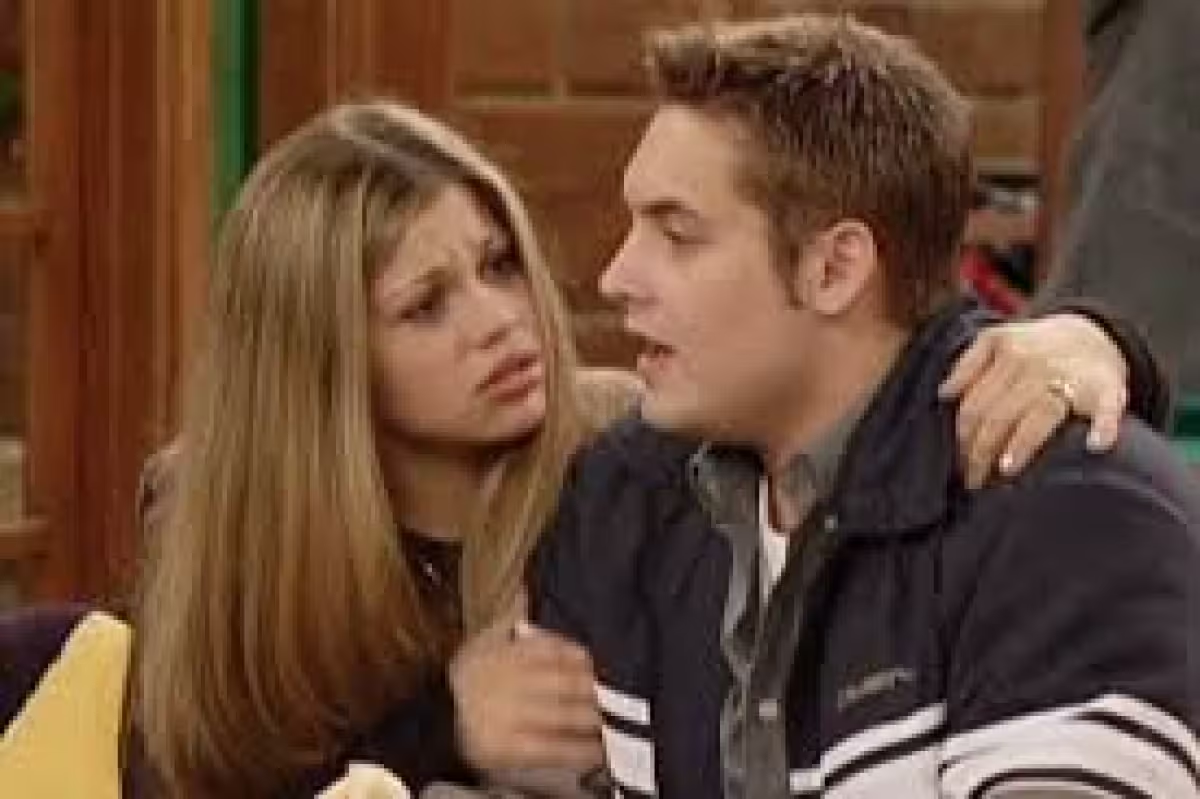
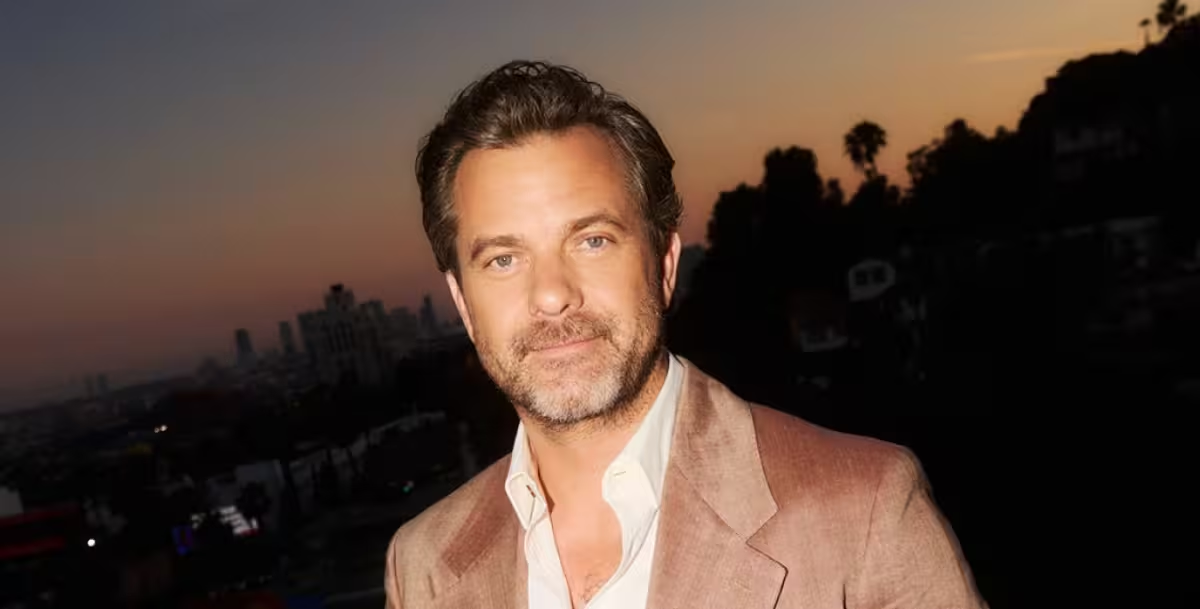
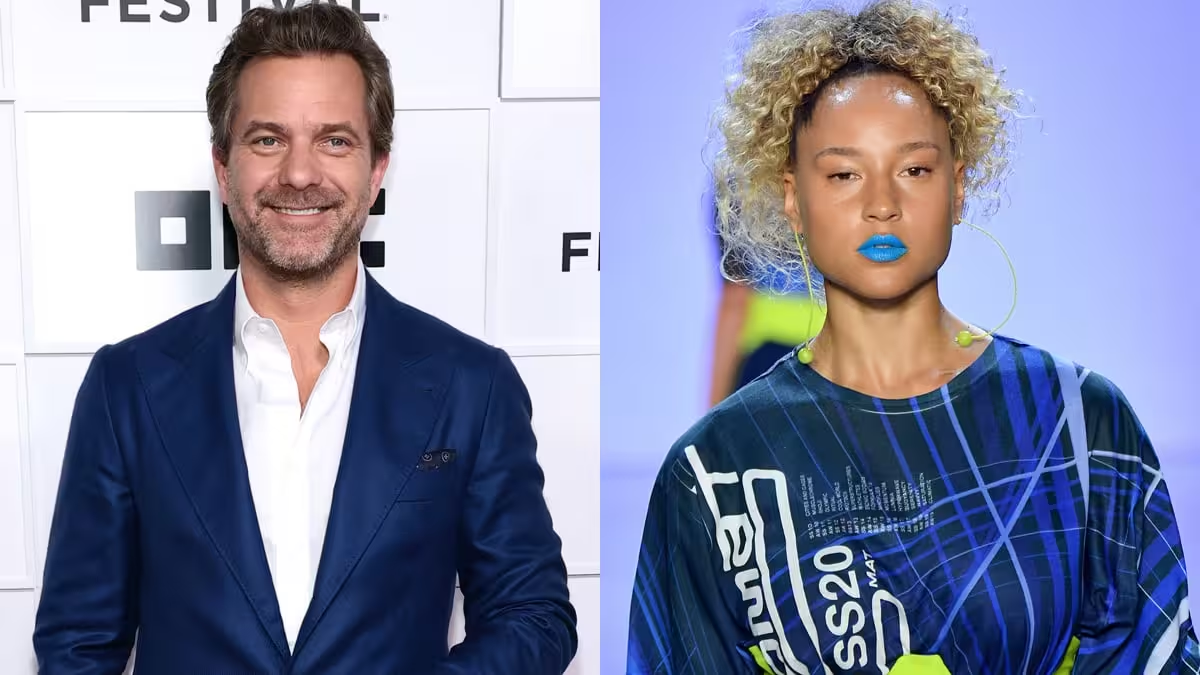
Holmes has been explicit about what Happy Hours is not. Fans have repeatedly linked the project to Joey and Pacey — the Dawson’s Creek characters who helped launch both actors in 1998 — but Holmes said she and Jackson were careful to avoid a straight reboot. "We also wanted to give ourselves the space to show different sides of ourselves and to not portray these people we’re known for," she said. The film draws inspiration from older-relationship romances: Holmes cited Richard Linklater’s Before series and Something’s Gotta Give as reference points, signaling a desire to tell love stories that occur in later chapters of life.
Those creative choices influenced Holmes’s approach to casting Jackson. She rang him first to check whether the role felt like a fit, then sent the script. Their quick decision to work together grew out of mutual trust rather than nostalgia; the pair found their old rapport and tailored the film to reflect who they are now, not who they were in their teens.
The friction between fan expectations and the filmmakers’ intentions surfaced repeatedly during production. Videos and photos traveling online fed comparisons to the show that made them famous, even while Holmes and Jackson insisted they were telling a different story. Managing that reaction required logistical measures on set and a verbal boundary around how the film should be perceived.
Holmes describes Happy Hours as the first installment in a trilogy she imagines, a creative roadmap that would follow similar themes across three films. What will determine whether those plans move beyond intention is the reception at Tribeca and whatever distribution path the festival opens. For now, Holmes has given herself room to make a film about middle-age love on its own terms; the premiere on Saturday will be the clearest signal of whether audiences — and the industry — are ready to follow her to the next two chapters.



