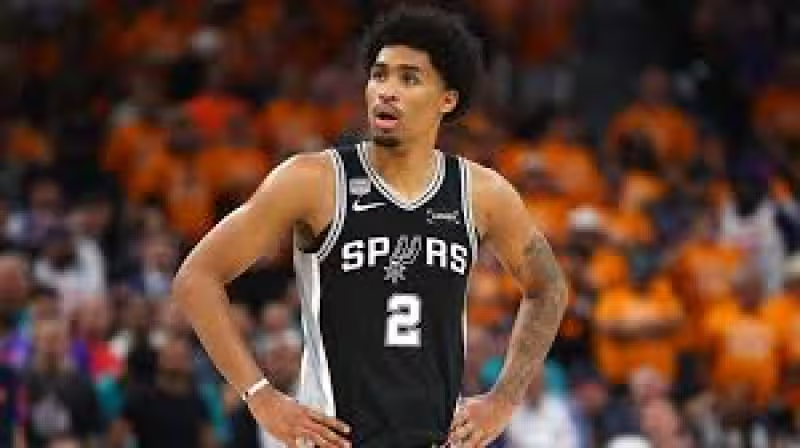
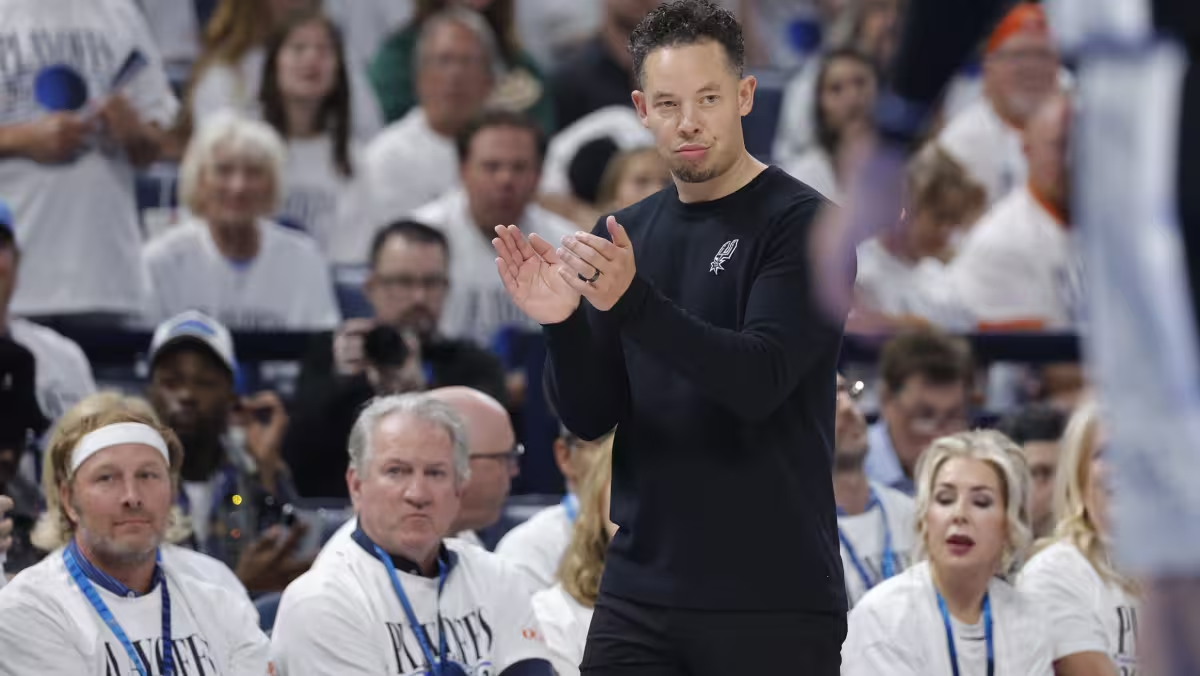
The San Antonio Spurs lost Game 1 of the NBA Finals 105-95 to the New York Knicks on Wednesday, and coach Mitch Johnson said Thursday that benching Dylan Harper with 4:04 remaining was a choice he made.
Johnson did not cast Harper’s exit as a punishment. "Dylan had a heck of a game, and he was playing very well... Dylan did not finish the game by nothing that he did or did not do," Johnson said, adding plainly: "It was a decision I made. I understand that there would be logic in having Dylan in that group, but I thought that group that was out there did some things during the stretch, and that's who I rolled with."

The numbers underline why the move drew attention. Harper finished with 16 points on 6-for-10 shooting, eight rebounds and an assist in 27 minutes off the bench, one of San Antonio’s most efficient performances through three quarters. After he left the floor the Knicks closed on an 11-0 run that wiped out the Spurs’ late chances.
Those closing minutes also exposed a wider problem Johnson emphasized: San Antonio’s playmaking dried up. The Spurs finished with 16 assists in Game 1, a sharp drop from their 25.1 assists per playoff game average, and Johnson refused to let that stat be read as a program failure. "Sixteen assists is not a reflection of this program, ever since I've been here, decades before I was," he said, then pushed the focus to execution: "We can be much sharper on just a lot of game-plan execution stuff."
Context matters here. San Antonio has experimented with late-game groups that include Harper alongside Stephon Castle and De'Aaron Fox during the postseason; those lineups have served as one answer to enemy pressure and ball initiation. Johnson’s choice to stick with a different group in the fourth turned the spotlight on how the Spurs intend to create offense down the stretch in this series.


That friction — Harper’s efficiency versus his absence at the end — is the clearest unresolved detail. Harper acknowledged the awkwardness without rancor. "I feel like everyone wants to be out there in those times and close the game out," he said, then moved to trust: "But, I mean, we won 62 games, we made it this far. So I’m going to keep on trusting the coaching staff, trusting Mitch, and just having that trust that they know what’s best for the team. And if they think that’s the best thing for the team and helps us win the most, then I’m all for it."
Johnson framed his decision as part instinct, part reward for the group already on the floor. He repeatedly returned the conversation to controllable execution — not the box score. "I think there's a lot of things we can control that are much more approach, game-plan execution driven, that we can improve upon before you even get to, 'What did this guy shoot from the field?,'" Johnson said.
Still, the immediate consequence is clear: the Spurs trailed after the 11-0 burst and left Game 1 with a deficit they could not erase. The coaching choice leaves a tactical question for Game 2 on Friday — will Johnson revert to Harper-containing crunch units that helped during the postseason, or double down on the lineup he trusted down the stretch in Game 1?
What happens Friday will decide more than one game's outcome. If the Spurs reopen their late-game looks to include Harper with Castle and Fox, it will be an acknowledgment that Harper’s halfway superstar efficiency should carry weight in close moments. If Johnson stays the course, he will be betting that execution and the specific mix of players he trusts will produce better results than shifting rotations for optics or individual hot hands.
For now, the Spurs head into Game 2 with an unanswered coaching question: whether Thursday’s explanation satisfies the team and fan base, or whether Johnson will alter his closing formula under Finals pressure.