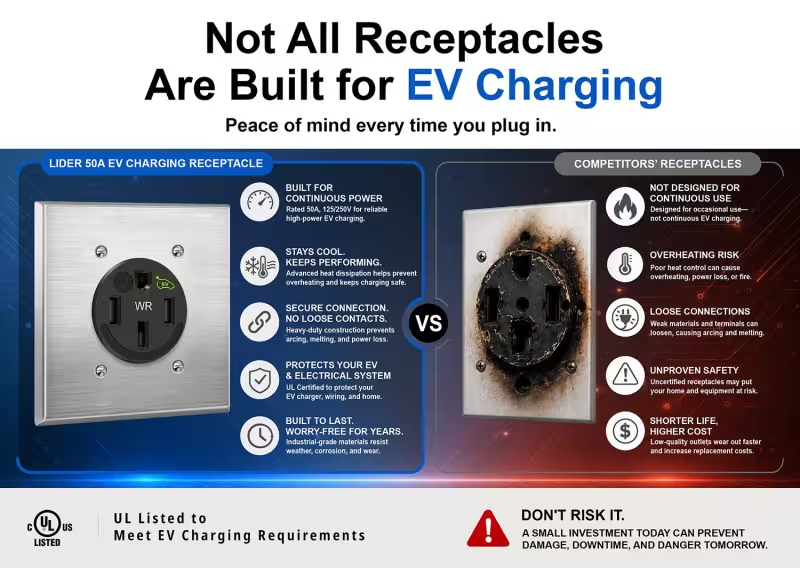
Lider Electric announced on June 4, 2026 that its LN-1450RH and LN-1450RHW NEMA 14-50 receptacles received UL certification with Electric Vehicle Marking for EV charging applications.
The UL Certificate of Compliance lists the standards section as UL 498 — Attachment Plugs and Receptacles — and carries Certificate Number E554035 with Report Reference E554035-20260519. The certificate specifically names models LN-1450RH-** and LN-1450RHW-** as Electric Vehicle Marking and suitable for USL only.

Lider describes the parts as heavy-duty NEMA 14-50 receptacles built to support reliable power at the connection point. The certificates and product notes highlight secure connection performance under sustained electrical load, high-temperature resistant contacts and clear product identification through the Electric Vehicle Marking.
Charged EVs reported on June 5, 2026 that the LN-1450RH and LN-1450RHW receptacles appeared for sale on the company’s website. The announcement positions the certified parts for both residential and commercial electrical upgrades where a dedicated 240-volt NEMA 14-50 outlet is used for EV charging.


The timing matters because EV charging imposes sustained electrical demand over long sessions, and the Electric Vehicle Marking is intended to distinguish products that have completed UL evaluation from those relying on self-declared claims. In practice the marking gives installers and buyers a clear label to spot receptacles tested to the UL 498 requirements as applied to EV use.
That distinction is practical: outlets marketed at big-box stores or sold as generic 14-50 receptacles have been flagged as not really suitable for EV charging in recent reporting. The difference is not only a label. Lider’s claim of high-temperature resistant contacts and secure connection under sustained load speaks to the specific failure modes installers worry about when a receptacle is used repeatedly for multi-hour charges.
Still, the certification leaves an important question open. The UL listing and the Electric Vehicle Marking identify compliance and intended use, but the certificate does not quantify field performance improvements, set pricing, or promise market share gains. The filings cite UL 498 as the applicable standard but do not translate that into measured longevity or comparative wear under real-world charging cycles.
For homeowners, fleet operators and electricians the immediate effect is practical: a visibly certified option now exists when selecting a NEMA 14-50 for EV charging. For wider adoption, the more consequential issue is whether contractors and purchasers will pay a premium for certified receptacles and whether that premium will displace cheaper, uncertified parts from EV service points.
Certification gives buyers a clearer product distinction at the point of sale, but it does not by itself answer whether the certified LN-1450RH and LN-1450RHW will deliver measurably longer service life or reduce on-site failures compared with noncertified alternatives — and that is the question the market will test next.