



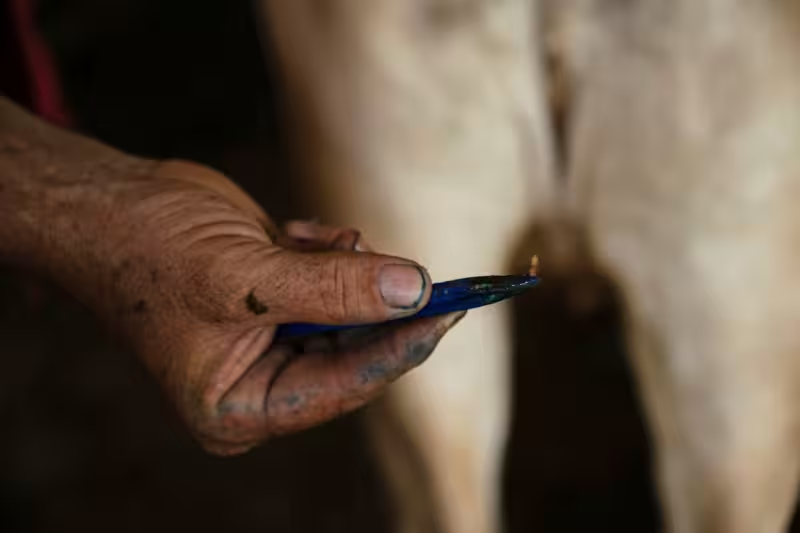
The United States Department of Agriculture’s Animal and Plant Health Inspection Service reported the first detected animal case of gusano barrenador in the United States after larvae were found in a 3-week-old calf inspected in Zavala County, Texas.
USDA said larvae of the fly Cochliomyia hominivorax were identified in the calf’s umbilical area and that, at the time of its announcement, the Zavala County detection was the only case registered in the United States.

The parasite can attack a wide range of warm-blooded animals — cattle, pigs, dogs, cats and wildlife — and can also infect humans. When the fly lays eggs in open wounds or natural body openings, the newly hatched larvae feed on living tissue, digging tunnels that expand lesions, cause intense pain, invite secondary bacterial infection and, if untreated, can be lethal.
USDA said it had already implemented sanitary protocols intended to prevent the pest’s spread into the southern United States, and it asked residents to check pets and livestock for symptoms. Warning signs listed by USDA include wounds that ooze or enlarge and visible worms in body openings such as the nose, ears, genitals or the umbilical area of newborn animals.
Owners who suspect an infestation are instructed to contact state animal health authorities or the USDA veterinarian in the area immediately; Texas authorities and USDA said any containment and response would follow the Screwworm Response Manual.

Context for the detection traces the parasite’s northward advance. The outbreak first accelerated in northern Latin America in July 2023 on the Panama–Costa Rica border and reached Chiapas in southern Mexico in November 2024. Earlier work noted detection of the fly on Devil’s Island in French Guiana by Charles Coquerel before those regional outbreaks.
The friction in the official record is clear: USDA and Texas authorities described the Zavala County finding as the only animal case recorded in the United States, even though USDA’s prior analysis had concluded the pest was likely to reach the southern United States. That mismatch — a single confirmed case alongside a prediction of likely arrival — leaves immediate practical questions unanswered.
Most urgent is how the calf became infected in Zavala County and whether the detection represents an isolated incident or the first identified case in a cluster. USDA and state teams are following established containment procedures, but the agency has not confirmed any additional detections beyond the calf.
The short-term operational picture is straightforward: inspections, targeted checks of newborn animals and public alerts are under way under the Screwworm Response Manual. The more consequential question is investigative — tracing the origin of the fly that laid the eggs and determining whether undetected infested animals are present in the area.
Until those tracebacks and additional testing are completed, the single recorded case stands as both a contained event and an opening act. If further cases are found, federal and state responses will move from detection and local containment to broader control measures specified in the manual; if none appear, the detection will remain a narrow but serious warning about the pest’s capacity to cause rapid harm to livestock, pets, wildlife and people.



