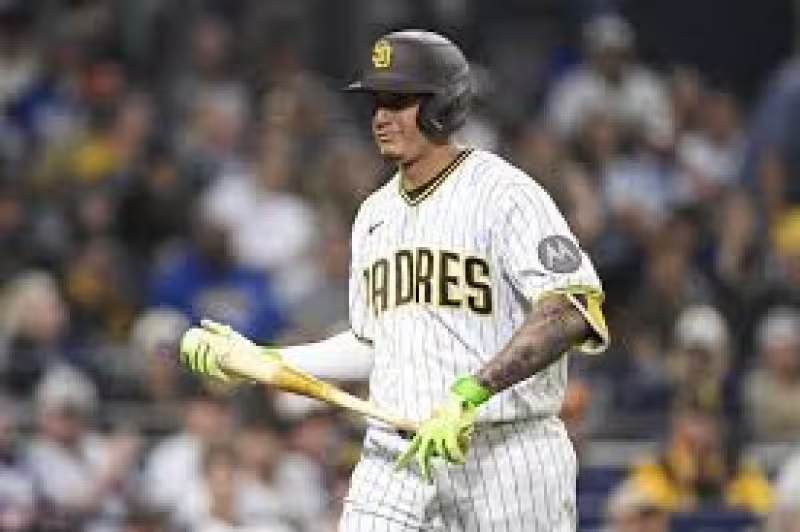
Manny Machado is still the San Diego Padres’ everyday third baseman, but the way he is getting on base has become the story: at age 33 he is hitting just.174 in 2026 and striking out at a career‑high rate, prompting growing questions about whether he remains an elite player.
The raw numbers underline the concern. Machado has 10 home runs this season, yet his batting average is roughly 100 points below last year’s mark and his contact issues have produced that career‑high in strikeouts. The slide follows a 2025 in which his OPS fell to.795 — the third straight season under.800 — even as he hit 27 homers and collected a Silver Slugger. Defensively he is not grading out the way his past honors might suggest, compounding the drop in offensive value.

Those declines feel sharper because Machado’s résumé, until now, read like a ledger of sustained excellence: seven All‑Star selections, three Silver Sluggers, two Gold Gloves, a Platinum Glove among his defensive awards and four top‑five finishes in MVP voting. That track record is why the present falloff matters: the club built part of its core around the expectation that Machado could deliver premium, two‑way impact for years to come.
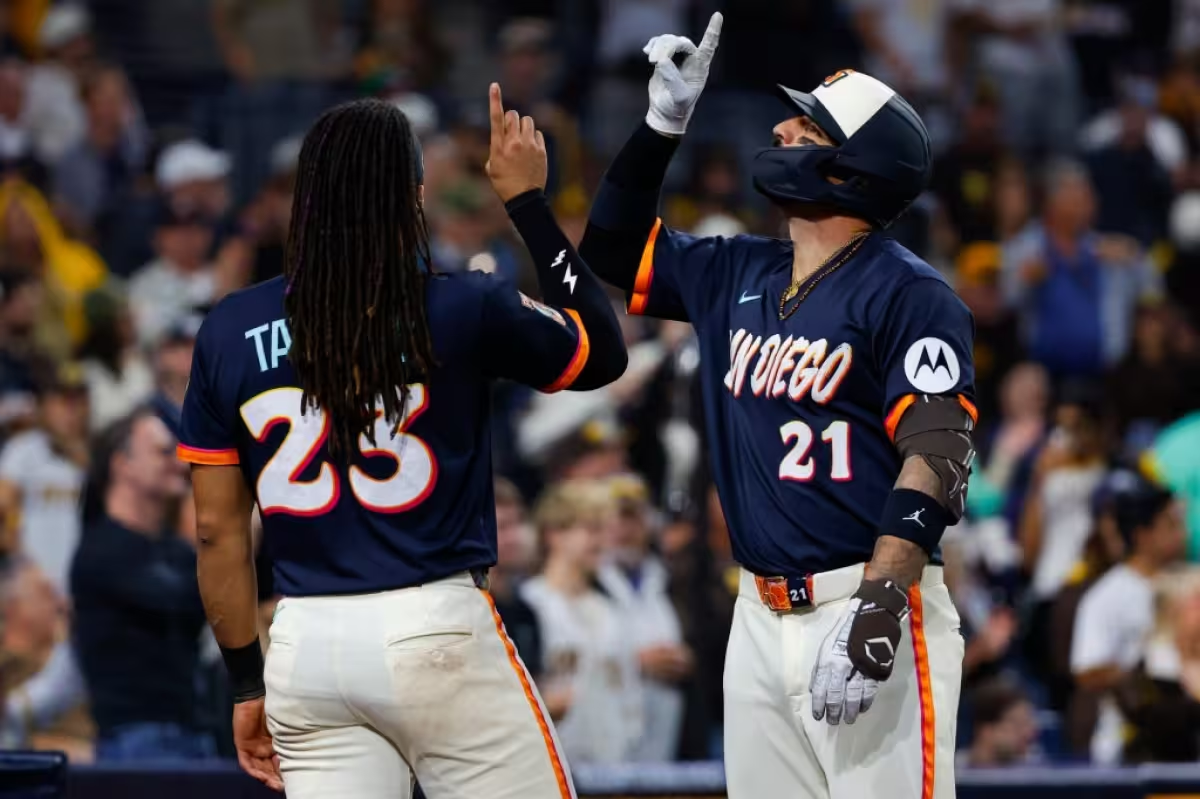

And there is a practical calendar to the worry. Machado remains a source of power — his 27 homers in 2025 and the 10 already in 2026 show the ball is leaving the yard — but power alone no longer masks the broader erosion. A.174 average and the spike in strikeouts reduce a hitter’s ability to sustain rallies and run value across a lineup. On a team balancing veteran names and unexpected contributors, that shift changes how opposing managers can pitch and how the Padres must construct their everyday lineup.
The most consequential friction is exactly that split: isolated home‑run production versus all‑around contribution. Machado still reaches the highlights; he no longer grades out as elite overall. At 33 and with seven more years on his current contract, that is not a theoretical problem. It is a structural one — a long‑term payroll commitment tied to a player whose peak tools may be receding, not just a slow month or two.
For the Padres, the arithmetic is simple and stark. If Machado can shorten his swing, cut down on strikeouts and nudge his average back toward prior levels, the club retains a middle‑of‑the‑order force who can still change games with the long ball. If he cannot, San Diego carries a high‑paid cornerstone whose best contributions are increasingly concentrated in homers while overall offensive and defensive value decline.
The single question now is specific: can Machado reduce his strikeouts and restore enough contact to bring back the two‑way excellence that made him elite — and can he do it while under seven more years of contractual obligation? How the rest of this season unfolds will answer whether this is a fixable slump or the opening chapter of a longer falloff that reshapes the Padres’ plans.