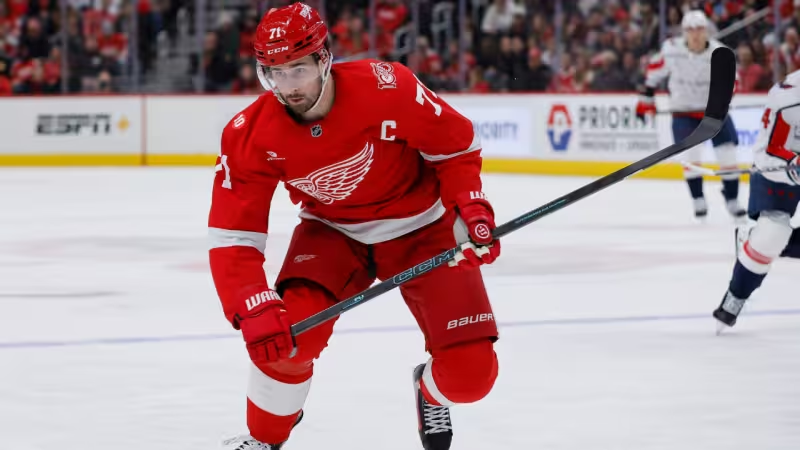
According to multiple sources, Dylan Larkin recently requested a trade from Detroit.
No one involved would comment. Larkin did not speak publicly about the report, and his agent, Pat Brisson, declined comment. Detroit's top hockey executive, Steve Yzerman, also did not comment when reached.

Larkin carries a full no-trade clause both this season and next, meaning any move would require his consent on destination. That leverage matters: he is regarded as a top-line centre in a league that remains short on reliable pivot options, and his recent international form — especially at the 4 Nations and the Olympics — only increased his market value.
The immediate consequence is straightforward and sharp: teams that need a top centre will now consider their offers, but any trade can only proceed with Larkin’s approval. His ability to veto destinations limits the pool of potential landing spots and guarantees intense interest from clubs that believe they can meet his terms.

There is friction inside Detroit. The team has been unable to make the playoffs, and there appears to be a somewhat frosty relationship between the captain and the franchise's top hockey executive. That dynamic, coupled with the wider ripple effects of recent player maneuvers — notably the power moves by Matthew Tkachuk and Quinn Hughes into new situations — helps explain why players are increasingly willing to press for change.
Yzerman's posture matters here. Multiple sources describe him as unwilling to be bullied into any scenario he dislikes. That raises the real possibility of a standoff: Larkin controls where he can go; Yzerman controls whether Detroit parts with assets on terms he finds acceptable. Neither side has spoken publicly, but that apparent mismatch sets a clear tension point for any negotiation.
What remains unknown is the single most consequential practical detail: where Larkin would be willing to land. There is no public list of acceptable destinations, no indication of whether he prefers a contender, a particular market, or specific linemates. Without that information, teams can make pitches in theory, but the hard work — aligning what Larkin will accept with what Yzerman will accept — has not begun in any visible or verifiable way.
The timeline is tight. Sources say the situation may be decided between now and the draft. That window compresses both sides: clubs that want to pursue him must assemble offers quickly, and Larkin must either name destinations or signal flexibility if a deal is to be completed. If no agreement emerges, Larkin’s full no-trade protection guarantees he can remain in Detroit through this season and the next.
The next hinge is precise. For a trade to happen, Larkin must indicate destinations he will accept, and Yzerman must determine whether any package meets the club’s price without sacrificing principles he has signaled he won’t cede. Until those two moves occur, the trade request stands as a confirmed development with a single, unanswered question — where Dylan Larkin will agree to go.