




The NBA will announce the referees for Game 7 of the Western Conference Finals between the Thunder and Spurs at 9 a.m. ET on gameday, the league’s schedule for officiating assignments dictates.
That timing is the only certainty ahead of the winner-take-all night: the first six games of the series were handled by different crews, and the slate to date has involved 16 officials and four separate crew chiefs.

Across those six games, only two officials have appeared more than once — Zach Zerba and Tony Brothers — making them the only repeats in a series otherwise rotated among new crews each night. Zach Zerba served as the Crew Chief in Game 1; whether his name will appear again on the Game 7 list remains to be announced at 9 a.m. ET. Tony Brothers worked as the Crew Chief in Game 2 and returned for at least one other assignment in the series.
The early-game rosters are on record: Game 1 featured Zerba with John Goble and Mitchell Erwin; Game 2 used Brothers alongside Josh Tiven and Karl Lane; Game 3 lists Marc Davis as Crew Chief with Courtney Kirkland and Justin Van Duyne; Game 4 had Scott Foster with Curtis Blair and Nick Buchert. Game 6 produced the Spurs’ victory that forced Saturday’s deciding Game 7.
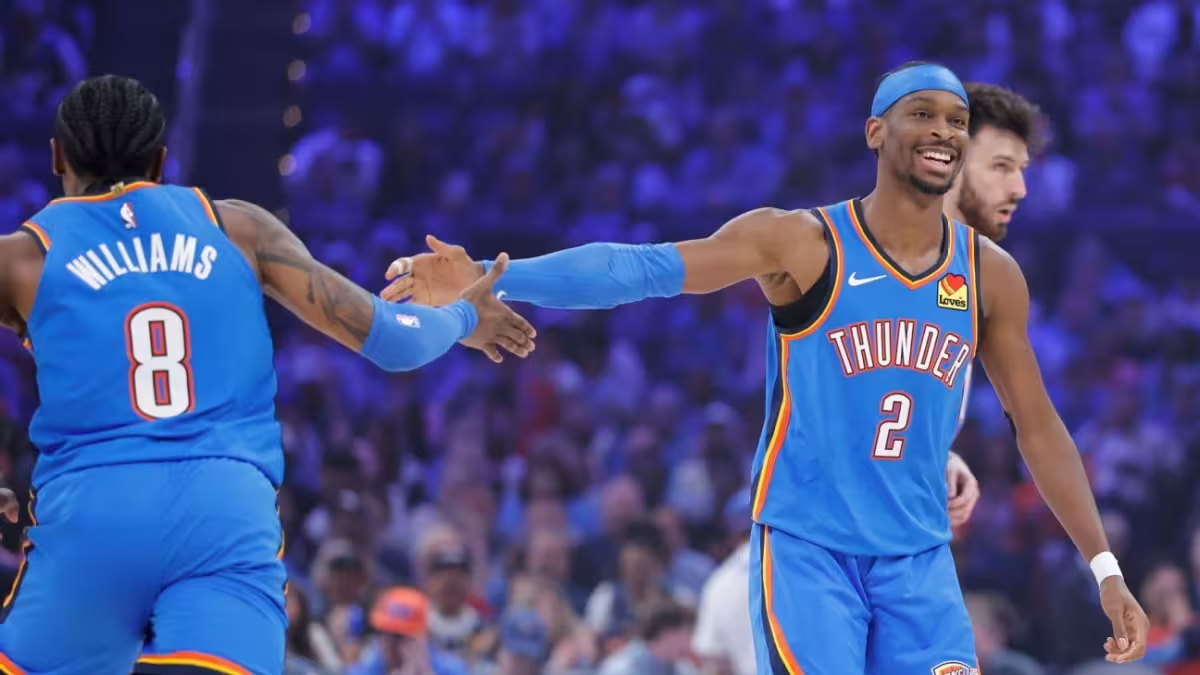
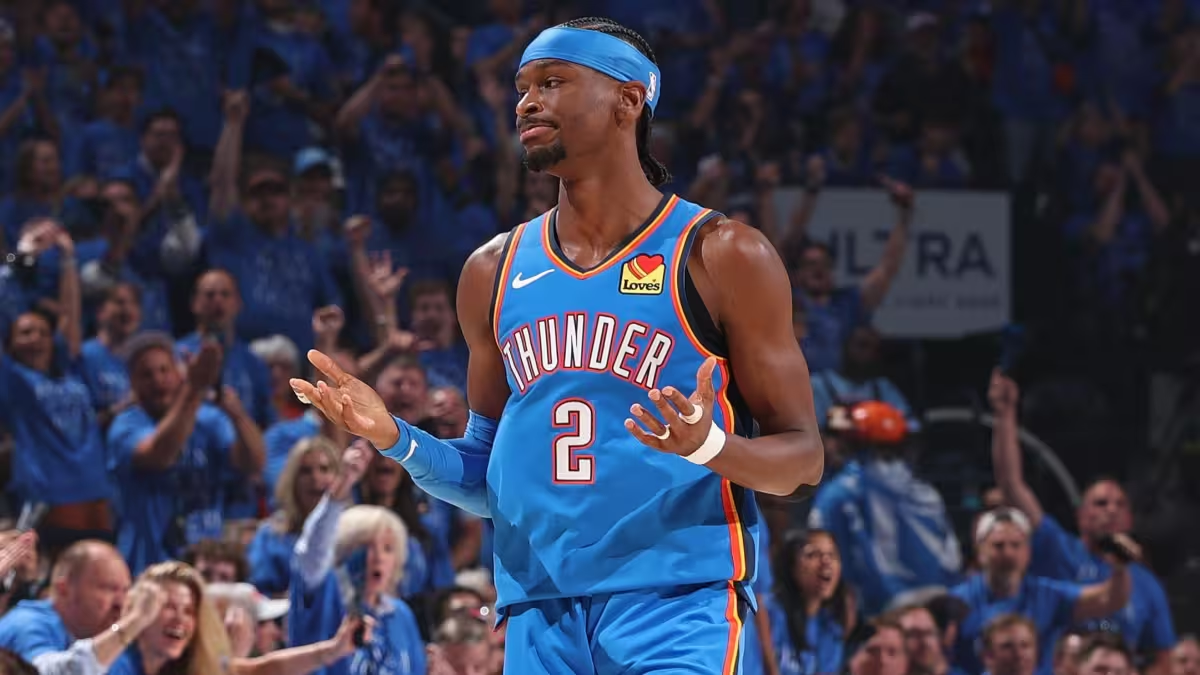

Fouls have been a constant subplot. The Thunder have leaned on drawing whistles — they led the series in fouls in three separate games — and they also attack the line: observers noted Shai Gilgeous-Alexander shot three free throws in Game 6. Yet the statistical oddity hangs over the matchup: through the first six games, the team called for more fouls lost every time, going 0-5 when it committed more personal fouls than its opponent.
The box scores underline the pattern. Game 1 went to overtime with the Thunder out-fouling the Spurs 26-19. Game 2 finished even at 21 fouls apiece. Game 3 saw the Spurs called for 28 fouls against Oklahoma City’s 25. Game 4 closed with the Thunder at 25 personal fouls and San Antonio at 20. Those figures have fueled debate about consistency and interpretation across different crews.
Commentators have been urging restraint; one broadcaster argued for letting the teams play and questioned whether recent calling patterns were a correction rather than a new norm. That perspective — that officials should allow more physicality and not call everything — has been part of the conversation leading into Game 7, and viewers will be listening for whether the evening’s crew follows the stricter or looser arc set earlier in the series.
Practically, the 9 a.m. ET release gives teams, coaches and media a single, predictable moment to parse matchups and tendencies before tipoff. It will also reveal whether the league sticks with the mix of rotating crews or leans on one of the repeat names from earlier games. For fans tracking the series’ officiating footprint, the most immediate data point is simple and dateable: 9 a.m. ET on gameday.
What remains unanswered until that hour is which three officials the NBA will send to oversee a game where every decision is magnified. The schedule fixes the when; the who is the open question that the league will resolve at 9 a.m. ET, and those names will shape how referees handle the foul-heavy threads that have shadowed the Thunder-Spurs series.



