



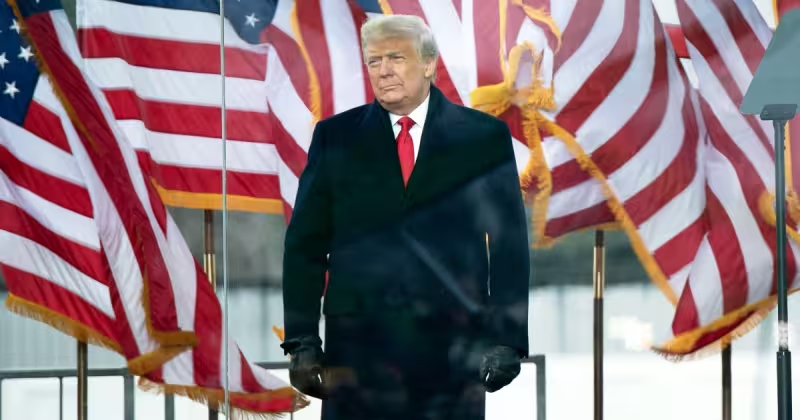
A federal judge on Friday temporarily blocked the Trump administration’s $1.8 billion anti-weaponization fund, freezing the money while a legal challenge plays out in court. U.S. District Judge Leonie M. Brinkema’s order bars the government from transferring funds, considering claims or disbursing money from the account until pending motions are resolved.
The ruling lands just as people claiming they were targeted by the government have already asked for money, and it puts the brakes on a fund operated out of the Justice Department. The process to apply for payments cannot formally begin until five commissioners are chosen to decide how the money will be distributed, a step that has not yet happened.

The case reached Brinkema after a Jan. 6 prosecutor and others sued last week to stop the fund. Andrew Floyd, who headed a task force in the now-closed Capitol Siege Section of the U.S. Attorney’s Office for the District of Columbia before he was dismissed in July, filed a declaration in the case on Thursday. In it, he said the fund was “gifting the people I helped investigate and prosecute after January 6,” and accused the administration of trying to “rush money out the door to perceived political allies, while treating me and people like me as disfavored enemies.”
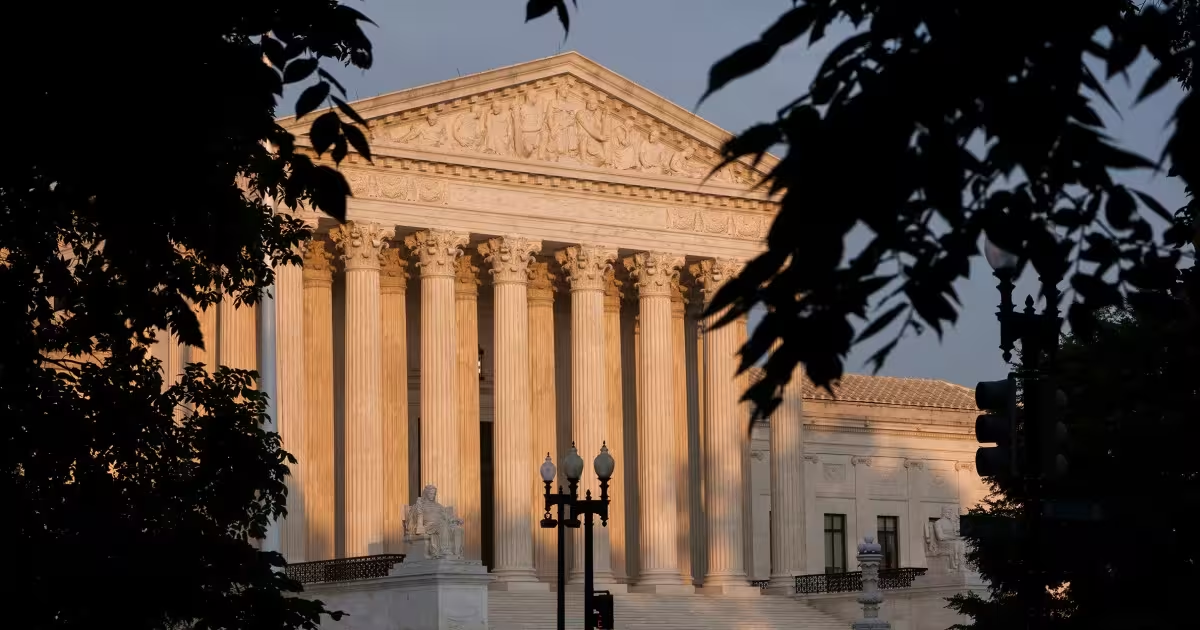
Brinkema said the order was needed to make sure no money is irreversibly disbursed while the motion to block the distribution is pending. That leaves the administration unable to take further action for now, even as its own social media account at the Justice Department said it would do everything in its power to make whole those who were persecuted for political purposes. Floyd called that prospect “appalling,” and said the president’s targeting of him and others involved in the Jan. 6 prosecutions leaves the country “in a very dark place.”
The fund was created through an unusual settlement with President Donald Trump, his family and the Trump Organization, and critics have described it as a possible slush fund for Trump allies. Legal experts have also warned that there may be very little public oversight over how the money is managed. Trump, on his first day back in office last January, mass pardoned roughly 1,500 Jan. 6 defendants, underscoring how quickly the politics around the cases have shifted.
For now, the dispute turns on two unresolved questions: who will be selected as the five commissioners, and how the money will be formally distributed once the court lets the process move again. Until then, the fund that was supposed to open a new channel for compensation remains frozen by the very litigation it helped trigger.



