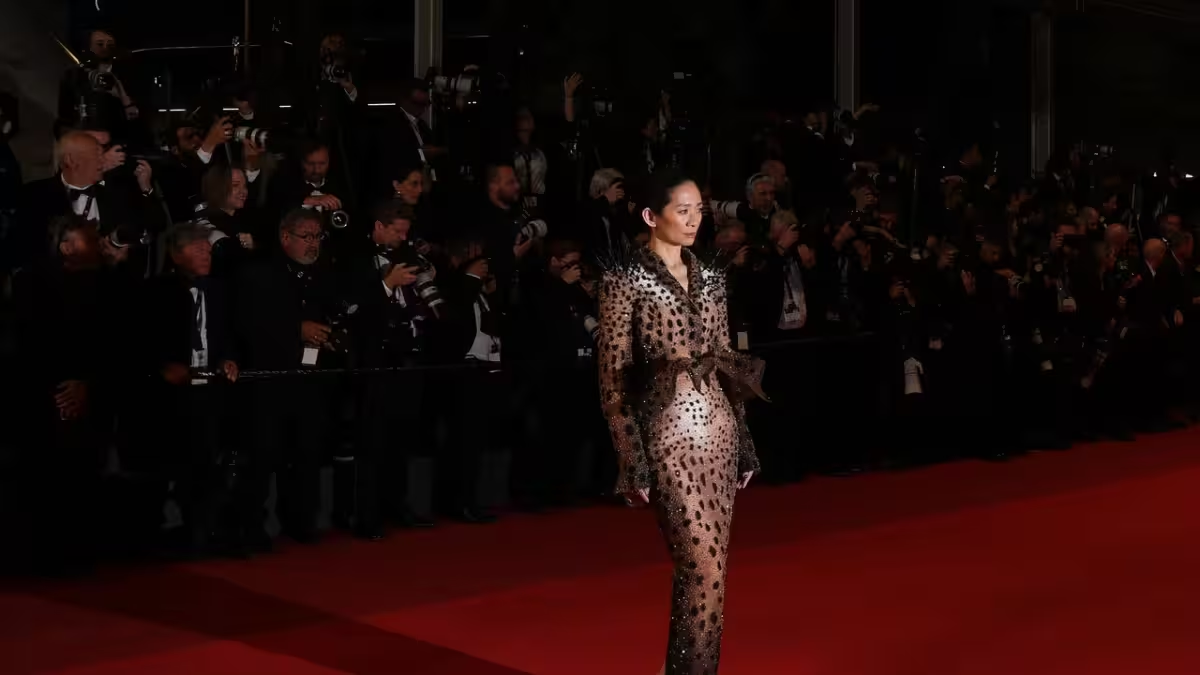
Cate Blanchett used her Cannes Film Festival appearance to deliver a blunt call to arms: reject fear-based narratives, counter xenophobia and act in small, steady ways — because, she said, "real freedom begins with everyday action." The remarks have been resonating widely online and landed as the film world prepares for screenings and a workshop tied to a fund she helped create.
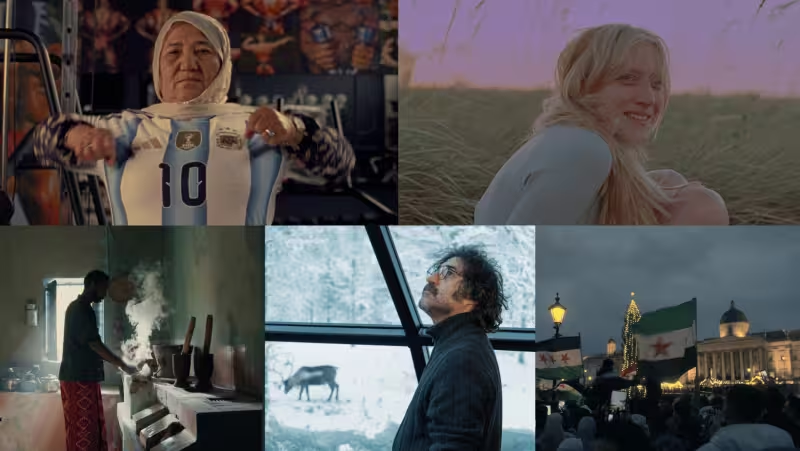
The remark matters because Blanchett is not only speaking; she has put money and structure behind the message. The Displacement Film Fund, which Blanchett spearheaded and which was established in 2025, funded five filmmakers in its pilot edition with production grants of €100,000 each. Those five finished films had their world premieres at IFFR 2026 and will be screened again in Rotterdam on Wednesday 17 June, the same day IFFR and the Buddy Film Foundation are organising a workshop for filmmakers with a refugee background.

The numbers underline the concrete reach of Blanchett's appeal: five filmmakers, five €100,000 grants, and a string of festival showings that moved from Rotterdam to international stages. The sequence — a fund created in 2025, premieres at IFFR 2026 and now a return to Rotterdam on Wednesday 17 June — illustrates how a single speech at Cannes connects to an initiative with measurable, if modest, results.
Context helps explain why the Cannes remarks are being read as more than rhetoric. Blanchett spearheaded the Displacement Film Fund as an actor, producer and UNHCR Global Goodwill Ambassador, and the fund’s stated aim is to support displaced filmmakers or those with a proven track record in authentic storytelling about displaced people. That blend of public advocacy and targeted funding is the through-line between her words at Cannes and the screenings and workshops scheduled for mid-June.

The tension in the story is plain: a speech that calls for everyday acts of resistance sits alongside a funding programme that, in its pilot, supported five projects. The grants — substantial at €100,000 apiece — are real and finite. Blanchett’s message asks for broad participation and small-scale acts across communities; the fund’s pilot reached a limited number of filmmakers. The question critics and supporters are now watching is whether a viral speech plus a focused funding model can translate into the wider cultural shift Blanchett described.
That question will be tested in Rotterdam on Wednesday 17 June, when audiences will see the Displacement Film Fund short films and when IFFR and the Buddy Film Foundation will run a workshop aimed at filmmakers with a refugee background. The screenings and the workshop are the first public moments after Cannes when the Fund’s pilot work is visible in the same place and on the same day, letting industry professionals, journalists and public audiences compare the speech’s broad claims with the Fund’s concrete output.
Blanchett’s Cannes remarks — urging people to engage in their communities and reject fear-based narratives — have already become part of the conversation online. What happens next is now less hypothetical: Rotterdam will show whether those conversations can translate into exposure and support for the filmmakers the Fund backed. If the films draw attention and the workshop reaches participants who can build on the pilot’s grants, the combination of high-profile advocacy and targeted funding will have a clear, measurable payoff.
For now, the answer is straightforward. On Wednesday 17 June, Rotterdam will be where Blanchett’s assertion that "real freedom begins with everyday action" is put to practical use — in screenings that amplify five funded voices and in a workshop meant to expand opportunity to filmmakers with refugee backgrounds.