



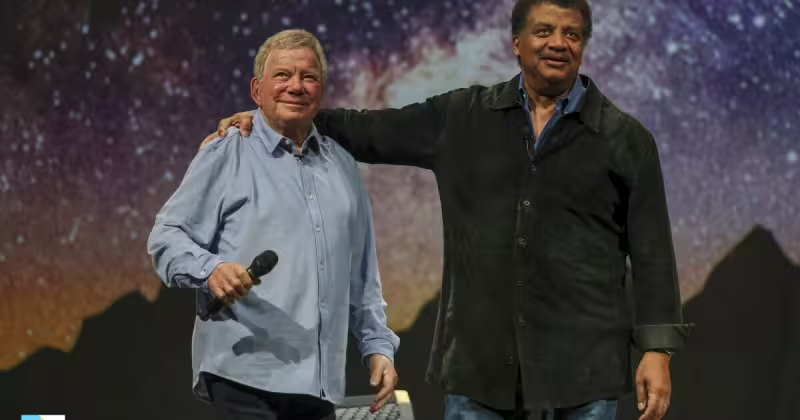
William Shatner and Neil deGrasse Tyson appeared together Wednesday in Los Angeles for a live conversation called "The Universe Is Absurd!" at the Saban Theatre in Beverly Hills, the second night of a two-night event tied to their new audiobook collaboration.
Onstage, Shatner told the audience that making the audiobook had required a deep, sustained intimacy. "We were required to spend some 20 hours talking to each other to make this book and in that discovery, I fell in love with Neil deGrasse Tyson," he said, the remark landing amid laughter and encores from a crowd that had come to see a famously theatrical performer trade riffs with a public scientist.

The fact of the remark carried weight beyond the applause. Shatner is 95 years old and the pair have a more-than-two-decade age difference, details that have become part of the pair's public story as much as their material. The conversations they have turned into the audiobook "Cosmos Confidential: Bill & Neil's Excellent Bromance," a title that leans into the affection and comic timing the two display live.
Tyson described what drives him when he shares a stage with Shatner. "William Shatner has the curiosity of a middle school kid who's just discovering the world," he said, adding, "Except this curiosity, he's retained his entire fricking life." He followed that with a line that framed his own role: "So, as an educator, I bask in the curiosity of others who have questions about the universe."
The context for this pairing is unusually literal. The two first met during a 2024 trip to Antarctica, where, on a cruise, they were put on stage as the night's entertainment. Those improvised exchanges hardened into recorded sessions and then into the audiobook now being performed live for ticketed audiences in Los Angeles.
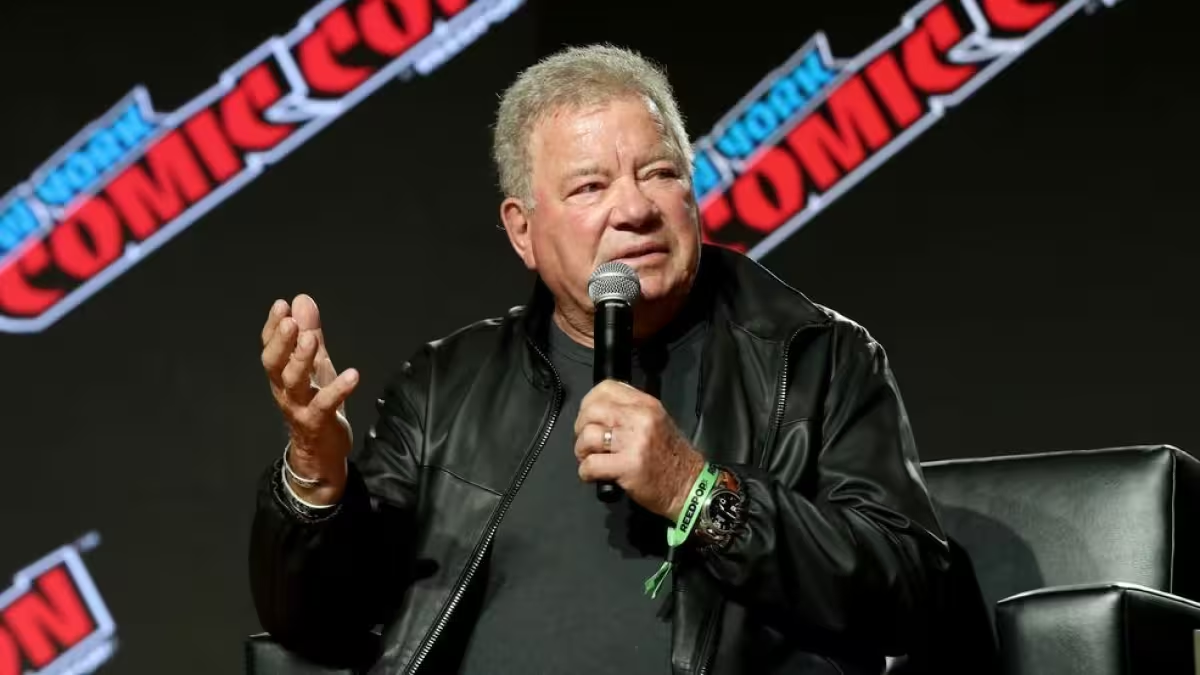
The evening moved between scientific riffing and stagecraft. Shatner, who spoke about his 2021 trip to space on a Blue Origin rocket, punctuated almost every earnest anecdote with theatrical asides. "You are unique in many ways," he told Tyson at one point; later he asked the audience, "Why does everyone approach me with a smile when they hear ‘heavy metal album’?" He pressed that point: "I don’t like being applauded for my age. Applaud me for my heavy metal album." Shatner said that album is due out in October.
The charm of the night is also its tension. The two men occupy visibly different cultural roles: Shatner the performer, prone to playful exaggeration and provocation; Tyson the scientist-educator, parsing curiosity, terminology and context. Shatner admitted at one point, "I’m trying to use the language that I understand. It’s not your language because you are a Ph.D.," and Tyson deadpanned, "Yeah, that word [entrails] didn’t appear in my thesis at all." The exchange underlined a friction that is also the show's engine — the comedy and insight that come when two very different ways of seeing the world rub against each other.
The live event also exists to sell and extend their recorded work. The audiobook's title telegraphs what the nights deliver: easy banter, unexpected learning moments and the kind of mutual admiration that has been described in public as a "legendary bromance." The 20 hours they spent recording is not just a statistic on a press sheet; onstage it was evidence — a stretch of time that produced an intimacy Shatner offered the audience in plain language.
By the end of the night the answer to the central question the pairing raises — what does Neil deGrasse Tyson do beside a showman like William Shatner? — was clear. Tyson plays the steady foil and curious educator, delighted by Shatner's persistent wonder and willing to amplify it; Shatner uses that amplification to turn scientific thought into theatrical moment. Together they turned long conversations into an audiobook and a stage show that depend on their uneven alliance more than on any single lecture or zinger.



