



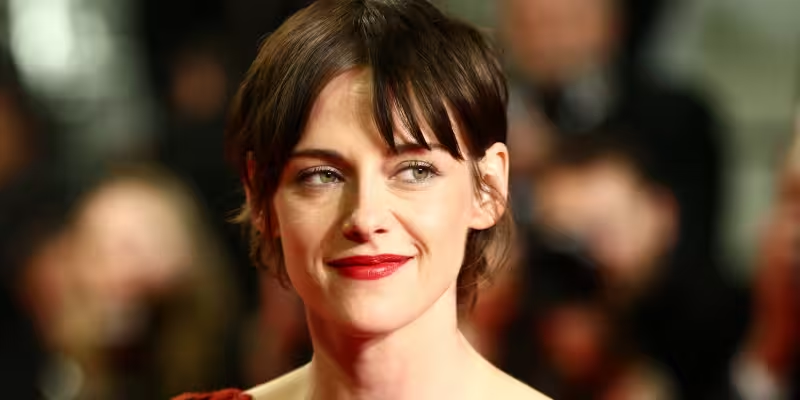
Kristen Stewart stepped onto the red carpet at the 79th annual Cannes Film Festival at the Palais des Festivals this spring with a slightly longer take on the textured French pixie that Winona Ryder helped pioneer in the 1990s, a stylistic moment signaling the haircut’s bold return in 2026.
The comeback is not a single stunt. Gracie Abrams turned heads at this year's Met Gala with a sleek, polished interpretation of the same trend, while Stewart’s Cannes appearance leaned into a more undone, forward-swept fringe. Together the appearances show the textured pixie moving out of niche fashion pages and back into mainstream red-carpet rotation.

The short, uniform length paired with lightly tousled texture, delicate waves and a rich brunette hue—details that recall Winona Ryder’s iconic vintage cut—are the through-line between the 1990s original and the 2026 revival. Hairstylist Elliot Bute of Berner's St Hershesons said the contemporary must-have is versatility. "Ask for a short, textured pixie cut with softness through the ends and slightly longer layers on top for versatility," he advised, noting the same shape works across both closely cropped and slightly longer styles.
Bute offered practical direction for anyone asking a stylist for the look: "Request point cutting or razor detailing to avoid heaviness, and be clear that you want something lived in, piece, and low fuss." He also laid out a simple daily routine: work a small amount of Almost Everything Cream through dry hair using the fingers rather than a brush, and remember that "the idea is to enhance natural texture. Push it forward for a casual fringe, sweep it back for something sleeker, or rough it up for added edge. It should feel undone, never overworked."
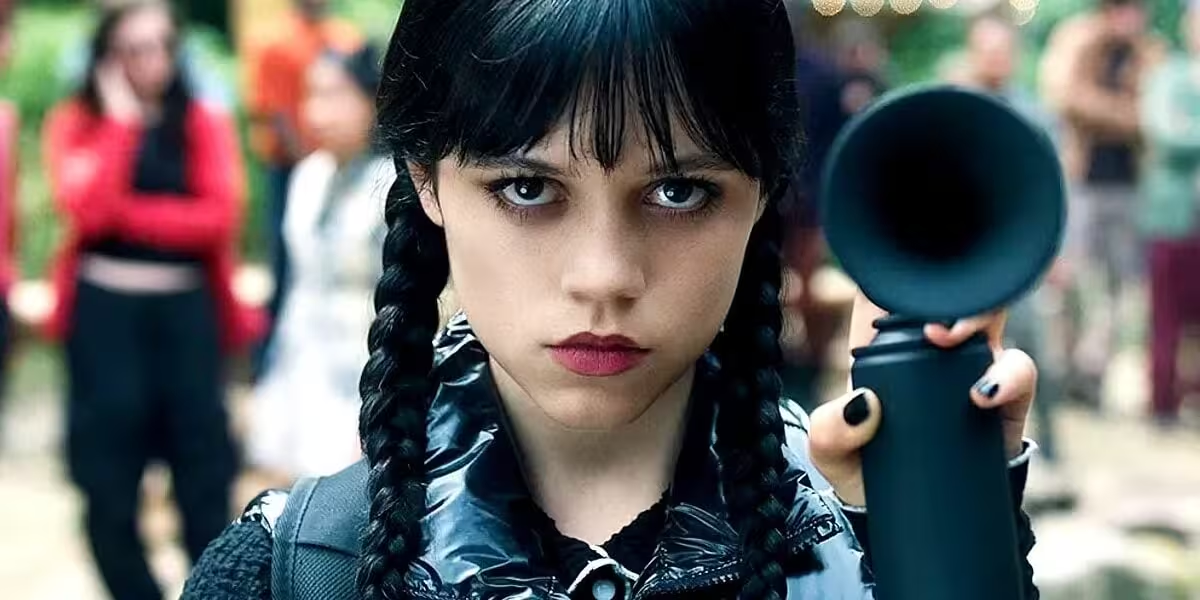
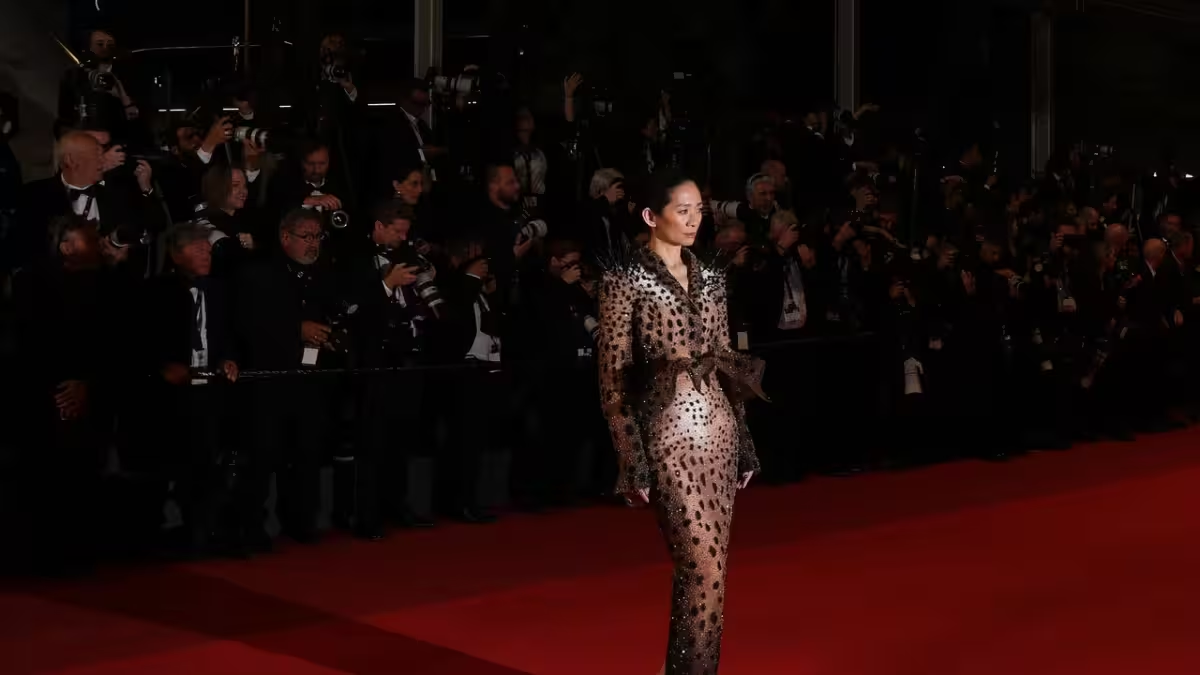
The haircut’s adaptability is central to why stylists and stars are embracing it again. The textured French pixie can read cropped and sporty, or soft and cinematic; it can sit short against the head or bloom into a choppy bob within a few months of growth. Zendaya’s latest string of appearances is cited as evidence that the cut also looks fantastic on shorter, curlier styles, widening its appeal beyond the straight, slicked interpretations that dominated earlier revivals.
That versatility creates a productive tension for the trend. The look’s origins in the 1990s—pioneered by names like Winona Ryder and Halle Berry—make it familiar, but the new versions are deliberately contradictory: polished at a gala, undone at a festival, sculpted one week and soft the next. The friction underlines a broader shift in styling philosophy: the haircut’s success now depends on texture and movement rather than a strict blueprint, and that means results vary depending on who’s wearing it and how their stylist interprets the brief.
For anyone wondering whether the return is a fleeting celebrity fad or a lasting shift, the evidence favors staying power. High-profile sightings across major 2026 moments—the Met Gala and the 79th annual Cannes Film Festival—paired with a clear, repeatable technique from a named salon, make the look easy to copy and adapt. It grows out well into a bob, flatters a range of curl patterns, and requires only a small amount of product and a confident cut to read modern. In short: the textured French pixie that Winona Ryder once made iconic has been updated, democratized and reintroduced to a new crop of stars, and that combination makes it likely to stick around beyond this year’s headlines.
Back on the Cannes carpet, Kristen Stewart’s slightly longer pixie—part homage, part reinvention—already reads like proof. The style that began as a bold, youthful statement in the 1990s has returned as a practical, fashionable option for 2026; ask for softness at the ends, a bit of length on top and a technique that keeps it looking lived-in, and the cut will do the rest.



