




The season 3 finale of CBS's Elsbeth landed a string of surprises — Elsbeth’s son Teddy proposed to his boyfriend Roy, Kaya returned undercover and overlapped with Elsbeth’s case of the week, and Patti LuPone turned up as a cabaret singer fighting to keep her New York apartment.
Carrie Preston, who carries the show as its lead, watched that episode land and felt its emotional punches. She won an Emmy for playing Elsbeth in The Good Wife and now spends her weeks fronting a CBS hit built around the eccentric, brilliant investigator Elsbeth Tascioni.

The evidence that the finale mattered came not in ratings quoted at a press conference but in the work: Carra Patterson’s Kaya — absent for most of the season — returned in a scene that threaded straight into the procedural plot, and Patti LuPone’s guest turn stopped Preston cold. "I don’t know how they edited it, but she made me weep," Preston said of LuPone’s performance. She called the season’s gallery of visitors a rare privilege: "I don’t know what I did in life to be so lucky to have someone like you come and do this show with me. I don’t know." She also says, plainly, "I have that moment with so many people."
Context matters: Elsbeth is a show built around a single character who, until this season, lived mostly at the edges of larger ensemble television. It is Preston’s first lead TV role after decades of supporting and guest parts, and season 3 has leaned into that star turn while bolstering it with high-profile guests. The thread of returning players matters here — Kaya’s long absence for most of the season set up her finale re-entry as a deliberate plot beat, and the episode stacked emotional and plot developments in a way the series has not always attempted simultaneously.
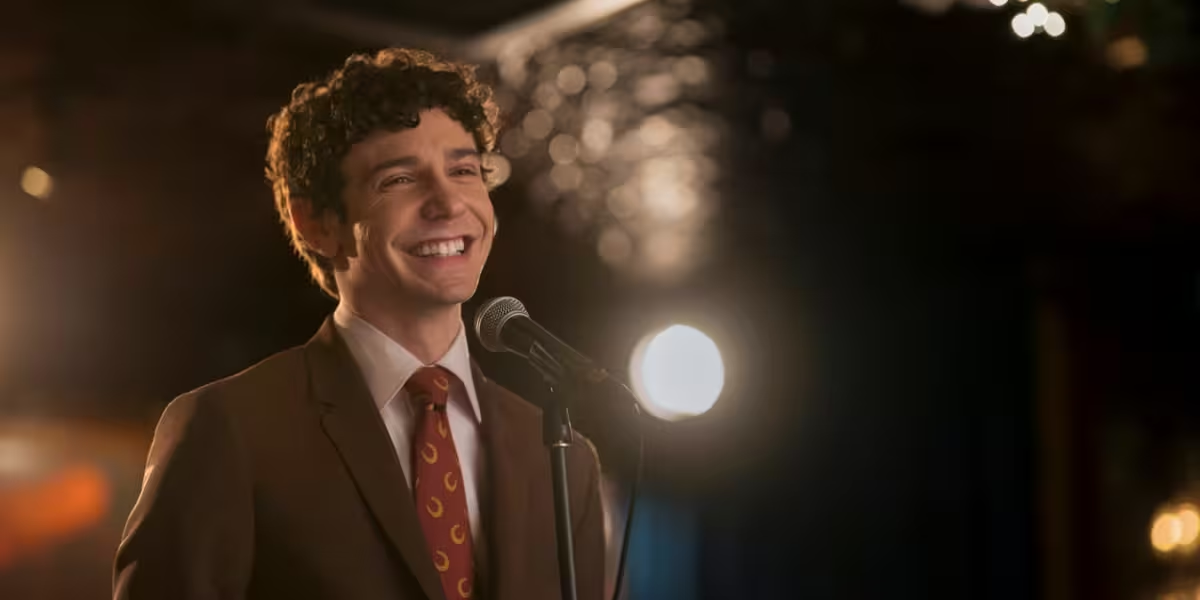
There is a friction point in that tidy finish. The show has "settled into a groove" this season, yet it remains a demanding gig for Preston: each episode asks her to carry comic timing, forensic intuition and sudden, authentic grief. Guest stars can amplify the result, but they also risk drawing attention away from the steady work required week to week. Kaya’s absence for most of the season, then her undercover return that overlaps with the case of the week, highlights a production choice — concentrate on new weekly material, or thread more serialized character arcs into the procedural frame.
Preston has been candid about what those choices feel like from the center of the set. She connected the finale’s emotional beats to deeper casting resonances, saying, "I feel like you could see Mia Farrow as Elsbeth’s mother," and praising LuPone’s ability to find the scene’s heart. The finale’s combination of a proposal, a returning ally, and a guest-star performance that moved the lead suggests the show’s creators are comfortable mixing tone and surprise.
What happens next is not a scheduling note but a creative one: Preston is already looking ahead. She told colleagues she is starting to think about what season four might look like, which is the clearest signal yet that the show’s core team wants to keep pushing Elsbeth into new dramatic territory. Given the finale’s choices — reintroducing Kaya, leaning on guest stars who can shift a scene’s weather, and landing a personal turn that moved Preston to tears — the most reasonable conclusion is that Elsbeth will return with the same blend of forensic caprice and emotional risk, and that Preston will keep shaping what that mix becomes.
After a finale that stitched a personal milestone to procedural mechanics, Preston’s response answered the basic question about whether the series will continue to evolve: she’s thinking about season four, and the show’s recent moves make it likely she’ll get to keep testing Elsbeth in new and demanding ways.



