



Evan Mobley returned to center stage on May 21 as the Cleveland Cavaliers prepared to respond to a collapse that handed the New York Knicks a 115-104 overtime win in Game 1 on May 20.
The collapse was brutal and specific: Cleveland led by 22 points in the fourth quarter before New York outscored the Cavaliers 44-11 over the final 12 minutes, erased the lead and forced overtime. The Knicks had been cold early from distance — just 2-of-21 from three-point range to start the game and 4-of-24 before Cleveland’s late unraveling — yet they finished the comeback and the win in dramatic fashion.

Numbers underline why the game felt like a seismic event for the series. Before the collapse, Cleveland’s play suggested dominance — a +26.5 net rating overall with a 112.0 offensive rating and an 85.5 defensive rating — figures that make a 22-point fourth-quarter lead look less like a fluke than a statement. Instead, those numbers now sit beside a 44-11 run that erased them, leaving the Cavaliers searching for answers with Game 2 looming the next day.
For Mobley personally, the moment landed inside a larger pattern of him as a playmaker. Reporting from the game noted he had three assists midway through the third quarter, finished with seven potential assists and, over his last nine games dating back to the Toronto series in Round 1, had averaged 4.6 assists per game. The Cavaliers listed him as a projected starter for Game 2 on May 21 alongside James Harden, Donovan Mitchell, Dean Wade and Jarrett Allen.
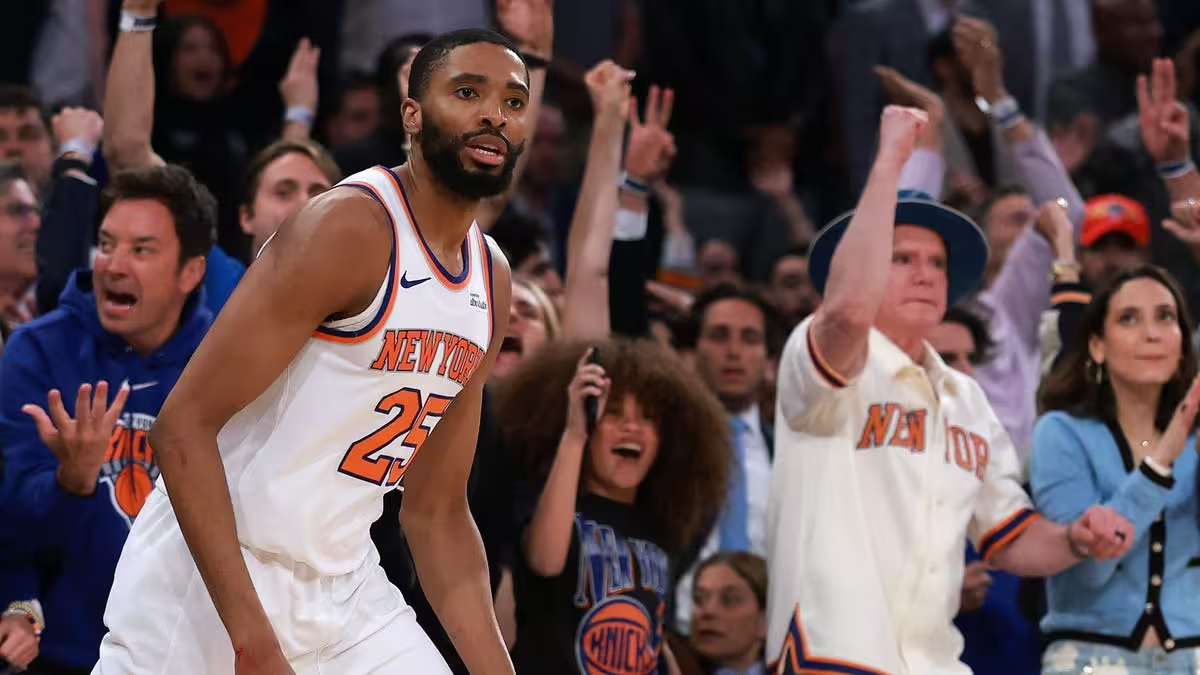
How the team responds on May 21 matters immediately. Oddsmakers made New York a 5.5-point home favorite and projected the Knicks for 111.5 team points against a 105 projection for Cleveland; DraftKings listed the Cavaliers as a +170 underdog for Game 2. Put bluntly: the market has shifted toward the Knicks after a single 12-minute stretch.
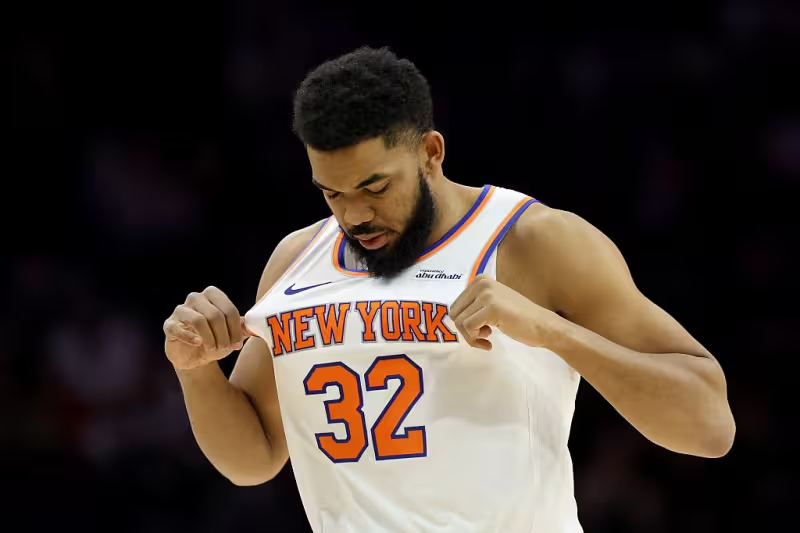
There is context that deepens the concern. The teams were in a playoff series in which New York had already taken a lead in the season series, and Game 1’s comeback will shape the tenor of the matchup going forward. Karl-Anthony Towns, who played 40 minutes in Game 1, finished with 13 points, 13 rebounds and five assists, and arrived at Game 2 having recorded at least five assists in eight straight games — a steadying presence for New York in crunch moments.
The tension is obvious. Cleveland’s dominant metrics before the late run contradict the way the game finished; the Cavaliers looked like the better team for most of the night and then surrendered the last 12 minutes. Head coach Kenny Atkinson admitted his team was overrun down the stretch and said he had been reluctant to burn timeouts, an explanation he offered while acknowledging the Knicks took control in the fourth. New York’s coach pushed back at the idea that the comeback was a surprise, saying it was hardly secret that his team would climb back if given the opening.
That friction — elite regular metrics overturned by a short, savage run — forces a strategic question Cleveland cannot dodge. Can the Cavaliers reassert the form that produced a 112.0 offensive rating and an 85.5 defensive rating, or will the collapse reveal a deeper inability to close playoff quarters? The answer will hinge, in part, on how Mobley and the projected starters manage pacing and late-game execution when the series resumes.
The practical conclusion after Game 1 is stark: Cleveland must change the ending. The Cavaliers’ roster and season-long numbers argue they are capable of it, and Mobley’s recent assist surge and his projected start show the coaching staff expects him to be central to that fix. If Game 2 follows the same arc as the finish of Game 1, the Knicks’ comeback will look less like an anomaly and more like a turning point for the series.



