























Usa News: Why a 108‑Minute, News‑Light State of the Union Matters for Public Confidence

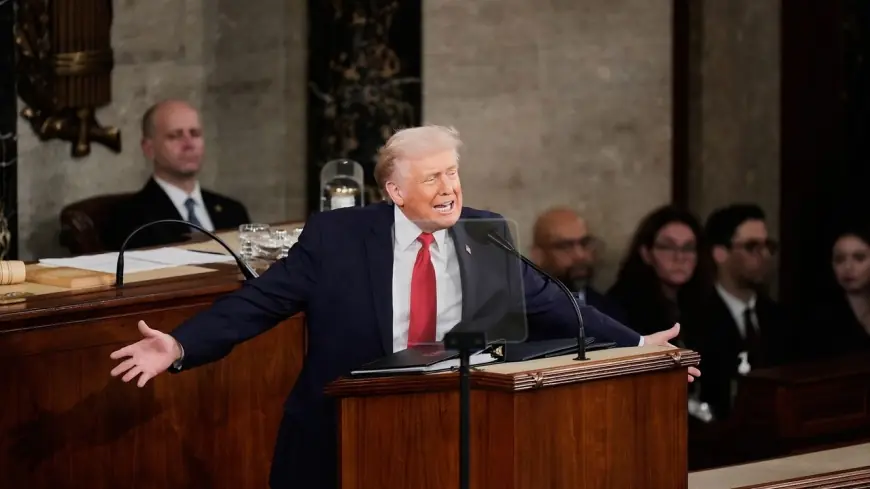
Intro: In the wake of a hundred‑and‑eight‑minute address that set a modern length record, the first people to feel the impact are the public and political persuadability that the president still commands. For readers of usa news, the practical consequence is simple: a very long speech that delivered little new policy detail risks deepening the gap between rhetoric and measurable public approval.
Usa News — Immediate effects on public opinion and messaging
The speech's size and style matter less as trivia than as a political liability. A recent survey placed disapproval at sixty‑three percent and approval at thirty‑six percent; those numbers suggest the address did not move large portions of the public toward the speaker. Here's the part that matters: an address that is historically long but described as "incredibly news‑free" creates a compressive effect — it raises expectations and then forces the public to rely on prior impressions rather than fresh policy commitments.
What’s easy to miss is that length can amplify clarity problems. When a speech is heavy on superlatives and light on actionable detail, it tends to reinforce existing impressions rather than reshape them.
Event details embedded: what was said, and what stayed vague
Embedded facts from the address show contrasts between scale and substance. The speech ran for 108 minutes, setting a modern record that surpassed a previous record set the prior year by the same speaker. Word‑count comparisons underscore the gulf in concision: the Gettysburg Address was two hundred and seventy‑two words; this speech exceeded ten thousand words.
- The president used sweeping language about national strength and economic metrics, claiming the nation was "bigger, better, richer, and stronger, " and asserting prices were down while dismissing complaints about cost of living as "a dirty, rotten lie. "
- The administration framed the address beforehand as intended to make a case about affordability, describing past policies as the cause of the problem and positioning the speaker and his party as the solution.
- Certain major policy areas were presented with uncertainty rather than clarity: the possibility of military action related to a foreign nuclear program was left as a may‑or‑may‑not outcome, and tariffs were defended as something the president intends to keep despite a Supreme Court rebuke of overreach and a plan to invoke alternate executive authorities whose legal footing was not spelled out in detail.
If you’re wondering why this keeps coming up for readers of usa news, consider that a long address without new anchors forces commentators and voters to revert to polls and prior judgments rather than new evidence.
Micro timeline embedded:
- One year earlier: the same speaker set the previous modern length record for a presidential address to Congress.
- Gettysburg reference: a historical contrast in concision highlighted during commentary.
- Immediately after the speech: a recent survey recorded roughly sixty‑three percent disapproval and thirty‑six percent approval.
Key takeaways:
- The speech’s historic length amplified scrutiny without supplying the new, specific policy commitments that tend to shift public opinion.
- Rhetorical superlatives and salesmanship were prominent; detailed explanations of how major claims would be delivered were largely absent.
- Uncertainty on high‑stakes items — from possible foreign action to legal workarounds for tariffs — leaves questions unanswered rather than settled.
- Public opinion figures suggest the address did not noticeably improve standing and may have reinforced existing disapproval.
The real question now is how the administration translates grand claims into verifiable outcomes. The immediate signal to watch will be whether specific, measurable policy steps follow the speech or whether the rhetoric remains the primary product.
It’s easy to overlook, but the real test will be whether subsequent actions supply the evidence that a long speech did not.