






















Netanyahu and Modi’s pivot: How defence, AI and labour deals could reshape the India–Israel partnership

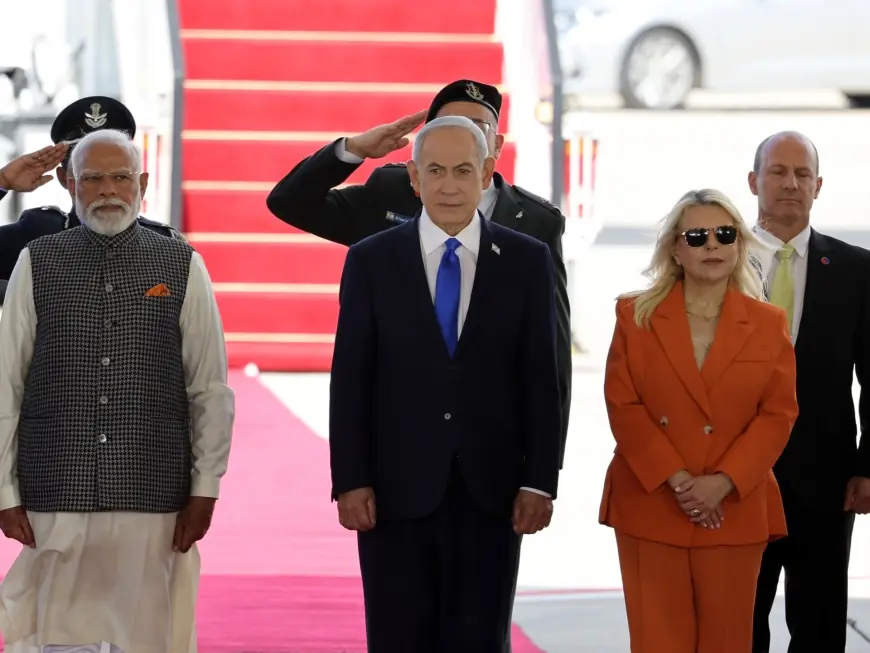
The agreements and public gestures from Narendra Modi’s two-day visit make one thing clear: the relationship will move from diplomatic warmth to faster operational cooperation. Prime Minister netanyahu’s visible alignment with Modi — from the tarmac embrace to symbolic colors — means defence, artificial intelligence and worker mobility are likeliest to see near-term changes, with digital payments and cybersecurity also in the immediate pipeline.
Netanyahu’s role in shaping the next phase of cooperation
Expect a practical follow-through rather than mere symbolism. The visit elevated the bilateral tie to a Special Strategic Partnership and produced over a dozen agreements that cover cybersecurity, trade, space exploration, education, investment, agriculture and broader economic cooperation. Defence and artificial intelligence were explicitly singled out for deeper cooperation, and both leaders mentioned pursuit of a free trade agreement—moves that will steer procurement choices, joint projects and regulatory alignment.
Here’s the part that matters: the visit bundled high-profile optics with concrete commitments. A pledge to allow another 50, 000 Indian workers over the next five years and plans to extend India’s digital payment system to the partner country signal that migration and fintech flows are being operationalized alongside defence and tech links. netanyahu’s public gestures—his wife’s choice of saffron and the leaders’ tarmac embrace—were used to reinforce a broader political alignment that undergirds those practical deals.
Deals, gestures and the limits they expose
Diplomacy during the visit blended ceremonial moments with policy steps. Modi toured Yad Vashem and addressed the Knesset, receiving a standing ovation; both leaders issued joint statements condemning terrorism and cross-border attacks and framed the strengthened partnership as historic. At the same time, commentary from different corners questioned which communities actually gain safety as cooperation deepens: persistent hierarchies and exclusions remain on both sides, and past and ongoing violence in contested areas was noted as evidence that not everyone is equally protected.
The visit also highlighted an ideological alignment: the visible use of Hindutva’s saffron in ceremonial dress and matching accents signalled comfort with the political framework associated with Modi. That symbolism was paired with practical outcomes—cybersecurity pacts, space and economic cooperation, and the digital payments and worker initiatives already mentioned—meaning policy and symbolism are moving together rather than on parallel tracks.
- Elevated partnership: Special Strategic Partnership status aims to speed up defence and AI collaboration.
- Economic/tech tie-ins: over a dozen pacts across cybersecurity, trade, space, education, investment, agriculture and economic cooperation.
- Labour and fintech: commitment to admit 50, 000 workers over five years and plans to extend a national digital payment system to the partner country.
- Political signaling: high-visibility gestures and parliamentary applause underlined the leaders’ personal rapport as a tool for policy momentum.
- Social limits: unresolved questions about who is actually secure in either country remain part of the conversation.
A short timeline helps anchor what changed in recent years: Modi’s first visit in 2017 opened the door to closer ties; the October 2023 Hamas-led attack shaped public solidarity and security rhetoric; the two-day visit consolidated multiple sectoral agreements and an upgraded partnership. The real test will be whether memoranda translate into joint projects, worker mobilization and interoperable tech systems.
The bigger signal here is that ceremonial choreography was paired with deliverables—an approach meant to convert political warmth into tangible cooperation, though it doesn't resolve deeper societal frictions on either side. If you’re wondering why this keeps coming up, it’s because the new package mixes defence, tech and people flows in ways that can quickly change operational priorities for both governments.
Key confirmations to watch for will be the formal steps to implement the worker commitments, launch of the digital payment integration, and initial defence or AI project announcements; those will indicate whether the partnership is scaling from headlines to durable programs. Recent updates indicate some elements are already moving from pledge to planning, but details may evolve.