

























Australia Urges Citizens to Leave Israel, Lebanon; Diplomats’ Families Evacuated

The Australian government has issued a strong advisory urging citizens in Israel and Lebanon to consider leaving the regions. This move comes amid escalating tensions related to potential U.S. military action against Iran. Australians are encouraged to take advantage of existing commercial travel options to exit while possible.
Evacuation Offers for Diplomats’ Families
As part of this advisory, the Australian Department of Foreign Affairs and Trade (DFAT) announced it would facilitate “voluntary departures” for staff and families of its diplomatic missions in Israel, Lebanon, Jordan, Qatar, and the United Arab Emirates. The DFAT also noted, “We continue to advise a high degree of caution in these destinations due to the unpredictable security situation.”
Travel Warnings and Advisories
DFAT specifically warned Australians in Israel and Lebanon to leave the regions promptly. The department also reiterated the directive not to travel to Iran, emphasizing the urgency for those currently in the country to depart “as soon as possible.”
Regional Military Tensions
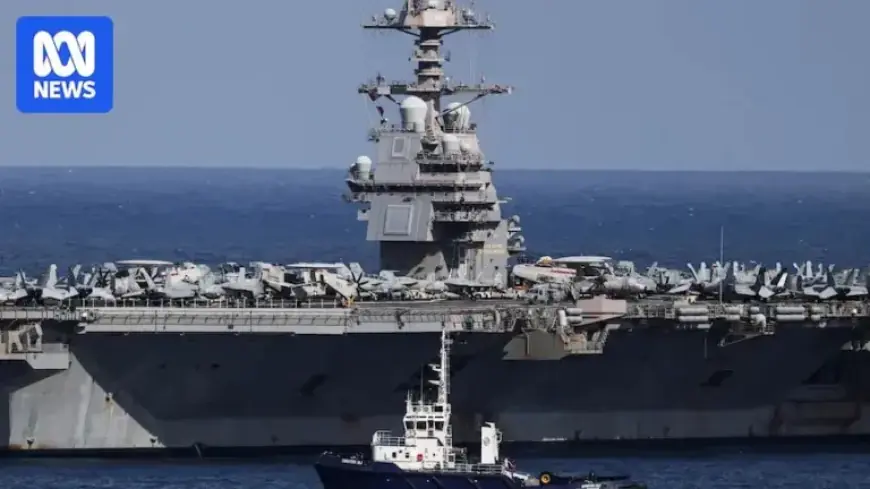
The rising military build-up in the Middle East has raised alarms. The U.S. Navy has dispatched its largest aircraft carrier, the USS Gerald R. Ford, to the region. Another carrier group, led by the USS Abraham Lincoln, is positioned in the Arabian Sea. Additionally, numerous U.S. aircraft have arrived at bases including Al Udeid in Qatar, which is recognized as the largest U.S. military installation in the region.
Potential Impact on Travel and Supply Chains
The potential for military conflict could have significant repercussions for travel. Airspace closures and flight cancellations may disrupt transport, particularly affecting global supply chains. Key airports in the UAE and Qatar are among the busiest in the world, and maritime routes in the region are critical for international commerce.
International Responses and Future Considerations
U.S. President Donald Trump has reiterated threats against Iran during his State of the Union address, emphasizing a preference for diplomatic resolution while asserting that Iran must never acquire nuclear weapons. This statement comes as indirect negotiations between the U.S. and Iran are set to resume.
The geopolitical landscape remains charged, with Iranian officials reacting strongly against U.S. and Israeli accusations regarding Iran’s nuclear ambitions. As the situation develops, any military escalation could dramatically alter regional dynamics and impact both civilians and diplomatic missions.