






















Demna Brings Sexy Back: Gucci’s High-Stakes Revival Puts Kering and Risk-Takers on Notice

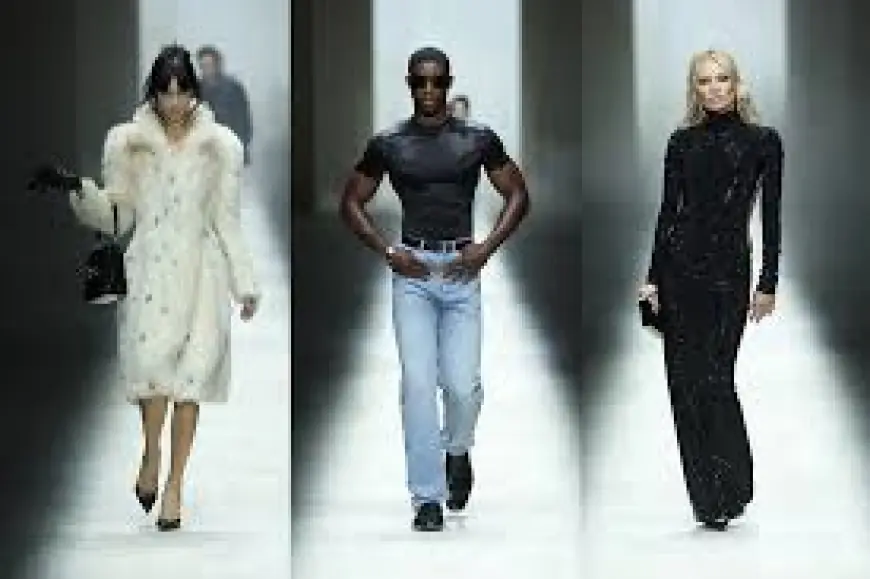
The immediate impact of Demna’s debut for gucci landed with shareholders, designers and trend scouts: a visible, risky pivot that aims to snap the house back into cultural conversation. The show’s sex-forward staging — from tight micro-dresses to a shock appearance in a diamante G-string — was designed to be felt first by the market and by peers who judge whether big luxury will again bankroll creative bets.
Who feels the change first: Kering, designers and the market
Here’s the part that matters: gucci’s parent group is watching whether this theatrical reset translates into momentum. The label’s recent underperformance has weakened its owner Kering, and that has a ripple effect on the industry’s willingness to finance unconventional ideas. Poor sales have been noted as damaging to the owner François-Henri Pinault and shareholders, and when Kering tightens its belt it becomes less likely to take chances on esoteric brands — a dynamic the fashion world feels directly.
Gucci catwalk: the show in Milan and the crowd
The show opened in Milan on Friday afternoon and drew a high-profile audience that included Donatella Versace and Paris and Nicky Hilton. The runway mixed deliberately provocative pieces — very short, very tight dresses that prompted Emily Ratajkowski to periodically tug at disco-ball sequins as she walked — with theatrical touches such as lapdance-style tinsel hair extensions and a model who pulled a phone from a bumbag and scrolled while walking. Kate Moss appeared in a diamante G-string; other visuals included a certain sketchiness in the roll of the hips that amplified the camp, walk-of-shame vibes.
Creative signals: Botticelli, underground culture and Demna’s intent
Demna framed the collection with an art-historical reference: the night before the show he had cited Botticelli’s early Renaissance paintings as inspiration. Backstage, he linked that to a mission of restoring cultural relevance — positioning Gucci alongside Italian figures such as Botticelli and Michelangelo — and argued that cultural relevance often begins in underground culture rather than the mainstream. He pushed back on expectations that he would produce oversized bomber jackets with monograms, noting that chatter, even from ChatGPT, missed his purpose; instead he described his Gucci as centered on energy, passion, fun and sex.
Design language and show mechanics
After the spectacle, Demna eased the runway with more wearable items: high-waisted jeans, leather tailoring, a navy peacoat and pointy boots appeared among the flashier pieces. Invitations had been sent in plush black velvet–padded jewellery boxes that billed the event as Gucci "by Demna" — a marked break with usual etiquette and a clear power move. The appointment has been framed as personal: Demna said that after years of proving his intelligence he now has freedom to create from an emotional rather than intellectual standpoint, and that he is happier and healthier than before, even suggesting he is "falling in love with" himself (unclear in the provided context whether those were his exact words).
Institutional memory: past eras and recent turbulence
Observers placed the show against Gucci’s recent creative eras: the house’s most influential moments came under Tom Ford’s provocative, "slutty-yet-aloof" energy and later under Alessandro Michele’s ambitiously gender-fluid and vintage-curious approach. The season before Demna, Sabato De Sarno’s brief reign was widely regarded as playing disastrously safe; De Sarno was let go after a short and underwhelming run. That recent turbulence helps explain why this roll of the dice feels urgent—not just for the label but for the broader luxury ecosystem.
Optimism around Demna’s arrival has already had an effect: news this month showed that Gucci’s sales had fallen less than expected — a 3% decreas (unclear in the provided context). That partial upside is likely why the show’s theatricality is being watched so closely: it’s an attempt to convert attention into sustained consumer demand.
What’s easy to miss is how overt public attribution — invitations labeled Gucci "by Demna" — signals a rare, personal accountability from a creative director at a storied house.
The real question now is whether the spectacle will translate into consistent sales growth and restore Kering’s appetite to underwrite daring projects. If demand picks up, designers across the group and the industry could regain room to experiment; if it does not, the cautious posture that preceded this moment may return.