




















william and prince andrew: UK documents move toward release as the royal family braces for a new phase

A rapidly escalating UK political and legal saga put prince andrew back at the center of national attention this week, and it is now directly shaping the public posture of william. With investigators continuing work tied to alleged misconduct in public office, lawmakers have taken steps that could force new disclosures, while the monarchy is trying to keep institutional distance and maintain routine public duties.
william and prince andrew: the timeline that drove this week’s headlines
The pressure point is the decision in Parliament to approve the release of confidential documents connected to prince andrew’s appointment and vetting for a past trade role. The move follows days of intense focus on the investigation and is intended to clarify what was known, when it was known, and how decisions were made.
At the same time, police activity linked to the case has drawn attention to royal-adjacent properties. A high-profile search tied to the wider investigation concluded after several days, while authorities indicated the overall inquiry remains active and that further updates may not come quickly.
Key moments that shaped the story in the past week (ET):
-
Thu., Feb. 19, 2026: prince andrew is arrested in the UK in connection with the investigation.
-
Sun.–Tue., Feb. 22–24, 2026: searches and procedural steps continue as public scrutiny intensifies.
-
Tue., Feb. 24, 2026: lawmakers back a release process for confidential files tied to past government roles.
prince andrew: what lawmakers are moving to disclose and why it matters
The immediate focus is on documents tied to government decision-making around prince andrew’s former official capacities. Supporters of disclosure argue that transparency is necessary to restore confidence in the boundaries between public office, privilege, and accountability.
Even with parliamentary approval, release is not guaranteed to be immediate or complete. Some materials can be withheld if they intersect with active investigative steps or other legal constraints. That means the public may see a phased rollout rather than a single “document dump,” and the most sensitive elements could remain sealed for longer.
The core stakes are reputational as much as legal: if the documents show loose standards, incomplete checks, or special access that would not apply to ordinary officials, the fallout could extend beyond prince andrew and into broader questions about how the state managed risk and oversight.
william: public duty continues, but the tone has shifted
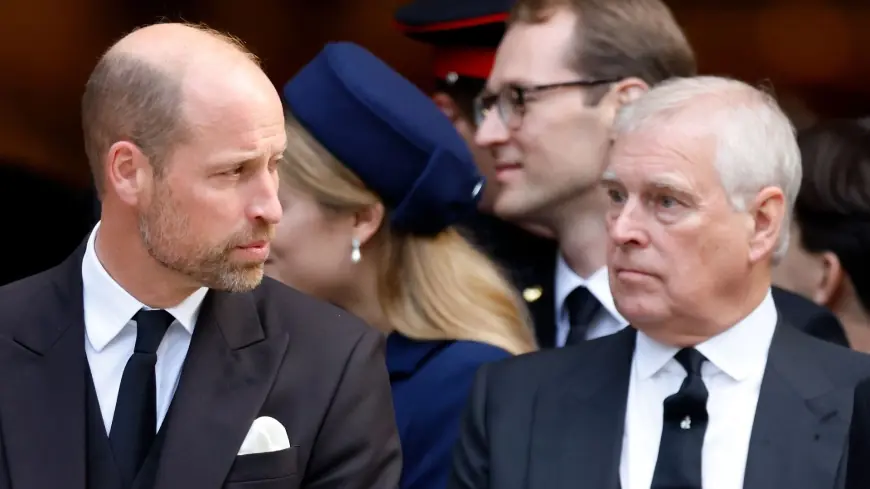
For william, the past several days have combined high-visibility public events with a noticeably strained tone. At a major cultural ceremony in London on Monday, Feb. 23, 2026 (ET), he made a brief remark to a guest about not being “in a calm state,” a comment quickly interpreted as a rare, unscripted glimpse of stress during a moment when the royal family is under renewed pressure.
While william has not delivered a detailed public statement about the investigation, his approach has leaned toward keeping focus on scheduled responsibilities and avoiding language that could be interpreted as interference in legal processes. That restraint reflects a broader institutional instinct: show distance, emphasize cooperation, and avoid making the case about family dynamics.
william and prince andrew: succession, Counsellor of State, and the governance question
Beyond the legal case, the week has reignited debate about the monarchy’s governance mechanics. As public attention intensifies, so do questions about who can represent the monarch in limited constitutional functions, and how eligibility is determined.
Some political voices across Commonwealth realms have openly floated the idea of removing prince andrew from the order of succession. That process, however, is not a quick switch: it typically requires legislative coordination and can become time-consuming because the monarchy’s legal framework touches multiple parliaments.
For william, that matters for one reason above all: the institution’s future credibility. The more the public conversation centers on loopholes and technicalities, the harder it becomes for the monarchy to present itself as modern, rules-based, and separate from scandal.
What happens next for william and prince andrew
The next phase hinges on three near-term developments:
-
Document release mechanics: what is published, what is withheld, and what timelines are applied.
-
Investigative steps: whether authorities announce further actions, interviews, or procedural milestones.
-
Royal-family positioning: whether william increases his public visibility to project steadiness, or keeps a lower profile while the legal process unfolds.
Uncertainty remains high because legal timelines can shift, and disclosure decisions can be contested. What is clear is that the story is no longer only about prince andrew’s past decisions; it is now a live test of institutional boundaries—one that william will be expected to navigate with precision and restraint.