

























Amd equity-for-chips deal with Meta ties 160 million shares to 6-gigawatt GPU purchase

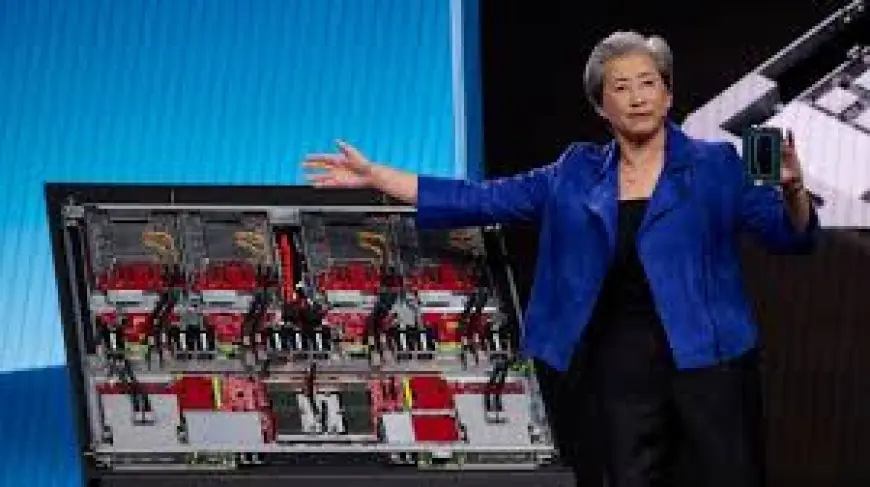
Meta and amd have struck a multiyear agreement under which Meta will purchase upward of 6 gigawatts of AI chips, a transaction structured in part as equity. The arrangement links 160 million shares of AMD common stock to performance milestones, a design that directly ties vendor compensation to chip shipments and execution.
Amd share issuance and the 160 million-share structure
Under the deal, AMD will issue Meta 160 million shares of common stock that vest in a series of tranches if AMD achieves specified milestones. The first tranche will vest when AMD ships its first 1 gigawatt of chips. AMD Chief Financial Officer Jean Hu framed the pact as a revenue-and-earnings accelerator, saying the partnership should drive “substantial multi-year revenue growth and be accretive to our non-GAAP earnings per share, ” and that the performance-based structure “tightly aligns AMD and Meta around execution and long-term value creation. ”
MI450 GPUs and Helios rack deployment
The initial graphics processing units under the agreement are AMD’s MI450 line. Those GPUs will be deployed in Meta’s Helios rack-scale data center systems paired with EPYC central processors in the second half of the year. Meta will also purchase a substantial number of CPUs, including AMD’s Venice chip and its next-generation Verano processor, highlighting a shift toward greater CPU importance for inference workloads and agentic AI services.
Nvidia Blackwell and Rubin ties to Meta’s larger GPU strategy
The AMD pact follows a separate multiyear agreement announced last week in which Meta agreed to acquire millions of GPUs from Nvidia, including Blackwell and Rubin processors. Nvidia also said Meta will host the first large-scale deployment of its Grace CPU servers; Nvidia typically combines a Grace CPU with two Blackwell or Blackwell Ultra processors to form GB200 and GB300 superchips that fit into rack-scale platforms.
Market reaction and chip-stock sentiment
AMD shares surged as much as 10% in premarket trading on the news before trimming those gains in the regular session. The deal arrives against a backdrop of cooling enthusiasm for chip stocks as investors debate whether heavy industry spending will pay off and whether custom chips from large cloud providers could displace general-purpose GPUs.
Capital spending commitments and industry totals
Meta’s agreement with AMD comes as the company plans to spend upwards of $135 billion in capital expenditures through 2026 to finance its AI expansion, including data center construction, chips, and model training. Meta, Amazon, Google, and Microsoft are expected to spend a combined $650 billion on AI, a scale of investment that has contributed to uneven share performance among the big tech companies: Meta’s shares were down about 2. 5% since its Jan. 28 earnings and investment announcement, Google had fallen roughly 8. 7%, Amazon about 11. 9%, and Microsoft about 15. 5%.
Competitive dynamics: CPUs, TPUs and the GPU landscape
CPUs are increasingly central to AI infrastructure as firms emphasize inference and agentic services, prompting Meta to buy large numbers of AMD CPUs alongside GPUs. In November, a report said Meta was in talks with Google to use TPU chips for AI applications; analysts cited in the report said it would be difficult for TPUs to supplant the more general-purpose processors that Nvidia and AMD build. The broader implication is that hyperscalers are spreading hardware bets across multiple architectures while tying procurement to execution to de-risk massive build-outs.
For further context on the original coverage, see the work of Daniel Howley.