
















Ai safeguards at risk as Pentagon presses Anthropic and threatens penalties

The immediate stakes here are about who controls the limits on military use of powerful systems and whether a self-styled safety-first company can keep those limits in place. The Pentagon’s pressure on Anthropic — including a hard deadline for CEO Dario Amodei and explicit threats of penalties — could force changes to how the company's Claude model is used inside defense systems and reshape how other firms set ai guardrails.
Ai risk and uncertainty: what’s unresolved now
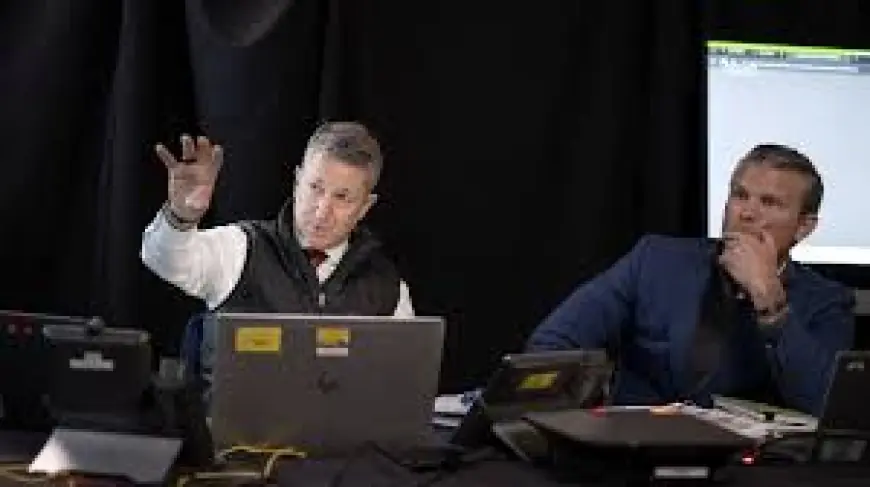
US military leaders, including Pete Hegseth, the defense secretary, met with Anthropic executives on Tuesday to press a dispute over what the government will be allowed to do with Claude. Hegseth gave Dario Amodei until the end of the day on Friday to agree to the department’s terms or face penalties, a detail appearing in recent coverage. The Department of Defense has warned it could cancel a massive contract and designate the company a “supply chain risk” if Anthropic does not comply.
What’s easy to miss is how many specific pressure points are still uncertain: whether the DoD will actually sever the relationship, how punitive designations would be applied, and which parts of Anthropic’s safeguards would be forced to change. The real test will be whether Anthropic alters policy language to allow broader military use or stands firm on its safety limits.
Meeting and operational context
The dispute follows weeks of disagreement over how the military is allowed to use Claude. Defense officials have pushed for unfettered access to Claude’s capabilities. Anthropic has resisted allowing its product to be used for mass surveillance or autonomous weapons systems that can use AI to kill people without human input. The DoD has already integrated Claude into its operations but has threatened to sever the relationship over what top brass perceive as roadblocks erected by the company.
Contracts, competing models and recent moves
In July last year the Department of Defense struck deals with several major ai firms, including Anthropic, Google and OpenAI, offering contracts worth up to $200m. Until this week, Anthropic’s Claude product was the only model permitted for use in the military’s classified systems. That shifted when the DoD signed a deal on Monday allowing the use in classified systems by military personnel of Elon Musk’s xAI chatbot; that product has faced recent backlash over producing nonconsensual sexualized images of children.
Both xAI and OpenAI have agreed to the government’s terms on the uses of their ai. A defense official has stated that OpenAI had allowed its model to be used for “all lawful purposes. ” OpenAI did not immediately respond to a request for comment on their agreement with the government.
Political pressure, public comments and recent operational claims
The meeting between Anthropic and the Pentagon is taking place a month after the US military reportedly used Claude to assist in its capture of Venezuelan leader Nicolás Maduro. There has been a widespread push from the Trump administration to integrate ai into the military; Donald Trump has repeatedly vowed that the US will win a global AI arms race.
Emil Michael, the Pentagon’s chief technology officer and a former Uber executive, has publicly campaigned for Anthropic to “cross the Rubicon” and agree to the government’s terms. Michael said last week in a public comment: “I think if someone wants to make money from the government, from the US Department of War, those guardrails ought to be tuned for our use cases – so long as they’re lawful. ”
Anthropic’s Dario Amodei has long spoken out in favor of greater regulation on ai, and his company has backed a political action committee advocating for stronger safeguards over artificial intelligence. Amodei opposed Trump during the 2024 US presidential campaign and Anthropic has hired — unclear in the provided context.
- Here’s the part that matters: the Pentagon has set an explicit, near-term deadline and threatened contract cancellation and a supply-chain designation, which raises the immediate risk to Anthropic’s DoD relationship.
- Who is directly affected: Anthropic’s executives and employees, DoD programs using Claude, and other ai firms watching whether safety commitments survive procurement pressure.
- Policy signal: two competing paths are now visible — companies align to the DoD’s terms or they try to defend safety constraints and risk punitive steps.
- Next signals that would confirm direction: whether Anthropic accepts the DoD’s terms by the stated deadline, whether the DoD follows through on contract cancellation, and whether additional firms revise their guardrails.
The real question now is how much of Anthropic’s public safety posture will survive direct military demands and explicit penalties. It’s important to watch whether this becomes an isolated showdown or a template for future procurement battles.
Micro timeline (from details in the provided context): Tuesday – meeting between US military leaders and Anthropic executives; Monday – DoD signed a deal permitting xAI use in classified systems; July last year – DoD struck deals with Anthropic, Google and OpenAI offering contracts up to $200m; one month earlier – reported military use of Claude in the capture of Nicolás Maduro.
It’s easy to overlook, but the stakes extend beyond a single contract: the outcome could tilt industry norms on safeguarding ai in defense contexts and set a precedent for how much control governments can require over commercial models.