











Warriors Vs Pelicans: Dejounte Murray’s return after a year-long rehab

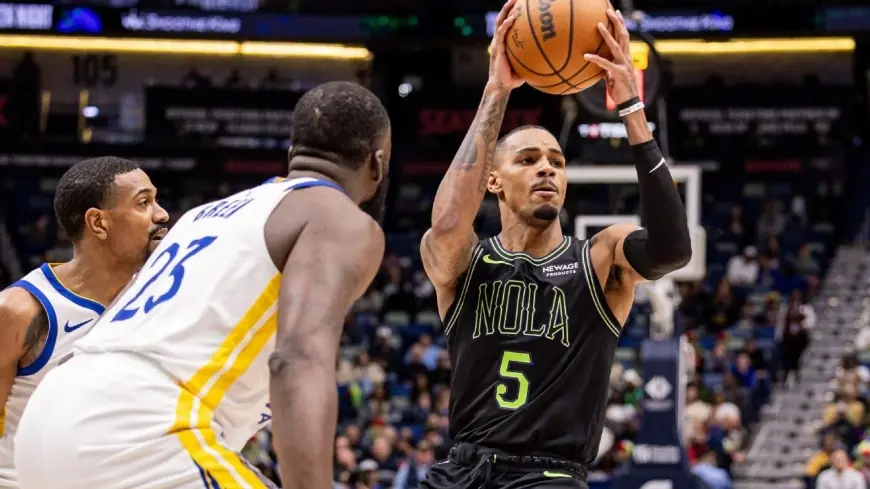
Dejounte Murray made his long-awaited return in the warriors vs pelicans matchup, scoring 13 points and helping New Orleans to a 113-109 victory over Golden State. The performance came after a year away for rehab from a ruptured right Achilles and followed a string of injuries and personal crises that nearly derailed his career.
Warriors Vs Pelicans: a comeback that began inside 20 seconds
Fewer than 20 seconds into his first game in nearly 13 months, Murray converted a slashing layup, setting the tone for a 13-point night. He capped the scoring with a driving layup off the glass with 1: 04 remaining that pushed the Pelicans’ lead to five in the final 113-109 score. His minutes were capped at 25 in the comeback from a ruptured right Achilles tendon, a limitation the team managed to preserve some minutes for closing and for the winning stretch.
What Murray did on the stat sheet and in the locker room
Murray finished with 13 points, three assists, a couple of rebounds and a steal, while also committing five turnovers. Zion Williamson led New Orleans with a team-high 26 points and singled out Murray’s communication and leadership on the floor. When the final buzzer sounded, Murray’s daughter ran onto the court and hugged him; later, the coach described the locker room as a "massive celebration" for the journey Murray had been through.
Timeline of injuries and personal setbacks that preceded the return
His season and the months before it were marked by sharp, compounding setbacks. In June 2024 the Atlanta Hawks traded Murray to New Orleans, where expectations were high that he could form a core alongside Zion Williamson and Brandon Ingram. A week before his first game of the 2024-25 season, Murray’s mother suffered a stroke and he flew to Seattle, where he grew up, to be with her; she could barely speak and was helpless in the hospital. In the first game he broke his left hand, underwent surgery and missed 17 games. In January 2025 he suffered a season-ending ruptured right Achilles tendon, triggering a year-long rehabilitation.
Personal reflections: darkness, resilience and recovery
Murray has described the period as a heavy, enveloping feeling he called "a dark cloud. " "Everything, " he said, "was just dark. " He added, "A lot of people don’t know, a lot of stuff in life went downhill, " and called that stretch "literally the worst three months of my professional career on and off the floor. " He said he was never able to focus on basketball, and that he finally let himself feel the weight and unload his grief. He traced his resilience to his upbringing in Seattle, saying he was forced to operate like an adult at 11 and that he has faced obstacles since he was like 5 years old. Emerging from that darkness, and after a rehab journey from one of the toughest injuries in sports, Murray said he was ready to keep playing.
Coaching, teammates and what comes next
Pelicans coach James Borrego praised Murray’s return, saying, "He looked like his old self. He didn't miss a beat, " and noting that he wanted to leave Murray some minutes for the closing period. Borrego also described the locker-room recognition—"his teammates just shouted him out"—and called the scene a celebration for the year Murray had endured. Murray himself said, "I've been through a lot, " adding that he keeps his "chest out, chin up, smiling" and that he was "just ready to see where it goes from here. " He also declared his appetite for the rest of the season plainly: "I'm hungry, " and "I'm starving. " The Pelicans have 23 games left this season.
Roster note: matchup context and surrounding storylines
The victory came against Golden State in the 113-109 final. The matchup and its outcome arrive amid other roster narratives, including that De'Anthony Melton is playing his way to more money on the Warriors as his value has skyrocketed, a development that frames some of the broader personnel conversations around the franchise Murray faced in his return.
Illustration credit: Demetrius Robinson. Photo credit: Stephen Lew.