




















Gorton And Denton race heads to final day as poll shows Greens, Reform and Labour neck-and-neck

gorton and denton faces a razor-thin finish as campaigning winds down, with a fresh constituency model putting the Greens on 31%, Reform on 30% and Labour on 29% — a gap of just a few hundred votes between first and third.
Three-way contest tightened by new polling and local splits
The seat, created two years ago and straddling the city of Manchester and the metropolitan borough of Tameside, has become a rare three-horse race. The updated model forecasts turnout of 37, 300 votes, up from 36, 600 in 2024, producing estimated totals of 11, 500 for the Greens, 11, 300 for Reform and 10, 900 for Labour.
Analysts point to local geography as a major factor: one half of the constituency, closer to Manchester proper, appears to lean Green, while the Denton side is described as predominantly white and working class and leaning toward Reform. The likely split on paper is that Gorton and its surrounding neighbourhoods break Green while Denton favours Reform, but that division does not settle the overall outcome.
Gorton And Denton final day: candidates, campaigns and recent history
Eleven candidates have been out delivering leaflets and knocking on doors on the campaign’s last day. The by-election was triggered by the resignation of the former MP Andrew Gwynne, who stood down with ill health after a suspension over offensive WhatsApp messages; Gwynne had risen to the rank of Health Minister during his career.
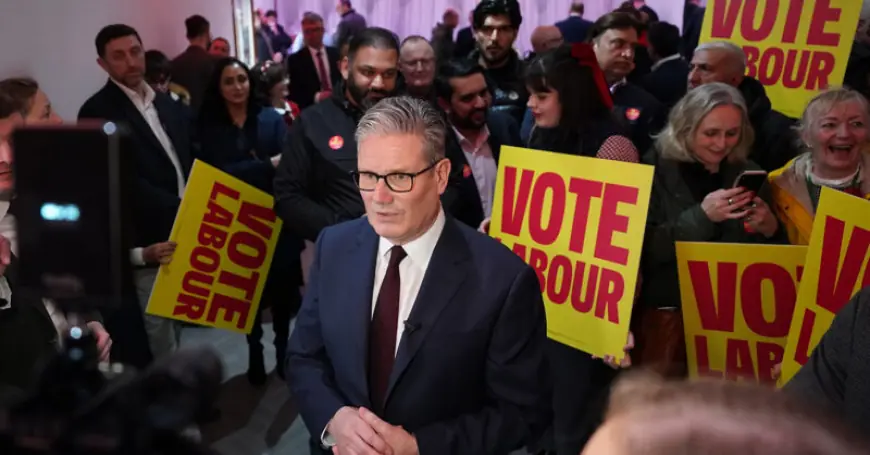
Labour held the seat with a 13, 000 majority at the 2024 general election, making Gorton and Denton Labour’s to lose. The prime minister, Sir Keir Starmer, personally intervened to stop Greater Manchester Mayor Andy Burnham from becoming the Labour candidate; Manchester councillor Angeliki Stogia won the selection and drew Starmer to a rally at a community centre in Levenshulme this week.
How the smaller parties and high-profile figures are shaping the race
Reform UK finished second in 2024 and remains prominent: their candidate is the TV presenter Matt Goodwin, supported on the stump by leader Nigel Farage, who frames the by-election as a referendum on the prime minister. The Green Party, which came third last time, fields plumber Hannah Spencer, who has pushed her working-class credentials and urged left-leaning voters to give the Greens a try.
New forecasting snapshots have shifted since January. A Britain Predicts model published in January placed Reform on 32%, Labour on 26% and the Greens on 22%; national polling since mid-January has shown marginal movement toward Labour and the Greens at Reform’s expense. Polling models also factor in a potential “squeeze” effect that can compress support toward perceived frontrunners in tight races.
Local echoes of razor-thin results and national attention
Campaigners warn that every vote will count: last year’s Runcorn and Helsby by-election was decided by six votes, handing Reform UK its first MP in the North West. With modelled totals separating first from third by only a few hundred votes, tactical voting and turnout will be decisive.
One new constituency poll from Omnisis has been folded into forecasts, and observers note the absence of a pro-Gaza independent candidate; voters inclined to such a candidate are said to favour Zack Polanski’s party by more than three to one in net terms, a factor that boosts Green prospects in the model.
Commons tensions add to the political backdrop
On the same week as the final-day campaigning, Commons turmoil spilled into public view. Sir Lindsay Hoyle said he told police he had heard Peter Mandelson was planning to leave the country; Mandelson says that tip-off was wrong and that it led to his being arrested rather than allowed to attend an interview voluntarily. Mandelson has told friends the tip-off came from the lord speaker, Michael Forsyth.
The speaker told colleagues that on receipt of information he had felt it relevant to pass it on to the Metropolitan police in good faith, calling the rapid media fallout regrettable and warning members it would not be appropriate to comment further because the matter is a live investigation.
Debate in the Commons this week also saw Kemi Badenoch say her party is under new leadership and press Sir Keir Starmer on student costs; she argued that student loans have become a debt trap and asked whether the prime minister would cut interest rates on student loans. Starmer accused Badenoch of effectively admitting the Conservatives had “scammed the country” and said the government would “look at ways to make it fairer, ” adding that energy bills are coming down by £117.
Rachel Hopkins (Lab) asked whether supporting a Palestinian-led government and upholding international law in Gaza was essential; Starmer said the government supports a two-state solution, that Hamas must decommission its arms, and that Israel’s block on aid supplies is “unconscionable. ” Edward Argar (Con) questioned whether the prime minister would U-turn on business rates, invoking a former prime minister’s line about U-turns.
With campaigning entering its final hours, voters will go to the polls and return the count; the result of the Gorton and Denton contest will reveal whether the model’s tight margins hold or whether local dynamics and tactical voting tip the outcome.