


















Mlb Debate: Bryce Harper Says Allowing On-field Fights Would Curb Pitching Retaliation and Shift Player Conduct

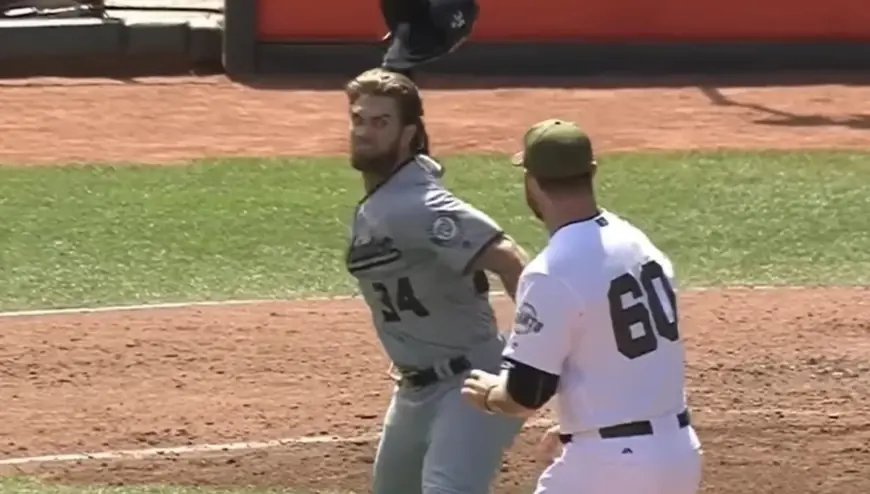
Who feels it first: pitchers and position players who currently police grievances through hit-by-pitches and bench warnings. Bryce Harper suggested permitting fights during games would reduce intentional throws at batters and change how disputes are resolved on the diamond. That idea, offered in a recent interview, reframes enforcement away from post-game discipline and toward on-field, immediate confrontation—with clear implications for mlb suspensions, dugout behavior and team strategy.
Impact on Mlb Players and Pitching Dynamics
Harper’s proposal centers on a practical trade-off: let players physically settle certain disputes, and instances of pitchers deliberately hitting batters might decline. That’s the explicit link he drew between fighting and eliminating deliberate throws at hitters. If taken seriously, the shift would affect who managers protect, how pitchers are instructed to respond to slights, and the likelihood of bench-clearing brawls becoming a routine enforcement mechanism instead of a rare escalation.
What's easy to miss is Harper said there is no bad blood now with the pitcher involved in his own famous confrontation, signaling his comments are framed as a structural suggestion rather than personal grievance. The real test will be whether other players echo this publicly or whether institutional actors move to formalize any change.
Harper's remarks and the 2017 mound incident
The remarks revisited a well-known on-field fight in which Harper charged the mound after being hit, an incident that led to multi-game suspensions for both participants. Harper watched the footage on a recent podcast appearance and argued that allowing fights on the field—like the model used in hockey—would serve as a deterrent to pitchers throwing at hitters. He also emphasized he doesn’t want to fight on the field in general, but framed occasional, controlled confrontations as a potential safety valve.
Disciplinary context is already part of the record: the two players involved in that 2017 clash received short suspensions. Harper also noted he has moved past the episode, describing no continuing enmity with his former opponent. He enters the conversation as a two-time MVP with a lengthy career track record, and he referenced that fight while discussing the broader idea of on-field enforcement.
- If more players publicly support this view or similar bench-clearing brawls recur, momentum behind Harper’s argument would grow.
- Immediate implications include a potential rebalancing of punishments: fewer retaliatory pitches but possibly more suspensions tied directly to fights.
- Pitching staffs and managers would need to revise in-game instructions about retaliation and protection.
- Any formal shift would require reconciling current suspension practices with a new tolerance for on-field fighting.
Here’s the part that matters: the proposal doesn’t just invite more physicality—it reframes how the game enforces norms. The real question now is whether players, team officials and league rule-makers view on-field fighting as a corrective mechanism or an unacceptable risk to safety and order.
It’s easy to overlook, but Harper expressly said he doesn’t harbor lingering bad blood with the opponent from the 2017 incident, which undercuts a narrative that his comments are merely personal vendetta. Instead, he offered a policy-style suggestion grounded in his own experience on the field.
Near-term signals to watch for include other prominent players repeating the argument and any uptick in bench-clearing incidents. Recent public discussion has put the idea into circulation; whether it becomes part of formal debate over mlb discipline remains an open question, and details may evolve.