
















Finley Melville Ives Stable and Being Assessed After Heavy Fall in Olympic Freeski Halfpipe Qualifying

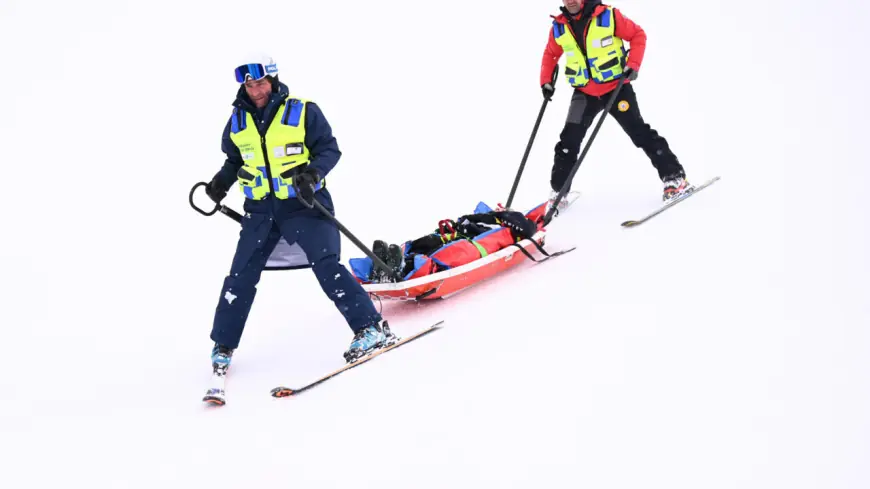
Finley Melville Ives, the 19-year-old world champion and world number one in freestyle skiing, was described as stable and was being assessed by medical professionals after a heavy fall during men's freeski halfpipe qualifying on February 20, 2026 (ET). The incident halted qualifying for several minutes and left the field and spectators shaken ahead of the scheduled 12-man final later that day.
Finley Melville Ives: What happened and what’s new
During qualifying at the Livigno Snow Park venue, Finley Melville Ives lost his skis after attempting an aerial trick, fell hard and slid down part of the halfpipe on his back. Medical personnel attended quickly as he appeared to be in distress and the competition was suspended for more than five minutes while he received treatment at the scene. He was removed from the course on a sled and transferred for further assessment.
New Zealand's Olympic Team later issued an update stating that Melville Ives was with family and under medical evaluation, and described his condition as stable and in positive spirits. The event had already seen another serious fall the previous day during women's qualifying. The 12-man final for the men's freeski halfpipe was scheduled for later the same day.
Behind the headline
The halfpipe discipline requires athletes to perform multiple aerial maneuvers by launching off the lip of a semi-cylindrical course. The inner height of the walls used in this event is listed at 7. 2 metres, and competitors routinely project themselves well above that lip to complete tricks. Those dynamics help explain why crashes can be severe and why rapid medical response is built into event operations.
Key stakeholders in the immediate aftermath include the athlete and his family, the on-site medical team, event organizers responsible for safety and scheduling, and fellow competitors facing an interrupted qualifying session. Organizers must balance athlete welfare with the demands of an Olympic competition timetable, while teams and medical staff manage the information and care flow for injured athletes.
What we still don’t know
- Exact medical diagnosis or details of any injuries sustained by Finley Melville Ives (unconfirmed).
- Whether Melville Ives will be cleared to compete in the scheduled final later that day (unconfirmed).
- Specifics of the on-site treatment beyond initial sled evacuation and assessment (unconfirmed).
- Any follow-up care arrangements, hospital transfers or planned public updates (unconfirmed).
- Whether the course or equipment will be altered as a result of the incident (unconfirmed).
What happens next
- Medical clearance and same-day return: If medical professionals clear him, he could remain entered for the final; the trigger would be an official medical clearance statement.
- Withdrawal and further evaluation: If assessments identify injury concerns, he may withdraw and undergo further testing; the trigger would be a withdrawal notification or transfer to a medical facility.
- Event schedule impact: Organizers could delay or adjust the final if further medical activity or safety reviews are required; the trigger would be an official competition update from event control.
- Safety review: Recurrent serious incidents could prompt a course safety review for the halfpipe setup; the trigger would be an internal safety assessment or notice from event medical leadership.
- Ongoing condition updates: The athlete’s team or medical staff may provide periodic condition updates; the trigger would be subsequent statements from the athlete’s delegation or medical team.
Why it matters
The immediate significance is twofold: the well-being of a leading young athlete and the integrity and safety management of a high-risk Olympic discipline. Finley Melville Ives occupies a top competitive position in the sport, and his condition affects not only his own Olympic prospects but the competitive dynamics of the event. Repeated serious falls over successive days also draw attention to how organizers balance athlete safety with the pressures of keeping to an Olympic schedule.
Near-term implications include potential changes to athlete lineups for the final, increased scrutiny on course safety procedures, and a sequence of medical follow-ups for the skier. Observers and event officials will be watching for medical updates and any official decisions about participation that influence the immediate Olympic competition.