























Keely Hodgkinson’s world indoor 800m record shifts the landscape — who feels the change first

What matters now is momentum: keely hodgkinson’s new world indoor 800m mark immediately raises the bar for championship races and reframes expectations for rivals and national sprint-middle programs. The performance is more than a single time — it creates pressure on contenders, validates a bold comeback plan after serious injuries, and puts British athletics into a rarified world-record conversation for championship events.
Keely Hodgkinson’s ripple: immediate impacts on competitors, selectors and season plans
The most immediate effect lands on fellow 800m runners who shared the Liévin start line: Switzerland’s Audrey Werro and an Ethiopian Olympic silver medallist were present as pre-race contenders, and Poland’s Anna Gryc fulfilled a pacemaking role designed to reach a 55. 8-second halfway point. National teams and meet planners will also reassess pacing and selection strategies now that a markedly faster benchmark exists early in the indoor season. What's easy to miss is that this record places Hodgkinson alongside one other British athlete who holds a current world record in a championship event, changing how domestic depth is measured.
Event details and context behind the mark
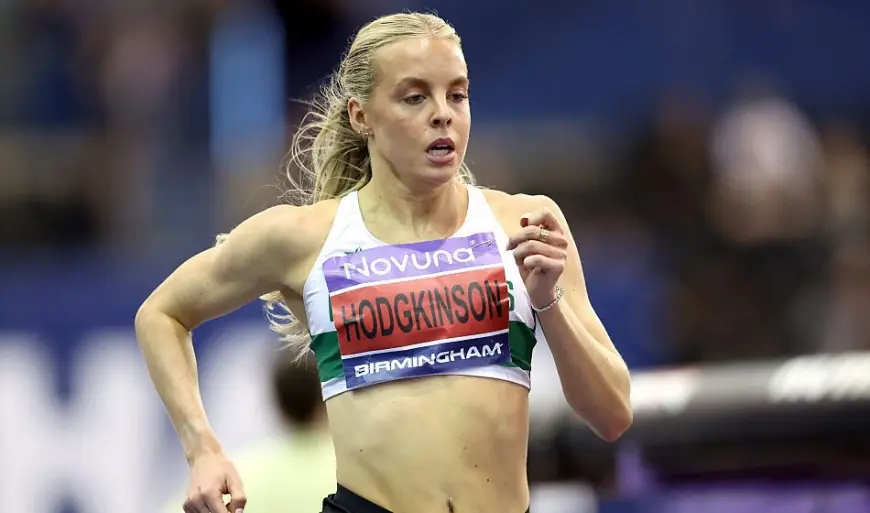
In Liévin, France, Olympic champion Keely Hodgkinson crossed the line in 1: 54. 87, taking almost a full second off the long-standing indoor 800m record of 1: 55. 82 set on 3 March 2002. The chosen pacing plan called for a 55. 8 split at halfway; Hodgkinson reached 400m in 55. 56 and then extended the lead to chase the target for the rest of the lap. The celebration included a ceremonial crown and a trackside throne as she accepted the win and the new record.
Her run came days after a national statement of form: Hodgkinson opened the indoor campaign with a 1: 56. 33 clocking in Birmingham, and she had also improved her own national mark by almost a second at the UK Indoor Championships the previous weekend. That sequence — a fast outing followed by a national record, then an all-time indoor world record — highlights how quickly her indoor season accelerated.
Her trajectory has not been linear. Earlier setbacks from two serious hamstring injuries interrupted plans to target the record at a named domestic meeting; before that, she had set a rarely contested 600m record during an earlier indoor season. The injuries and recovery work in the gym were referenced as part of the buildup to this performance, which came after a long wait to return to championship-level racing.
- National standing: the record places her among a tiny group of British athletes holding current world marks in championship events, altering selection conversations.
- Rival dynamics: athletes who paced or raced with her at Liévin now face a new target they measured themselves against mid-race.
- Tactical note: the race used a planned 55. 8 halfway split, and Hodgkinson reached 400m in 55. 56 — a detail that shows how pacing executed the record attempt.
- Form signal: a 1: 56. 33 run just days earlier indicated the performance was building rather than a single outlier.
Here's the part that matters: this changes the conversation about how fast the indoor 800m can be run in championship-type environments, and it validates a season strategy that included a quick return to form after injury.
The real question now is whether that mark will reshape pacing choices at marquee indoor meets and how rivals will respond over the next weeks.
What’s easy to overlook is the technical tweak in indoor starts: a longer lane phase (150m instead of 100m) was noted as favoring faster, less crowded early laps — a factor Hodgkinson had cited as helpful in producing fast indoor times.
Short timeline: Ceplak's indoor record had stood since 3 March 2002; Hodgkinson ran 1: 56. 33 in Birmingham five days before the Liévin run; she then set 1: 54. 87 in Liévin to claim the new mark. Schedule notes: indoor season and championship lead-ups remain active and subject to further performances.
That performance will be parsed by rivals and national coaches alike, and confirmation of its longer-term significance will come as the season progresses and championship fields reconvene.