
























Carlos Alcaraz’s Doha surge is rewriting opponents’ plans and raising the bar for the rest of the tour

Why this matters now: The stretch of finals and relentless wins are not just trophies on a résumé — they change how opponents prepare and how tournaments are navigated. carlos alcaraz arriving in another final forces rivals into a defensive posture: they must game-plan for an opponent who is both producing results and publicly expressing frustration with the governing framework. That combination shifts pressure from match-to-match onto the rest of the draw.
Carlos Alcaraz’s run: immediate impact on rivals and tournament dynamics
Rivals face two linked pressures: tactical and psychological. Tactically, they must counter a player whose match-winning patterns are described as decisive and comprehensive; psychologically, the momentum of reaching the last round in 12 of his last 13 tournaments compresses margin for error in opponents’ approaches. The recent match outcomes have already left established contenders reacting rather than dictating, and that inversion affects how coaches allocate practice time and how lower-ranked challengers pick their moments.
Here’s the part that matters for players and coaches preparing for the coming weeks: consistent final appearances change risk calculations. Teams now have to weigh whether to chase short-term adjustments or preserve energy for repeated deep runs, because the predictable result — his advancement — alters the payoff matrix for aggressive gambits.
Event details and the Doha match thread
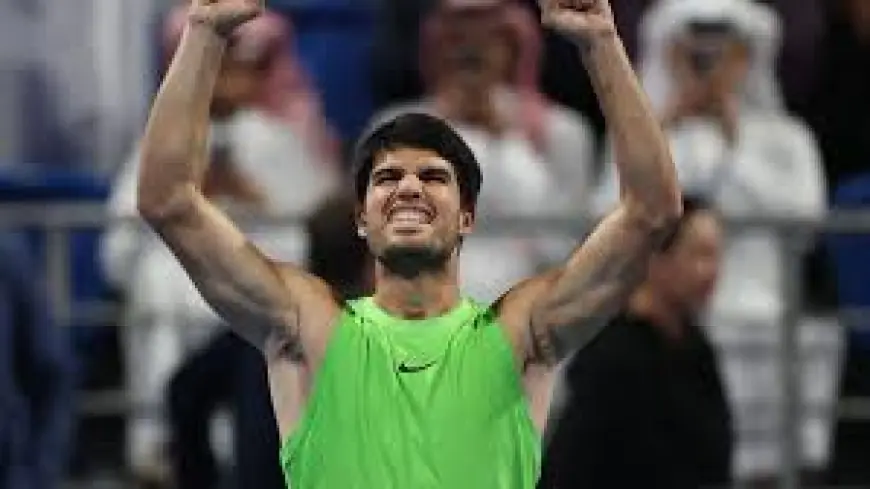
The immediate trigger for this latest strategic reshuffle was a straight-sets victory over a high-profile opponent: a 7-6, 6-4 win that lasted 2 hours and 2 minutes. That result sent him into the final, where he will meet Arthur Fils, ranked 40th, who advanced after a 6-4, 7-6 victory over his own opponent. The win continues an impressive pattern: eleven matches played in the tournament, and as many victories, and the broader non-stop consistency of reaching finals in 12 of the last 13 tournaments entered.
Alongside on-court dominance, there was a public flash of anger directed at the sport’s rulebook, encapsulated by a blunt Spanish-language criticism of ATP rules. That public airing of frustration adds a second layer to the moment — it’s not only the scoreboard that’s putting rivals on the back foot, but a visible tension with the structure that governs the tour.
- Finals frequency: 12 finals in the last 13 tournaments entered, marking an unusually sustained peak in outcomes.
- Doha specifics: straight-sets victory (7-6, 6-4), match length 2h 02m; opponent beaten in the semi was a top-tier rival.
- Upcoming opponent: Arthur Fils (ranked 40) reached the other side’s final with a 6-4, 7-6 win.
- Public stance: an outspoken critique of ATP rules occurred during the event run, signaling off-court friction alongside on-court success.
It’s easy to overlook, but these developments combine form and friction: dominance produces strategic fallout, and visible frustration with structure can become part of opponents’ mental calculus.
The real question now is how other top players adapt their preparations: continue to chase one-off tactical fixes in the hope of an upset, or rethink longer-term approaches to counter repeated final appearances? For tournament organizers and coaching teams, the recent run provides a practical prompt to alter scouting and load management.
Key takeaways and signals that will clarify the next phase:
- If he converts the Doha final into a title, the sequence will further cement the pattern of late-stage consistency across the season.
- Should the final be competitive, it will offer clearer evidence about whether the dominance is widening or if challengers are beginning to find workable answers.
- Continued public criticism of tournament rules may shape discourse around scheduling and regulations, even as results keep speaking on court.
- Opponents’ strategic shifts—more conservative or more innovative—will be the early indicators of how sustainable this pressure is across the tour.
What’s easy to miss is how rare it is for a player so young to pile up this kind of finals frequency while also publicly challenging the tour’s framework; that double dynamic makes the current stretch especially consequential for rivals and event planners alike.