
























Chicago Bears Moving To Indiana Emerges as Hammond Wolf Lake Site Becomes Primary Focus

The Chicago Bears signaled a new emphasis on a Hammond location near Wolf Lake, intensifying debate over chicago bears moving to indiana and prompting renewed bargaining in Illinois. Indiana lawmakers advanced a stadium framework this week that team leaders called a significant step in their stadium planning.
What happened and what’s new — Chicago Bears Moving To Indiana
Indiana’s House panel unanimously advanced legislation that would create a stadium finance authority to support a potential dome in northwest Indiana. The committee vote moved the proposal forward during a hearing in which local officials voiced strong support for landing an NFL franchise.
The team shared a statement characterizing the bill’s passage as the most meaningful step in its stadium planning to date and said it was committed to completing remaining site-specific due diligence for a location near the Wolf Lake area in Hammond. A Bears spokesman said Hammond is the site the organization is focused on and that further work remains to be done.
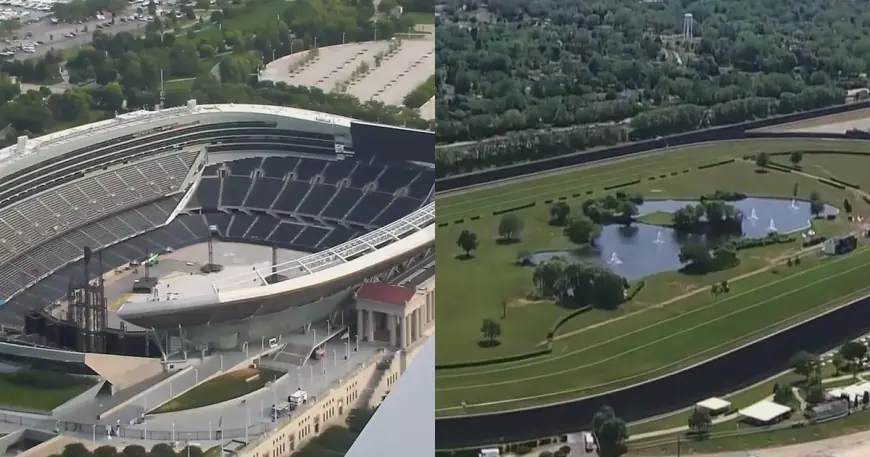
Officials have identified at least two Hammond-area parcels under consideration, including Wolf Lake Memorial Park and a golf course near 129th Street and Calumet Avenue that was built over an old landfill and sits near industrial and residential areas. The team has not released renderings or locked down an exact stadium footprint.
At the same time, village leaders in Arlington Heights said Bears representatives have assured them that the Indiana developments do not represent a final decision on a new site, and that discussions in Illinois remain active.
Behind the headline: context, incentives and stakeholders
Indiana leaders framed the effort as an opportunity to secure a major professional sports venue and associated development. State officials described a framework that would enable negotiations between the state and the team, and local leaders in Hammond expressed willingness to partner with the Bears on the project.
Illinois officials say they had held extended negotiations with the team shortly before the Bears’ statement, and Illinois leaders voiced surprise and disappointment at the timing. Arlington Heights officials emphasized ongoing talks in Illinois and urged swift legislative action there to keep the suburban option viable.
Key stakeholders include the Bears organization, Indiana legislators and Hammond municipal leaders pushing for the project, and Illinois state and local officials advocating for Arlington Heights or other in-state options. Regional taxpayers, local residents near proposed sites, and businesses that would be affected by new infrastructure and tax changes are also central to the outcome.
What we still don’t know • What happens next • Why it matters
What we still don’t know
- Whether the Bears will ultimately relocate from Illinois or finalize a Hammond site — the team has not committed to leaving Illinois.
- The precise stadium parcel, designs, renderings or a construction timeline for any Hammond location remain unannounced.
- The final financing package and which public taxes or levies will be approved to support construction are unresolved.
- How Illinois’ pending legislative options will change in response and whether a Mega Projects bill can be enacted on a timeline the team finds acceptable.
What happens next — plausible scenarios and triggers
- Hammond path: The team completes site-specific due diligence, Indiana finalizes the stadium authority framework, and the Bears proceed with a Hammond plan. Trigger: successful due diligence and enactment of enabling legislation.
- Illinois path preserved: Illinois leaders reach a legislative agreement acceptable to the Bears and the team opts for Arlington Heights or another in-state site. Trigger: passage of a revised Mega Projects bill and renewed agreement terms with the Bears.
- Prolonged dual-track negotiations: The Bears continue parallel talks with Indiana and Illinois, extending uncertainty while both sides refine offers. Trigger: ongoing public statements, more detailed proposals, and additional legislative activity in both states.
- Stalled process: Key legal, environmental, financing or community hurdles slow both efforts and delay any decision. Trigger: failed due diligence findings or legislative impasses.
Why it matters
The outcome would shape regional economic development, tax policy and political dynamics. Indiana legislators have proposed local tax measures to help fund stadium and infrastructure costs, and lawmakers discussion includes expectations about the team’s contribution to construction. Illinois leaders have signaled both surprise and an urgency to pass legislation that could retain the team for an in-state site. Neighborhoods near proposed Hammond parcels face immediate land-use and environmental questions if the project advances.
Near-term implications include intensified legislative activity in both states, increased public scrutiny of financing proposals, and continued uncertainty for fans and local governments until the Bears complete site due diligence and announce a final decision.