






















Peaky Blinders Movie: What the First Trailer and Calke Abbey Reveal About The Immortal Man

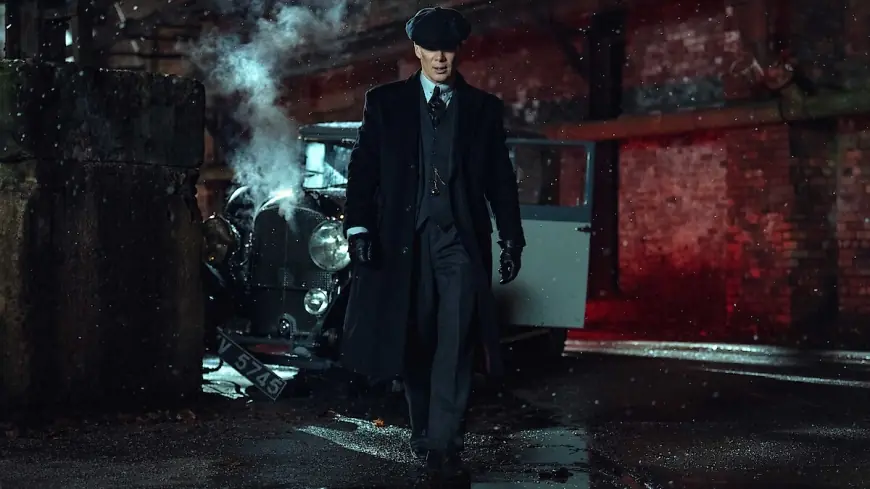
The first full trailer for the Peaky Blinders Movie, titled The Immortal Man, has been released, and it confirms Cillian Murphy's return as Tommy Shelby in a story set in Birmingham during World War Two. The film's use of authentic locations such as Calke Abbey and a confirmed March release schedule make this the clearest picture yet of the production's scale and tone.
What happened and what’s new
The trailer establishes that Murphy resumes the role of Tommy Shelby in The Immortal Man, depicting an older, greying Shelby drawn back from self-imposed exile to Birmingham in 1940 amid wartime destruction. Press notes for the film frame the narrative as a reckoning: with family and national stakes underlined, Tommy must confront his past and decide whether to confront or destroy his legacy.
New cast members visible in the trailer include Rebecca Ferguson, Tim Roth and Barry Keoghan; Keoghan appears as Tommy's son, now leading the gang as Duke Shelby. Stephen Graham and Sophie Rundle are shown returning to their earlier roles. The trailer emphasizes interpersonal confrontation and a darker, more mature Shelby at the center of the drama.
On the production side, the stately home Calke Abbey in Derbyshire was used extensively, with ground-floor passageways, a kitchen, a schoolroom and a night nursery serving as on-screen locations. The estate's worn interiors and stable yards were adapted with minimal alteration to reflect the period, and more than 1, 300 historic objects were packed, moved and reinstated in a process taking over 950 hours. The Immortal Man is scheduled to open in cinemas on 6 March and to launch on a major streaming platform on 20 March.
Behind the Peaky Blinders Movie
Context: The film continues the story created for television, following a central character who returns to face consequences shaped by both personal and national turmoil. The trailer and production details offer a coordinated signal about tone and ambition: the narrative is set during wartime 1940, and the production deliberately sought locations that conveyed historical decline without extensive reconstruction.
Incentives and constraints: Producers prioritized authenticity in locations to achieve a convincing period atmosphere with limited set intervention; Calke Abbey’s layered interiors and peeling finishes provided an immediate, usable backdrop. The careful handling of historic objects—over 1, 300 items moved across nearly 1, 000 hours of conservation work—shows a constraint of working in a protected heritage site while preserving visual credibility.
Stakeholders: key creative figures include the returning lead actor and a cast augmented by notable additions. The custodians of Calke Abbey worked closely with the production team to adapt visitor spaces for filming while safeguarding collections. Audiences who followed the television series, cinema operators for the early March opening, and streaming distribution for the later March launch are all positioned to gain from the rollout.
What we still don’t know
- Complete plot details beyond the trailer’s broad premise remain unconfirmed.
- The specific roles and narrative importance of the newly announced cast members are not fully detailed.
- Box office projections and the streaming windows beyond the initial launch date are not disclosed.
- The extent to which Calke Abbey scenes represent broader location use across the film is not specified.
- Runtime and certification for theatrical and streaming releases remain unannounced.
What happens next
- Wide public reaction to the trailer could set the tone for pre-release marketing intensity; the trigger will be audience and critic response after the trailer circulation.
- The March cinema opening will offer an early measurement of theatrical demand; box office performance during opening weekend will influence subsequent distribution emphasis between cinemas and streaming.
- Further promotional material—interviews, clips or additional trailers—may clarify unresolved plot points and character roles; a new promotional push would likely follow early audience feedback.
- Calke Abbey’s public engagement may increase if on-screen scenes draw visitor interest; visitor operations may adapt tours or displays to reflect the film’s presence depending on audience demand.
- Conservation follow-through at filming locations will be tracked by site custodians to confirm that historic items were returned and reinstated as planned; any delays or issues would prompt further logistical updates.
Why it matters
The Peaky Blinders Movie marks a formal continuation of a well-known narrative universe, and the trailer confirms a tonal shift toward a wartime, introspective confrontation for its central character. For fans, the return of the lead actor and familiar supporting players provides continuity, while new cast additions signal an expanded generational storyline centered on Tommy Shelby and his son. The production’s use of an authentic heritage site underscores a commitment to period detail that may shape audience reception and local interest in filming locations. Near-term implications include audience anticipation building ahead of the March cinema opening and streaming launch, logistical follow-through at preserved sites that hosted filming, and a promotional window in which further materials will be decisive in framing the final rollout for The Immortal Man and the Peaky Blinders Movie experience.