






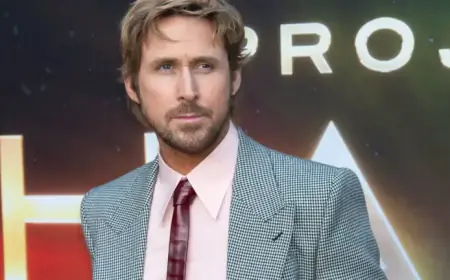






Daryl Hannah and John F. Kennedy Jr. Are Back in the Spotlight as a New Series Reopens Old Questions About Fame, Privacy, and the Kennedy Orbit

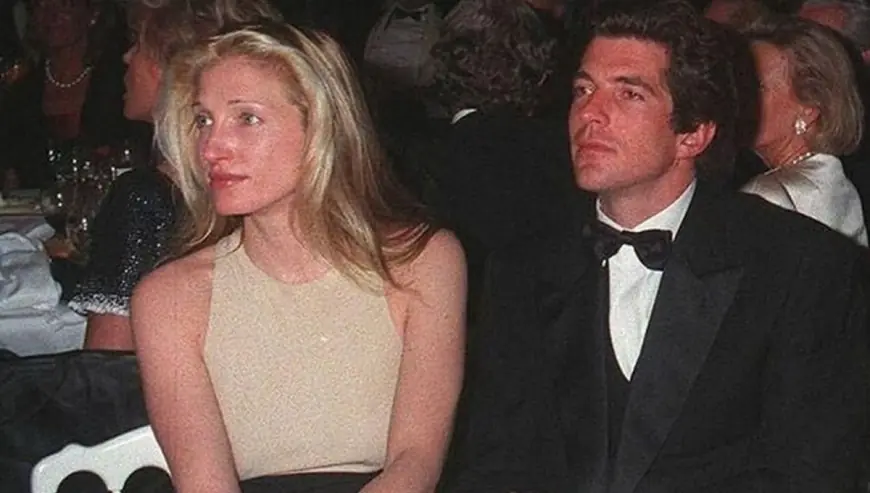
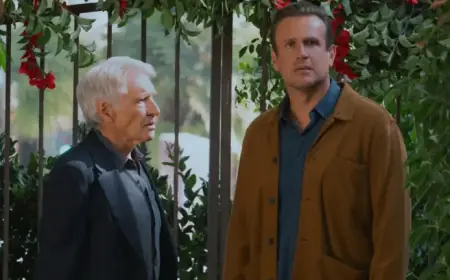
A newly released biographical romance series that premiered on February 12, 2026, has reopened public fascination with Daryl Hannah, John F. Kennedy Jr., and the tightly wound family dynamics surrounding Jacqueline Kennedy Onassis. The show’s weekly rollout has also revived a familiar 1990s storyline: how a very public man tried to build a private life, and how the women closest to him were pulled into a spotlight they did not control.
The renewed attention is less about “new” facts and more about what happens when dramatization meets a digital audience. Old paparazzi-era narratives are being re-litigated in real time, with modern expectations about consent, gender, and media intrusion.
What happened: the Daryl Hannah and JFK Jr. relationship, and where it fits in the timeline
Hannah and Kennedy’s romance became a defining celebrity story of the early 1990s. They reconnected in the late 1980s and dated for more than five years, ultimately splitting in 1994. That breakup year is a hinge point: it overlaps with a period when Kennedy’s public life intensified and when his future relationship with Carolyn Bessette began to take shape.
Jacqueline Kennedy Onassis died on May 19, 1994. That date still matters because it shaped the family’s emotional landscape at the same moment Kennedy’s personal life was in flux. In the public imagination, Jackie Onassis is often treated as a symbol of poise and control amid chaos; in reality, her final months occurred during a period of intense transition for her son.
Afterward, Kennedy and Bessette married on September 21, 1996, in a private ceremony. Their story ended tragically on July 16, 1999, when a plane Kennedy was piloting crashed, killing him, his wife, and her sister.
Behind the headline: why this story keeps coming back
The incentives are obvious, and they’re powerful.
For entertainment producers, Kennedy-adjacent stories offer built-in audience recognition and a ready-made emotional arc: glamour, scrutiny, and tragedy. For viewers, the appeal is partly historical and partly psychological, a chance to decode how fame pressures intimate relationships.
For the people portrayed, the incentives run the other direction. Hannah has long been protective of her privacy. The Kennedy family has spent decades navigating the collision between public interest and personal boundaries. A dramatization creates a new version of the past that can feel definitive, even when it’s built from fragments.
The stakeholder map is wide:
-
Surviving relatives, whose private grief gets recycled into public content
-
Public figures and actors, whose reputations can rise or take hits depending on portrayal
-
Fans of Hannah, Bessette, and the Kennedy legacy, who often split into competing “teams”
-
A modern audience, primed to reassess older tabloid-era treatment through today’s lens
In short: nobody involved controls the conversation, but everyone bears some cost from it.
What we still don’t know, and why the gaps matter
Even well-documented public relationships contain large private blank spaces. The new wave of attention highlights how easily those gaps get filled with assumptions.
Key uncertainties that remain hard for outsiders to truly pin down include:
-
The full emotional and practical reasons behind the 1994 split
-
How Kennedy’s family viewed the relationship in real time versus what later narratives suggested
-
What boundaries Hannah and Kennedy tried to set, and which ones the media and public ignored
-
How much of the “will they marry” storyline was real pressure versus external projection
These unknowns matter because the current debate isn’t only about what happened. It’s about what people feel entitled to know, and what they do with partial information.
Second-order effects: the modern impact of resurrecting a 1990s romance
The biggest ripple is reputational, not factual.
First, dramatization can flatten real people into archetypes: the movie-star girlfriend, the famous heir, the iconic mother. That flattening is sticky; it shapes how younger audiences “learn” history.
Second, it reframes media accountability. What was once treated as harmless celebrity coverage now reads, to many, like sustained harassment. That can trigger broader conversations about paparazzi culture, gendered narratives, and how “privacy” works when wealth and fame are involved.
Third, it can shift sympathy and scrutiny unevenly. Women in these stories tend to carry the heaviest interpretive burden: they’re judged for wanting privacy, judged for being visible, judged for what they allegedly represented to a powerful family brand.
What happens next: realistic scenarios and triggers
As the series continues its weekly releases at 9 p.m. ET on Thursdays, expect the conversation to move in predictable waves:
-
Renewed debate over portrayal accuracy as later episodes cover more emotionally charged events. Trigger: a scene viewers interpret as unfair to a real person.
-
A surge of archival re-sharing of photos and interviews, reframing the relationship through modern values. Trigger: viral clips and side-by-side comparisons.
-
A pushback cycle focusing on privacy and consent, especially around Hannah’s depiction. Trigger: criticism from fans and cultural commentators.
-
A broader reexamination of Jackie Onassis as a person rather than a symbol. Trigger: viewers engaging with her 1994 timeline in a more personal way.
-
A short-lived peak followed by a long tail of “definitive timeline” content that becomes the new default narrative. Trigger: the finale and recap culture.
Why it matters now
This is not just nostalgia. It’s a case study in how modern media can reboot an old story and change its meaning.
For Daryl Hannah, the moment underscores how hard it is to outgrow a high-profile relationship once it becomes a cultural reference point. For Jacqueline Kennedy Onassis, it highlights how myth and motherhood get blended until the person disappears behind the icon. For audiences, it’s a reminder that the past isn’t merely revisited; it’s re-edited, with today’s assumptions layered onto yesterday’s lives.