















wuthering heights movie divides critics and fans with sexy, tamer take on Brontë

Emerald Fennell’s new wuthering heights movie arrived this weekend and has sparked an immediate split: some audience members praise its glossy sensuality and the chemistry of its leads, while many critics argue the adaptation strips Emily Brontë’s novel of the strangeness and brutality that made it enduringly unsettling.
A fantasia of texture and shock that wants to be kinky
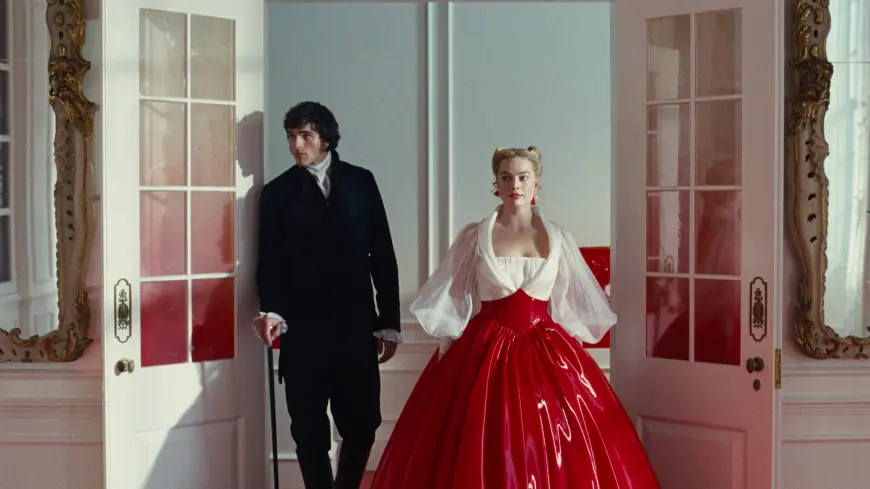
The film is presented as an intentional reimagining rather than a line-by-line translation of the 1847 novel. Fennell’s aesthetic choices lean heavily into tactile, provocative design — interiors lined in flesh-toned leather, closeups of moist surfaces, latex and cellophane costuming, and a pulsey pop-infused soundtrack. Those choices announce a vision that is lusty, sensory and deliberately showy. Early viewers described moments framed to read as erotic or uncanny rather than strictly gothic terror.
That stylistic gamble has polarized reaction. For some, the production’s bravado and sex-forward textures refresh a classic that can feel remote on the page. For others, the movie’s emphasis on spectacle replaces the novel’s emotional and moral density with surface-level provocation — an aesthetic that courts shock but, critics say, rarely achieves the unsettling profundity of the source material.
Star power and a crowd-pleasing crowd
The casting of two high-profile performers in the lead roles is central to why audiences have flocked to the film. One lead’s physical presence and charisma have prompted demonstrative reactions at screenings, where groups of viewers expressed delight and admiration during key scenes. A pop-forward soundtrack and late-night, party-ready marketing have further pushed the film toward mainstream buzz and appointment viewing.
Yet casting choices have also fueled controversy. The novel’s depiction of Heathcliff as racially ambiguous and often described in dehumanizing terms is a central element of its social and psychological dynamics. Critics and readers argued that reshaping Heathcliff into a conventionally handsome figure in this version softens the character’s otherness and erases some of the novel’s racial and class tensions. That change, combined with the film’s glossy sexiness, has led some to charge the adaptation with whitewashing and romanticizing elements that Brontë presented as corrosive.
What the film leaves behind: the novel’s cruelty and generational damage
At the heart of the debate is a mismatch about what makes Wuthering Heights endure. Brontë’s book has long been read both as an annihilating obsession between two monstrous lovers and as a transgenerational story about trauma and redemption. The novel’s power derives from its contradictions: characters who are magnetic and terrifying, love that feels elemental yet destructive, and a moral landscape that punishes desire as often as it exalts it.
Many critics argue the new film trims the novel’s merciless edges. Scenes of coercion, domestic violence and the slow rot of abuse that ripple across generations in the book are, in this rendition, less present or less morally complicated. By making the central pair more conventionally sympathetic and excusing or aestheticizing harm, reviewers contend the adaptation loses the tension that makes the original story both disturbing and unforgettable.
Supporters counter that this is a deliberate, interpretive choice: a fantasia that extracts a single emotional register — eroticism and yearning — and amplifies it. Detractors maintain that without the moral ambiguity and savagery Brontë wrote, the story can’t fully be called Wuthering Heights.
The release has crystallized a broader question about literary adaptation: how much fidelity to a novel’s darkness is necessary for a film to truthfully carry its name? For now, audiences are sorting themselves along predictable lines — those who are happy to trade some of the book’s discomfort for cinematic immediacy, and those who see that bargain as a betrayal of what made the source material strange and essential.