









Tyra Banks and America’s Next Top Model Face a New Reckoning as a Fresh ANTM Documentary Reopens Old Wounds

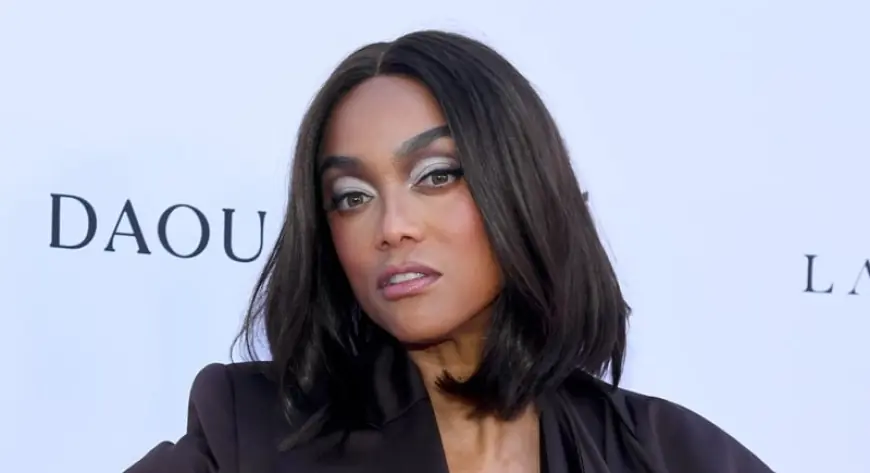
A new three-part America’s Next Top Model documentary, Reality Check: Inside America’s Next Top Model, has landed in recent days and quickly reignited the long-running debate over what the show represented, what it normalized, and who benefited most from its cultural dominance. The docuseries revisits the franchise’s most talked-about moments while bringing key insiders back on camera, including Tyra Banks and longtime judge Nigel Barker, along with former judges and contestants.
The timing is no accident. Reality television from the early and mid-2000s is being reassessed through today’s lens on labor, consent, mental health, and representation. ANTM is a particularly combustible case study because it sat at the intersection of beauty standards, competition, and an industry that already runs on rejection. The documentary’s arrival effectively pulls a once-untouchable pop-culture staple into a more formal courtroom of public memory.
What the ANTM documentary says happened, and why it’s resurfacing now
America’s Next Top Model ran for more than two decades as a franchise, selling itself as both a dream factory and a boot camp. The documentary returns to the series’ signature ingredients: extreme makeovers, high-pressure judging, heavily produced storylines, and moments that became shorthand for reality TV excess.
This time, the framing shifts. Instead of asking whether the show was entertaining, the documentary asks what entertainment required. That includes the emotional costs for contestants, the incentives for producers to escalate conflict, and the way “tough love” judging blurred into humiliation for mass consumption.
Banks’ participation matters because it moves the story beyond fan commentary and former-contestant retrospectives. When a creator and on-camera face engages directly, the question becomes less about nostalgia and more about accountability: What did the people steering the machine know then, and what do they say now?
Tyra Banks, Nigel Barker, and the power dynamics of the judging table
The documentary spotlights the panel as a power center, not just a cast of characters. Banks, Barker, and other familiar figures weren’t merely reacting to contestants; they were helping set the rules of the world those contestants had to survive.
Behind the headline is a set of incentives that rarely gets said out loud:
-
Television incentives rewarded moments that could be replayed, clipped, and argued about.
-
Industry incentives rewarded “breakdown” narratives that made the show feel like a real proving ground.
-
Personal incentives rewarded judges who became brands themselves, synonymous with a catchphrase, a glare, or an unforgettable takedown.
That’s why the documentary’s attention to viral flashpoints lands so sharply. It’s not only revisiting what happened on screen. It’s asking what kind of workplace and creative culture produced those scenes, and why the system kept selecting for escalation.
Janice Dickinson’s absence becomes its own storyline
One of the loudest talking points around the docuseries isn’t a clip, but a missing voice: Janice Dickinson. The documentary does not include a new on-camera interview with Dickinson, and the explanation offered is simple—she was unavailable during filming because she was committed to another project.
In a way, that absence heightens the narrative tension. Dickinson’s role in early cycles was central to the show’s “tough industry realism” posture. Without her directly weighing in, viewers are left to reassess her impact through archival scenes and through the memories of other participants, including Barker. That creates a second-order effect: the documentary avoids turning into a single-person redemption or indictment arc and instead keeps focus on the structure of the show itself.
What we still don’t know, and what the doc can’t fully answer
Even a sharply produced documentary can only go so far, and several key questions remain unresolved:
-
What safeguards, if any, were in place when contestants faced major appearance changes or emotionally intense critiques?
-
How were contestants informed about what could be edited into storylines and how that might follow them for years?
-
Where does responsibility sit when the incentives are shared across creators, executives, and audience demand?
The most important missing piece is often documentation: policies, contracts, and internal standards that would show whether the show was operating as a product of its time or an outlier even then. Without that, viewers are left with interviews, memories, and footage—powerful, but not the whole paper trail.
What happens next: realistic scenarios as the ANTM conversation escalates
Expect the documentary to trigger a new wave of responses that fall into a few likely paths:
-
Public reflection from additional alumni, especially contestants whose careers and personal lives were shaped by how they were portrayed.
-
A broader industry conversation about reality TV protections, including how much has changed and how much is still performative.
-
Renewed debate over whether ANTM can or should return, and what a modern version would need to look like to avoid repeating past harms.
-
A reputational recalibration for those most associated with the franchise, where silence is interpreted as strategy rather than neutrality.
The trigger for each scenario is simple: traction. If clips and commentary keep circulating, more stakeholders will calculate that it’s safer to speak than to disappear.
Why it matters beyond ANTM
This documentary isn’t only about a modeling competition. It’s about how a generation of reality television taught audiences to confuse “pressure” with “professionalism,” and how beauty culture used entertainment to enforce norms with a smile. The show also genuinely expanded visibility for some communities at a time when mainstream fashion media was narrower than it is today—making the legacy complicated, not clean.
Reality Check: Inside America’s Next Top Model lands at a moment when the public is less willing to accept “that’s just how TV was” as a full explanation. The documentary’s real impact may be less about winning an argument over specific scenes and more about forcing a broader one: what viewers were trained to enjoy, what contestants were asked to endure, and what accountability looks like when the product was built to be unforgettable.