



















Can an Olympic gold medal change connor hellebuyck’s big-game reputation?

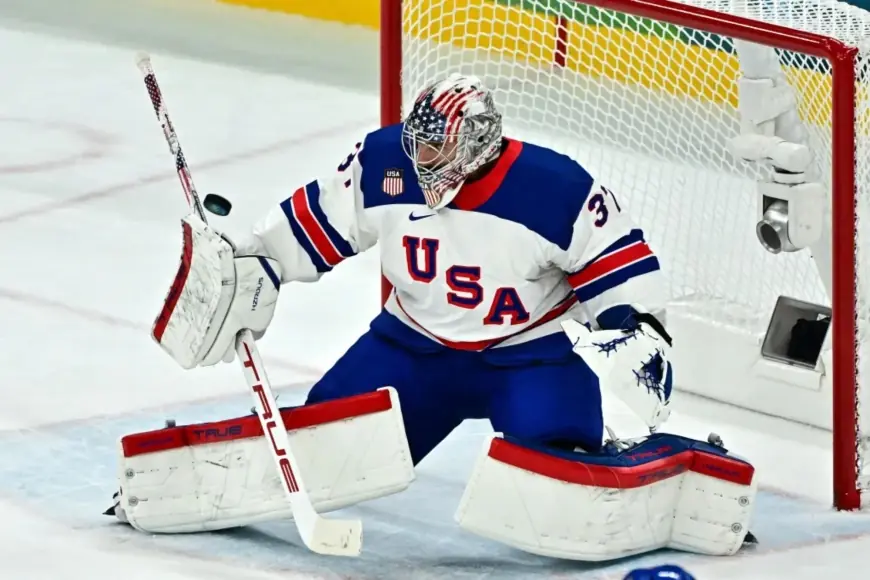
MILAN — Connor Hellebuyck’s stillness in goal has long been his calling card: a concentrated, almost stoic presence that turns chaos into routine. But the narrative that has shadowed his career — elite regular-season play punctuated by postseason struggles — is clashing with a different image unfolding at these Olympics. If he helps the United States to gold, will it be enough to alter the way big games are remembered?
Calm dominance in Milan, contrasted with springtime struggles
On the ice in Milan, Hellebuyck has looked as composed as ever. His save percentage and goals-against average through the preliminary round rank among the tournament leaders, and teammates speak of a confidence that settles the roster. "Never really seems like he’s in a panic, " the team captain said, noting how Hellebuyck’s positioning and poise inspire trust.
That tranquility is part coaching manual, part temperament: he studies his craft intensely and rarely allows emotion to disrupt technique. Yet the pattern that critics point to is clear. Over recent postseasons he has posted numbers well below his regular-season greatness, a drop that has fueled questions about his ability to carry a team deep into the playoffs. Injuries this season and a club missing the cut have only added to the scrutiny and the sense that there is unfinished business.
Olympics as a single-event crucible
Tournament hockey compresses pressure into a short, unforgiving window. For goaltenders who thrive on rhythm and preparation, that format is both an opportunity and a test. Hellebuyck’s remarks in Milan — that these moments are why he plays and that he plays for the fun of it — have an almost deliberate counterweight to the narrative of postseason faltering. His numbers so far in the tournament suggest he’s embracing that pressure rather than being defined by it.
Coaching decisions matter in this environment. The head coach said he trusts all three netminders on the roster but has leaned on Hellebuyck’s hot form, valuing performance over pre-tournament pecking order. That vote of confidence in a compact event carries weight; one standout performance or a championship run can recalibrate public memory. A gold medal would be a high-visibility, high-stakes counterargument to the playoff critique — an image of Hellebuyck atop an Olympic podium that could stick in the minds of fans and commentators alike.
Will one medal rewrite a career arc?
It’s unlikely that one tournament will erase an extended pattern on its own, but it can broaden how a player is judged. Hellebuyck’s regular-season résumé is already among the elite, with multiple top awards and metrics that underline sustained excellence. The question is whether a major international triumph can tilt perception enough to make his overall legacy read differently: less about springtime lapses and more about clutch delivery on the sport’s biggest stage.
Legacy is rarely a single-line statement. It’s a ledger of seasons, moments, failures and triumphs. For Hellebuyck, the Olympics present a concentrated chance to add a defining positive moment. If he continues to steal games, silence doubt and help the United States navigate the knockout rounds and beyond, the gold around his neck would do more than complete a collection — it would complicate the narrative critics have leaned on. It wouldn’t erase the playoff record, but it would force a broader, more nuanced verdict on a goaltender whose room for reinvention is unusually large for a player in his early 30s.
Whatever unfolds in the quarterfinals and potential medal rounds, the duel between long-term metrics and single-event legacy will be fascinating to watch. For now, Hellebuyck’s Milan run has already provided a vivid reminder: when he’s at his calmest, he can make the biggest saves look inevitable. Whether that image ultimately becomes the dominant memory depends on what happens next — and that answer will arrive in a handful of high-stakes games scheduled to continue this week (ET).