























Robert Duvall, scene-stealing screen icon, dies aged 95

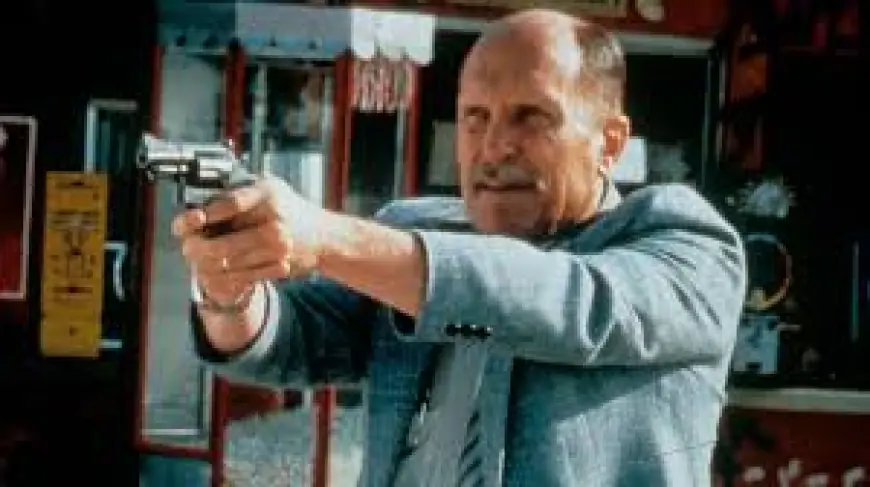
Robert Duvall, the consummate character actor whose career spanned stage, television and some of cinema’s most enduring films, has died at the age of 95. Revered for small but unforgettable turns and an Oscar-winning leading performance, Duvall remained one of Hollywood’s most reliable presences for more than six decades.
A career of unforgettable supporting turns
Duvall made his mark by making supporting roles feel pivotal. He was the cool, composed consigliere in two instalments of a landmark crime saga, a performance that lodged itself in the popular imagination alongside the film’s larger-than-life leads. He also delivered one of cinema’s most quoted lines in a harrowing war epic — "I love the smell of napalm in the morning" — a moment that helped define that film’s grim mythology.
Across genres he remained magnetic: from a quietly stirring turn in a Southern courtroom drama early in his film work to the grizzled, redemptive lead that earned him an Academy Award in the early 1980s. Even when not the marquee name, Duvall had a knack for making small parts feel like the spine of the picture, a trait that made him indispensable to filmmakers seeking authenticity and emotional weight.
Roots, training and an actor’s work ethic
Born January 5, 1931, in San Diego, Duvall came from a naval family background and served in the army after World War II, including a stint in Korea. He gravitated to New York to study acting at the Neighborhood Playhouse under Sanford Meisner, and cut his teeth in stock and off-Broadway theatre. Early stage triumphs included a breakthrough in a major American play, while another theatrical collaboration led directly to his first film role in the early 1960s.
Stories from his early years highlight an obsessive commitment to craft: he shared a Manhattan flat with two future stars while pursuing steady work, and he openly embraced the life of a working actor. Where many performers aim for the occasional prestige project, Duvall said he wanted to be employed constantly — a promise he largely kept over a career that rarely slowed.
A legacy of range and recognition
Although he won the Academy Award for portraying a washed-up country singer who finds redemption, much of Duvall’s reputation rests on his ability to transform smaller parts into cornerstones of the films around them. On television he inhabited historical figures such as a U. S. president and a famed Confederate general, demonstrating a facility for both contemporary and period work. His family history included links to notable American figures, which at times informed the biographical roles he accepted.
Critics and colleagues consistently praised his conviction and precision. Whether playing a taciturn lawyer in organized crime dramas, a haunted soldier, a flawed singer or a man of conscience in quieter dramas, Duvall brought an unflashy rigor to performance: gestures calibrated, voices modulated, silences employed as powerfully as speech.
As the industry reflects on his passing, Duvall’s films will remain a reminder of how a dedicated character actor can shape the texture of American cinema. His output — enormous in volume and uneven only in the sense that he was constantly working — leaves behind a catalogue of work that will be studied and admired for years to come.